

 GMA Brandtalk
 Tracking
 Archives

Economic Planning chief: I'm not happy with 6% growth
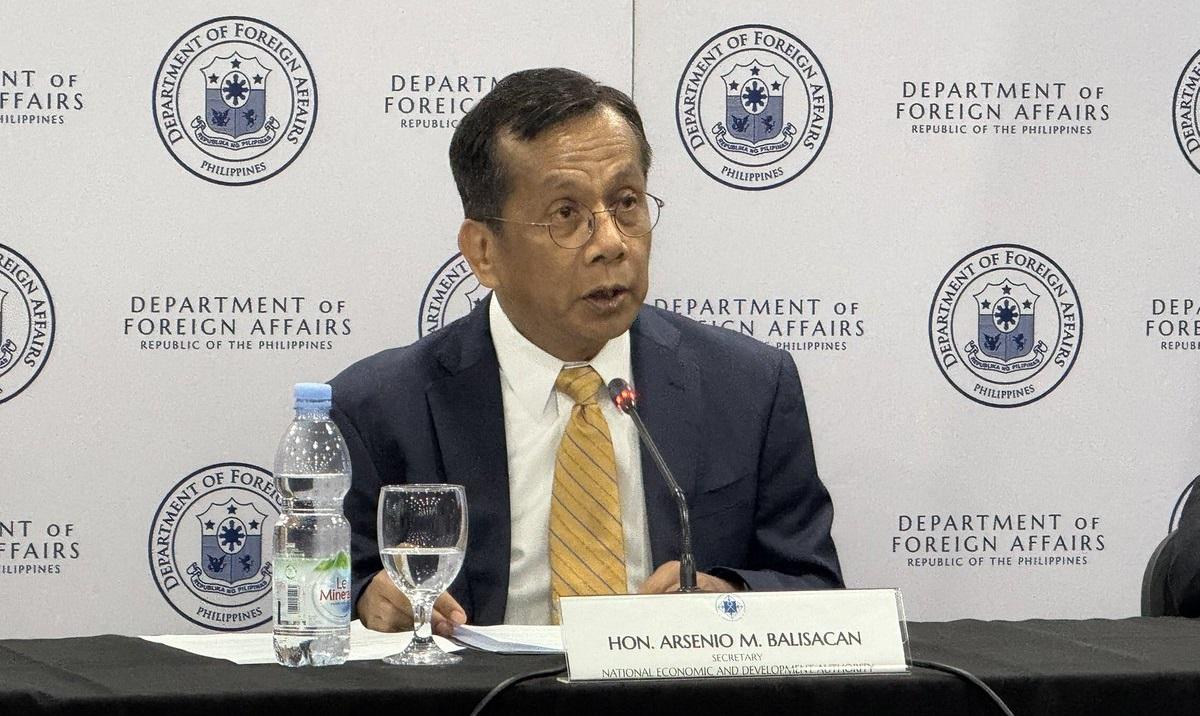
The Philippines’ aspiration of being a poverty-free and middle-class society by 2040 is no longer feasible if the country’s economic growth remains at a single-digit rate over the next decades, Department of Economy, Planning, and Development (DEPDev) Secretary Arsenio Balisacan said Thursday.
At the DEPDev’s 2025 mid-year press chat, Balisacan said the COVID-19 pandemic has set back the country’s growth.
“We lost three years of growth momentum… [Ambisyon Natin] 2040, at the current growth, is no longer feasible anymore,” the country’s chief economist said.
Under the “Ambisyon Natin 2040” roadmap, the Philippine government aspires the country to be elevated to high-income economy status with “a prosperous middle class society where no one is poor,” “economic growth must be relevant, inclusive and sustainable,” and “per capita income must increase by at least three-fold.“
Balisacan, however, said the goals of the roadmap might be achieved a full decade behind 2040 or by 2050.
“If we continue our momentum, we will still [achieve] that by 2050,” the DEPDev chief, referring to the country’s average economic growth rate of 6% seen in the last decade.
He said that the government's “Ambisyon Natin 2040” goals might still be hit if the economy grows faster above 8% or at least by double-digit.
“That is the kind of aspiration we must have not only by our administration but by succeeding administrations,” the country’s chief economist said.
“I am not, you know, happy with 6%, because with 6%, we will be overtaken by a race to grow faster,” Balisacan said.
The DEPDev chief said the country needs “to solve the constraints that we face —structural, technical, institutional all that stuff.”
In his mid-year report, Balisacan said from 2023 to the first quarter of 2025, the Philippines “remained among Asia’s fastest-growing economies.”
“Unemployment fell below pre-pandemic levels, while underemployment also declined steadily in 2023 and 2024. Poverty incidence dropped to 15.5% in 2023, lifting an estimated 2.4 million Filipinos above the poverty line. Inflation eased significantly, from a peak of 8.7% in January 2023 to just 1.4% in June 2025,” he said.
“And having met our Gross National Income (GNI) per capita targets for 2023 and 2024, the Philippines is now poised to achieve upper-middle-income status in the near term. In the World Bank’s estimates of GNI per capita for 2024, we were short of just $26 to become an upper-middle-income country,” he added. — RSJ, GMA Integrated News

