

 GMA Brandtalk
 Tracking
 Archives

Only Marcos approval needed as House adopts Senate version of powers on fuel excise tax
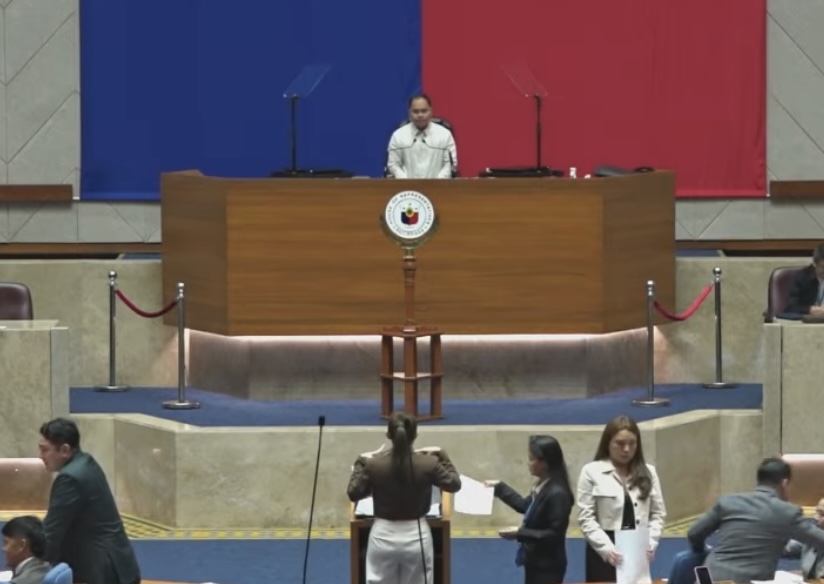
The House of Representatives on Wednesday adopted the Senate version of the bill allowing President Ferdinand Marcos, Jr. to suspend and reduce the excise tax on petroleum products to address rising oil prices amid the conflict in the Middle East.
This developed after the House plenary, via a voice vote, adopted Senate Bill 1982 or the Act Authorizing the President To Suspend or Reduce Excise Tax on Petroleum Products as an amendment to House Bill 8418.
The House’s adoption of the Senate bill will allow Congress to do away with the convening of a bicameral conference committee to reconcile the differing provisions of the two versions.
“That forgoes the bicam. Automatically, the enrolled copy will be sent to the President,” the Senate President Vicente "Tito" Sotto III said.
“This adoption means that the measure only needs the President's signature to become a law,” said Marikina Rep. Romero Quimbo, the chairman of the House Committee on Ways and Means.
The measure grants the President emergency powers when the average price of Dubai crude oil price exceeds $80 per barrel for one month immediately preceding the suspension or reduction of the excise tax.
According to Mark Salaza's report on "24 Oras," the House adopted the changes the Senate made to its version of the measure.
This includes the period of the President's emergency power lasting three months instead of the initially proposed six, except when the price per barrel of Dubai crude continues to rise.
The House also agreed with the Senate on the automatic withdrawal of the emergency power when the price of crude oil goes below $80. This means the excise tax rate would return to its normal level.
It also adopted the Senate's proposal for the Department of Energy and the Development Budget Coordinating Committee to report on the status and impact of the oil crisis, instead of the Secretary of Finance as the House initially proposed.
The proposed law, which amends the National Internal Revenue Code of 1997, will give the President emergency power until December 31, 2028.
- It also requires the President to submit to the Senate and the House of Representatives a report on the following:
- the factual basis and policy goals for the suspension or reduction of excise taxes;
- the estimated foregone revenues, including affected social benefits for different household deciles;
- the expected impact on inflation and fuel prices;
- a cost-benefit analysis; and
- an assessment of possible market distortions, leakages, or unintended consequences arising from the suspension or reduction of excise taxes, and other economic activity.
The report shall likewise include a recommendation on whether the suspension or reduction of excise taxes should be maintained, modified, or lifted, and shall form part of the basis for any continued suspension or reduction.
The Department of Planning and Development (DEPDev) earlier said that suspending the excise tax on fuel will reduce oil prices by P6 per liter for diesel and P10 per liter for unleaded.
The Department of Energy earlier announced that diesel and gasoline prices were expected to reach as much as P114 per liter and P91.60 per liter, respectively.
Quimbo earlier urged the House to adopt the Senate version to expedite approval of the crucial legislation.
The Middle East conflict started when a joint US-Israel Operation Epic Fury launched airstrikes targeting Iran’s seat of government last February 27 to supposedly deter Iran’s missile program, which threatens the region’s security.
This operation has since killed Iranian leaders and prompted Iran to retaliate by launching airstrikes targeting US bases, among others, located in Middle Eastern countries where the Philippines sources 98% of its crude oil supply. –NB, GMA Integrated News

