

 GMA Brandtalk
 Tracking
 Archives

Wall Street indexes rise after Trump postpones strikes on Iran’s power plants
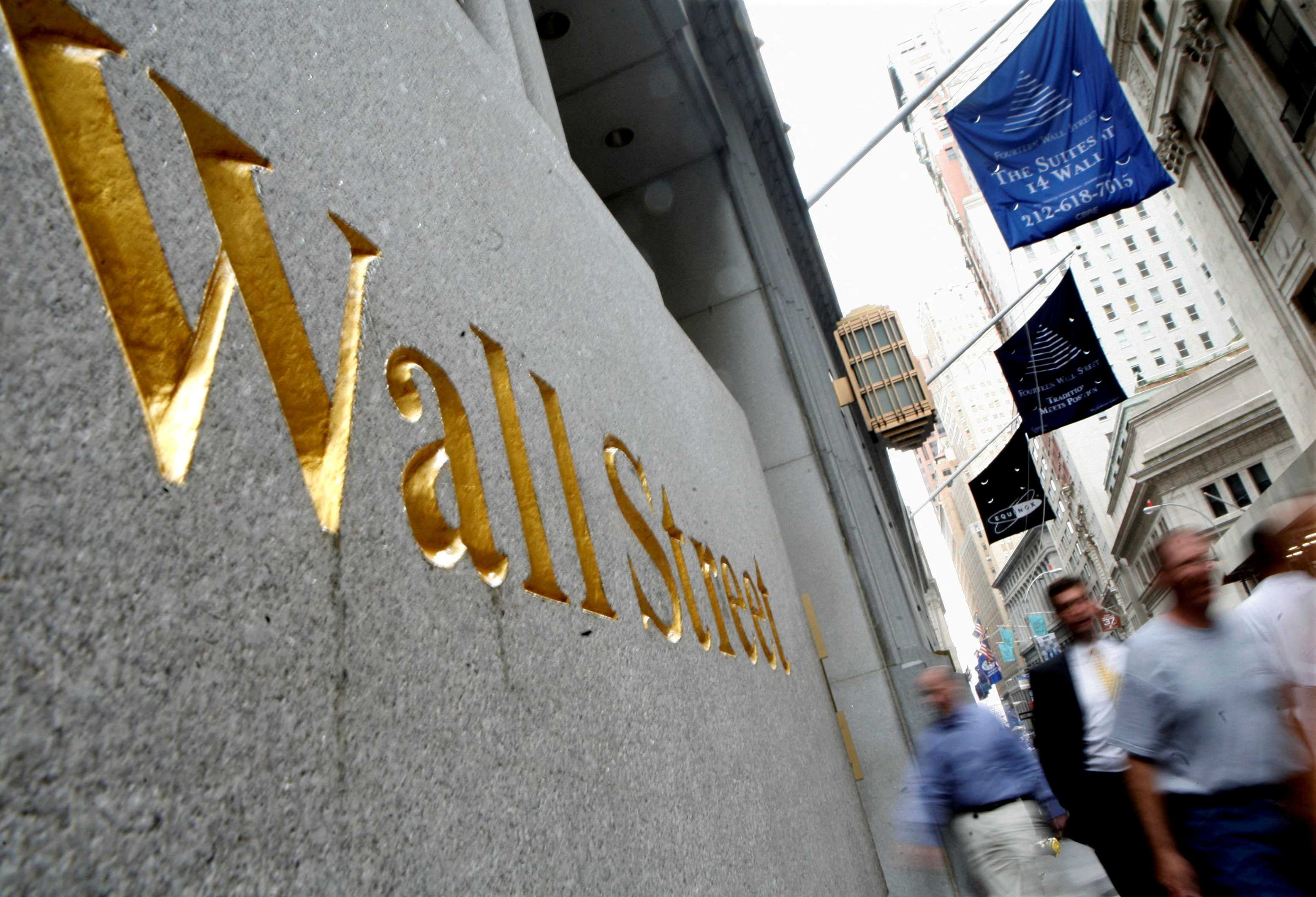
The main US indexes were advancing more than 1% on Monday after President Donald Trump said he had ordered the military to postpone strikes against Iranian power plants following “productive conversations” with Tehran.
Iran’s foreign ministry refuted the claim, with a spokesperson saying they had held no discussions with the United States and that their conditions to end the war had not changed. While another source told Reuters Israeli officials believed the US and Iran could hold talks this week.
Global stock indexes staged a sharp recovery after Trump’s comments, while oil prices fell, signaling improving risk appetite. Equities had been trading lower earlier in the day after threats of attacks on Israeli and Iranian power networks.
“You never know who to believe but it does appear that Trump is trying to start discussions with somebody in Iran to resolve the war despite strong denials from Iran. This has caused significant optimism in stock prices today with the market up strongly although off its highest levels because of the Iranian denials,” said Tim Ghriskey, senior portfolio strategist at Ingalls & Snyder in New York.
At 02:03 p.m. the Dow Jones Industrial Average .DJI rose 820.49 points, or 1.80%, to 46,399.84, the S&P 500 .SPX gained 98.83 points, or 1.52%, to 6,605.31 and the Nasdaq Composite .IXIC gained 351.27 points, or 1.62%, to 21,998.88.
All three indexes were, so far into the session, on track for their biggest single-day percentage gains since February 6. The CBOE Volatility Index .VIX, Wall Street’s fear gauge, retreated after earlier hitting its highest level in two weeks. It was last down 1.78 points at 25.
Oil prices were down about 10%, but the energy index .SPNY was up 1.3%, gaining along with all of the S&P 500’s 11 major industry sectors. The biggest advance among the sectors was in consumer discretionary .SPLRCD, up 2.9% while defensive healthcare .SPXHC was the slowest gainer, up 0.2%.
Ghriskey said that with hopes for a resolution of the war “theoretically it takes the pressure off the US consumer who’s been suffering from high oil prices.”
After Trump’s comments, investors trimmed bets for an interest-rate hike from the US Federal Reserve to a 16% probability for December from 25% in the prior session, according to CME Group’s FedWatch.
Traders were betting on a roughly 70% chance that rates would be unchanged by year end after scaling back bets for cuts last week after the central bank struck a hawkish tone due to concerns about higher inflation.
The small-cap Russell 2000 .RUT was outperforming with an advance of 2.9%. On Friday, the index, which is sensitive to higher interest rates, had ended more than 10% below its record close of January 22, confirming it had been in correction territory.
Fuel-hungry airlines jumped as the price of oil fell with Alaska Air ALK.N up more than 5%, while American Airlines AAL.N and United Airlines UAL.N added more than 4% each. Cruise ship operators soared, with Norwegian Cruise Line .NCLH.N shares up almost 8% while Carnival Corp .CCL.N and Viking Holdings .VIK.N rose more than 6%.
Banks, which had sold off sharply during the conflict, inched up, with JPMorgan Chase JPM.N up 1.9% and Goldman Sachs GS.N adding 3%. The S&P 500 Banking index .SPXBK gained 1.8%.
Investors will look forward to Fed speakers, business activity surveys and consumer sentiment readings this week.
In individual stocks, Synopsys SNPS.O gained 4.2% after activist investor Elliott Investment Management built a multibillion-dollar investment in the electronic design automation firm.
Advancing issues outnumbered decliners by a 4.28-to-1 ratio on the NYSE, where there were 48 new highs and 93 new lows. On the Nasdaq, 3,532 stocks rose and 1,181 fell as advancing issues outnumbered decliners by a 2.99-to-1 ratio.
The S&P 500 posted 6 new 52-week highs and 7 new lows while the Nasdaq Composite recorded 30 new highs and 138 new lows. — Reuters

