

 GMA Brandtalk
 Tracking
 Archives

Win Gatchalian seeks P1,500 monthly aid for minimum wage earners
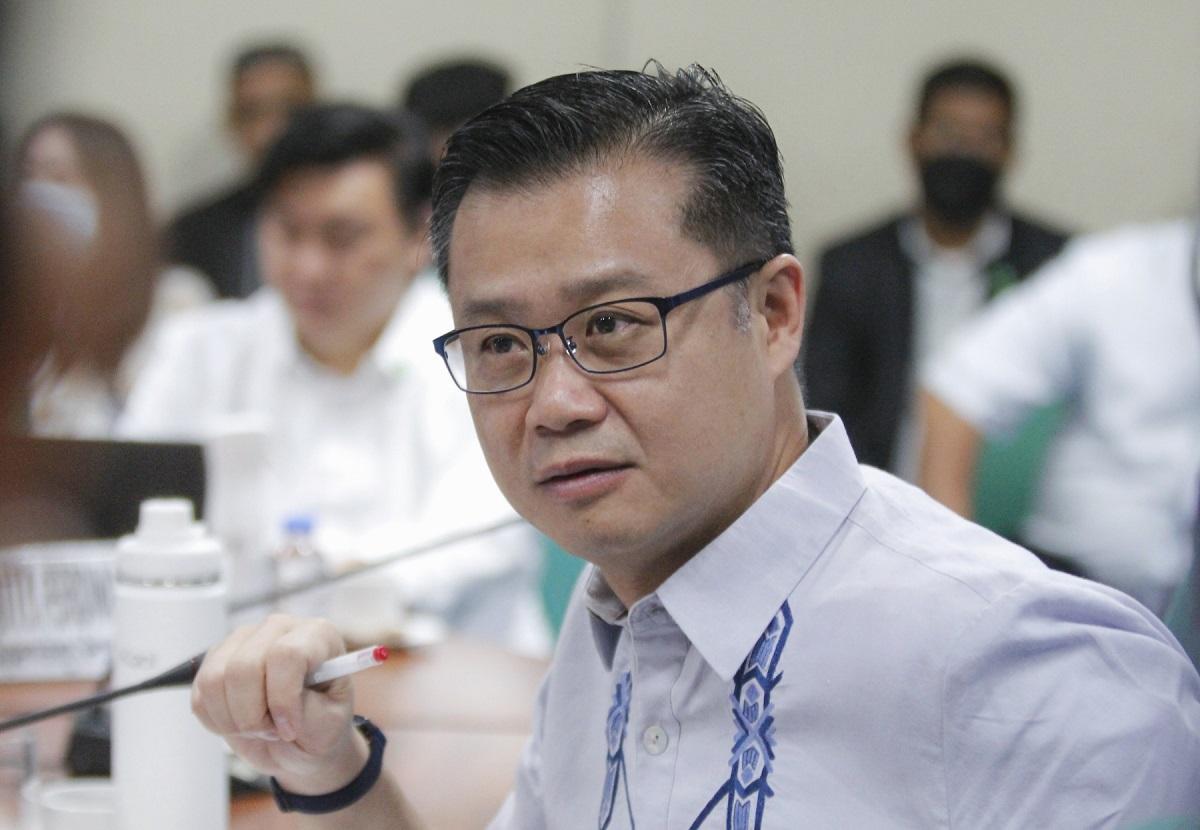
Senator Sherwin Gatchalian has recommended providing P1,500 monthly financial aid for minimum wage earners who are suffering from the rising prices of fuel and other commodities amid the tensions in the Middle East.
Gatchalian, who chairs the Proactive Response and Oversight for Timely and Effective Crisis Strategy (PROTECT) committee, pointed out in his preliminary report that the Middle East crisis causes workers to lose purchasing power as prices rise faster than wages.
The senator thus sees establishing a targeted monthly cash relief program—providing P1,500 monthly relief for five million minimum wage earners—as a short-term solution.
He said this “should be seriously considered” rather than an across-the-board wage order that may further burden struggling companies amid the crisis.
This proposed program would cost the government roughly P7.5 billion per month.
“Typically, ang ating mga social amelioration are poverty-level and below. So we also recommended the minimum wage earners kasi near poor sila and susceptible sila sa inflation shock,” Gatchalian told reporters in a Zoom interview.
(Typically, our social amelioration programs are only for those in poverty-level and below. So we also recommended the minimum wage earners because they are near poor and susceptible to inflation shock.)
The Department of Budget and Management (DBM) earlier assured the public that contingent funds are in place should the Department of Labor and Employment (DOLE) seek to extend the provision of financial assistance to minimum wage earners affected by the rising fuel prices.
Malacañang also said the government would study the request for financial assistance to minimum wage earners, the middle class, and government employees also affected by the oil crisis resulting from the Middle East conflict.
Asked about potential subsidies for the middle class, Gatchalian said the matter could be reviewed considering the middle class has a broad scope.
“Merong middle, middle low, middle high—very broad siya. So pwedeng pag-aralan kung sinong susceptible sa inflation shock. Ang importante dito ‘yung ‘pag tinamaan ka ng inflation shock, kaagad bababa ‘yung income mo or pwede kang pumunta sa poverty segment,” he explained.
(There is a middle, middle low, middle high—it is very broad. So we can study who is susceptible to inflation shock. The important thing here is to help those whose income will immediately decrease or who may possibly go down to the poverty segment if hit by inflation shock.)
He also said that the DOLE and the Department of Trade and Industry (DTI) should work together to deliver temporary income support to low-wage workers while also extending zero-interest or low-interest financing to vulnerable micro, small, and medium enterprises (MSMEs), so that worker relief would not come at the cost of mass business closures. — RSJ, GMA News

