

 GMA Brandtalk
 Tracking
 Archives

Dollar pushes to one-week high as Middle East tensions reignite
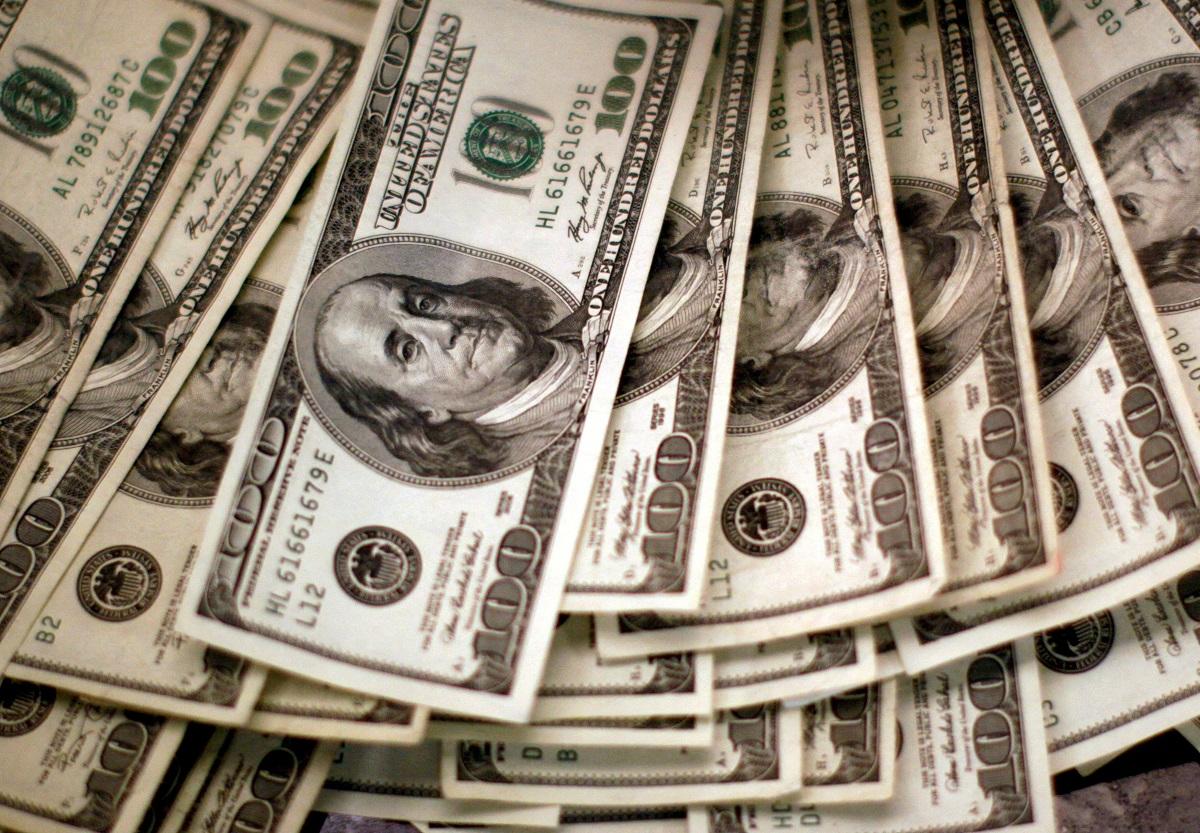
SINGAPORE/TOKYO - The US dollar firmed to its highest level in a week against major currencies on Monday before paring gains as renewed US-Iran tensions and fading hopes for a Middle East peace deal sent investors toward safe havens.
The United States said on Sunday that it had seized an Iranian cargo ship that tried to run its blockade, while Iran said it would retaliate, stoking fears about a resumption of hostilities.
Tehran also said it would not participate in a second round of negotiations that the US had hoped to kick off before its two-week ceasefire with Iran expires on Tuesday.
"The weekend escalation revives the geopolitical risk premium just as markets had started pricing a peace dividend," said Charu Chanana, chief investment strategist at Saxo, adding that higher oil "is not just an energy story, it is a growth-and-rates story."
At the same time, compared to the sharp jump in oil prices, moves in currency markets were restrained, with the dollar giving back some of its early gains by mid-morning in Asia.
The euro last bought $1.1757 after hitting a one-week low of $1.1729 earlier in the session, while sterling was 0.11% lower at $1.3503. The risk-sensitive Australian dollar fell 0.17% to $0.7155.
The dollar index, which measures the US currency against six peers, was at 98.30, hovering near its highest in a week and recouping some of its recent losses.
The index is down 1.5% in April amid rising risk appetite on hopes for a peace deal. The index had surged 2.3% in March on haven demand after the war broke out.
Chris Weston, head of research at Pepperstone, said while the tone is risk-off to start the week, the move so far "appears orderly rather than indicative of a major volatility shock."
"Market participants understand that the path to a formal agreement was unlikely to be linear and remains vulnerable to sudden changes, so market players won't be wholly surprised by a sentiment shift," Weston said.
Markets focus on Strait of Hormuz
Now in its eighth week, the war has created the most severe shock to energy supplies in history, sending oil prices surging because of the de facto closure of the Strait of Hormuz, which typically handles about a fifth of the world's oil shipments.
The United States has maintained a blockade of Iranian ports, while Iran has lifted and then reimposed its own blockade on marine traffic passing through the crucial waterway.
That spurred a rebound in oil prices on Monday. Brent crude futures LCOc1 jumped over 5% to $95.2 a barrel and US West Texas Intermediate CLc1 was at $88.99 a barrel, up over 6%.
"The key is still the Strait of Hormuz for many, and hopes that we could see the US and Iran sit down at the negotiating table before the ceasefire ends now seem remote," said Nick Twidale, chief market strategist at ATFX Global in Sydney.
"For now, I think we will see further downside moves for risk in the coming sessions."
The New Zealand dollar eased slightly to $0.5876.
The yen weakened to 159.06 per dollar, just shy of the crucial 160 level that traders worry could lead to intervention to support the Japanese currency.
The market's focus will also be on the Bank of Japan meeting later this month. Governor Kazuo Ueda has refrained from pre-committing to an April rate hike with the war muddling the outlook, but he left a few hawkish signs after last week's IMF meetings, suggesting tighter policy by June. —Reuters

