

 GMA Brandtalk
 Tracking
 Archives

DOE: Oil crisis due to Middle East conflict seen to last until end-2026
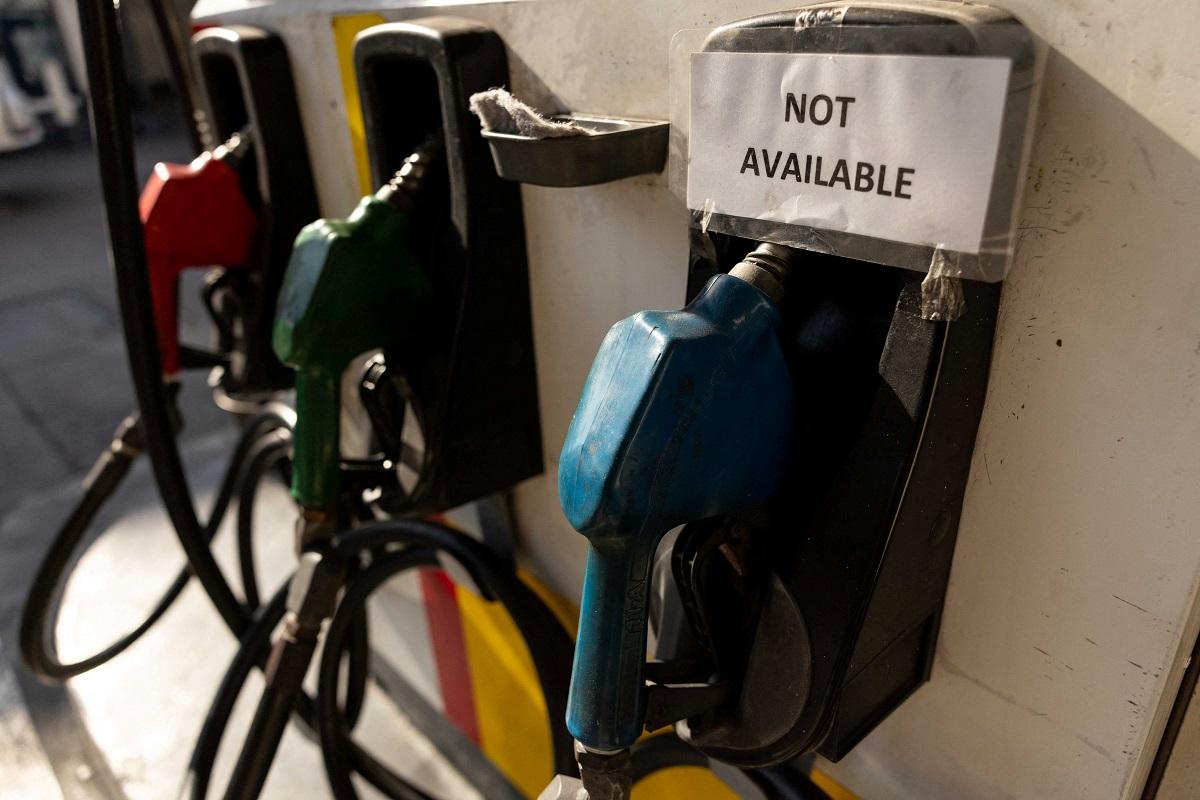
The Department of Energy (DOE) said Tuesday oil price hikes in the Philippines due to the war between US-Israeli forces and Iran could last up to the end of the year.
Director Rino Abad of the DOE's Oil Industry Management Bureau made the pronouncement during the briefing by concerned government agencies regarding the ongoing and proposed actions in response to the fuel crisis.
Abad said very few to no ships at all are able to pass through the Strait of Hormuz because of a standing US naval blockade, even amid the indefinite ceasefire between the two sides.
"We are hoping that the indefinite ceasefire will be sustained, and that [ceasefire] will also be reflected [by way of] true, straight [up] absence of blockade [along the Strait of Hormuz]," Abad told the House transportation panel.
"Dapat wala na ho 'yun. Ang nagpapababa lang po ngayon ng presyo ay kung wala silang putukan, pero hindi pa rin po nakakadaan iyong mga [oil tankers]. Pag nakadaan po iyon, ang laki pa po ng ibababa ng price,"
(The blockade should be removed. The only thing lowering the prices is the ceasefire, but vessels are unable to pass the Strait of Hormuz as it is still shut. If that were to open, oil prices will be further reduced substantially.)
"The long-term agreement [between the parties] will be the ideal because if there's a peace deal and it will reflect that there are no unannounced conflicts, then we'll go back to the pre-crisis level. But this would take a long time, probably up to…, kasi hindi rin talaga natin matantiya kung kailan matatapos iyong kanilang agreement (we can't really say how long their agreement would last). Maybe this will be extended up to the end of the year," Abad added.
Global petroleum prices have skyrocketed since US and Israel launched a joint offensive on Iran on Saturday, February 28, accusing the latter of advancing nuclear and ballistic missile programs.
Iran retaliated against US allies in the Gulf, resulting in exchange of devastating airstrikes that have damaged critical infrastructure, including oil refineries.
Tehran, and later Washington, set up a blockade on the Strait of Hormuz, a critical waterway for the commerce of global petroleum.
In the Philippines, fuel prices had breached P100 per liter level due to the country being heavily dependent on imported oil supply.
To fight overcharging
Given the situation, Abad said the government-owned Philippine National Oil Company (PNOC) has been continually buying reserve fuel, particularly diesel, as well as liquefied petroleum gas (LPG).
In addition, Abad said that the pilot program of providing public utility vehicles a P10 per liter discount for their diesel purchases will be implemented nationwide.
The pilot program initially enlisted 56 gas stations in Metro Manila.
"We have seen that the system is working, and the instruction from the Office of the President is to go for nationwide implementation," Abad said.
"We are onboarding gasoline stations nationwide and right after that, the LTFRB (Land Transportation Franchising and Regulatory Board) will also onboard the nationwide PUJs (Public Utility Jeepneys) and UV Express registrants," Abad added.
These measures, Abad said, are on top of the DOE's imposition of fuel price adjustment limits.
"We cannot prevent the movement [of oil prices worldwide] but we can prevent overcharging because the DOE dictates the adjustment based on the price benchmark movement. There are no ranges of increases or ranges of decreases," Abad said. — VDV, GMA News

