

 GMA Brandtalk
 Tracking
 Archives

Bank of England holds rates, warns of inflation threat from Iran war
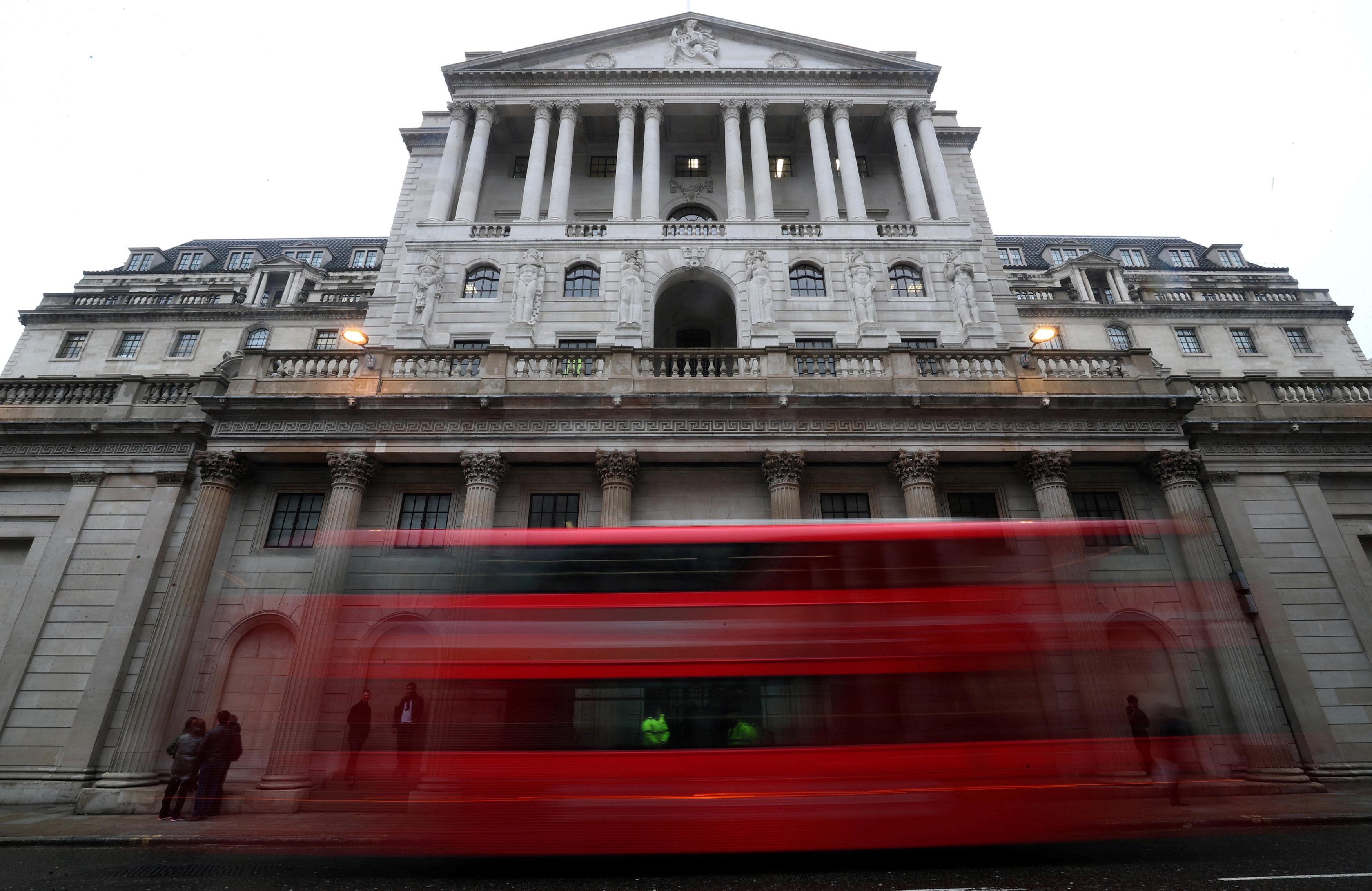
LONDON — The Bank of England kept interest rates on hold on Thursday and set out a range of possible economic impacts from the Iran war, the worst of which might entail "forceful" rate rises while less damaging outcomes may not require any increase at all.
Facing deep uncertainty about the duration of the conflict and the damage it will wreak on Britain's economy, the Monetary Policy Committee voted 8-1 to keep the BoE's benchmark Bank Rate at 3.75% as only Chief Economist Huw Pill sought a hike to 4%.
The decision was in line with expectations in a Reuters poll of economists but investors responded by scaling back their bets on BoE rate hikes this year.
A day after the US Federal Reserve kept rates unchanged, and shortly before the European Central Bank stayed on hold too, the MPC said it would monitor the Middle East closely.
Markets trim BoE rate hike bets
Two-year British government bond yields GB2YT=RR fell by around 5 basis points immediately after the decision but sterling was little changed against the US dollar GBP= and the euro GBPEUR=.
Governor Andrew Bailey said the BoE would face a "difficult judgement call" over the coming months on whether to raise rates, as waiting for hard evidence of inflation pressures would leave things too late.
He said he did not want to push back against market expectations for at least two rate rises this year and the BoE was on an "active hold" on borrowing costs. But he also said the central bank was not sending "a slightly clandestine message that interest rates are going to go up."
On April 1, Bailey told Reuters that investors were being premature with their bets on multiple rate hikes this year.
After Thursday's rate decision, financial markets were pricing in 0.61 percentage points of BoE rate increases this year, down from about 0.76 percentage points before the decision. Bailey told Bloomberg TV later on Thursday that the market reaction appeared "very sensible."
Analysts read the BoE's message in different ways. Dutch bank ING expected a rate hike at the central bank's next meeting in June with probably no further increases.
Deutsche Bank forecast no move before July but said the scale of geopolitical uncertainty meant multiple hikes could not be ruled out.
"Big picture, the MPC has bought itself time today. The MPC is preaching patience—but at the same time, the Bank has signaled that its patience may be wearing thin," Deutsche Bank Chief Economist Sanjay Raja said.
Another German bank, Berenberg, said a reopening of the Strait of Hormuz soon might allow the BoE to resume cutting rates towards the end of 2026, while US bank Citi said it expected rates to stay on hold through 2026.
Deep uncertainty over length of Iran war
Faced with such deep uncertainty over the war, the BoE opted not to publish a central economic forecast.
Instead, it produced three scenarios based on energy prices and different degrees of second-round effects.
Britain is seen as highly vulnerable to the jump in energy prices due to its heavy use of natural gas.
Under the most damaging Scenario C, where oil prices peak at $127 a barrel and remain above $100 until mid-2028, inflation could peak at 6.2% in early 2027—almost double its most recent reading—and stay above the BoE's 2% target for the coming three years, based on current market expectations for rates.
If that risk materialized, it was "likely to warrant a forceful tightening in monetary policy," the BoE said.
However, Scenarios A and B—which show oil prices falling to around $80 a barrel within a few months—would require a "less restrictive policy stance" with the rise in market-based interest rates since the start of the war helping to offset inflation pressure.
Bailey thought the most likely outcome was Scenario B under which inflation peaks at a little over 3.5% at the end of 2026 before falling back to close to 2%, and interest rates over the next three years higher than markets expected in February.
But he also placed "some weight" on Scenario C.
Bailey said the fact that the BoE had not cut interest rates, as expected shortly before the war broke out, provided "a good deal of space" to absorb inflation pressure.
Around half the other members of the MPC who voted to keep rates on hold also said they put most weight on Scenario B.
The scenarios were based on market pricing in the 15 days to April 22 and did not incorporate a further spike this week in global oil prices which hit a fresh four-year high of $126 a barrel on Thursday before sliding to $114.
Act early or wait for evidence?
The BoE said some MPC members "might prefer to act early" while others could wait for more evidence of inflation getting stuck too high.
While there was a risk of "material second-round effects" from the energy price shock—such as demands for higher pay or companies raising prices rather than absorbing higher costs—the jobs market was weakening and a rise in financial market borrowing costs would limit inflation.
"The Committee stands ready to act as necessary," the BoE said, repeating language it used in March. — Reuters

