

 GMA Brandtalk
 Tracking
 Archives

Has the Philippines slipped into stagflation? 'I don't see it that way,' says Balisacan
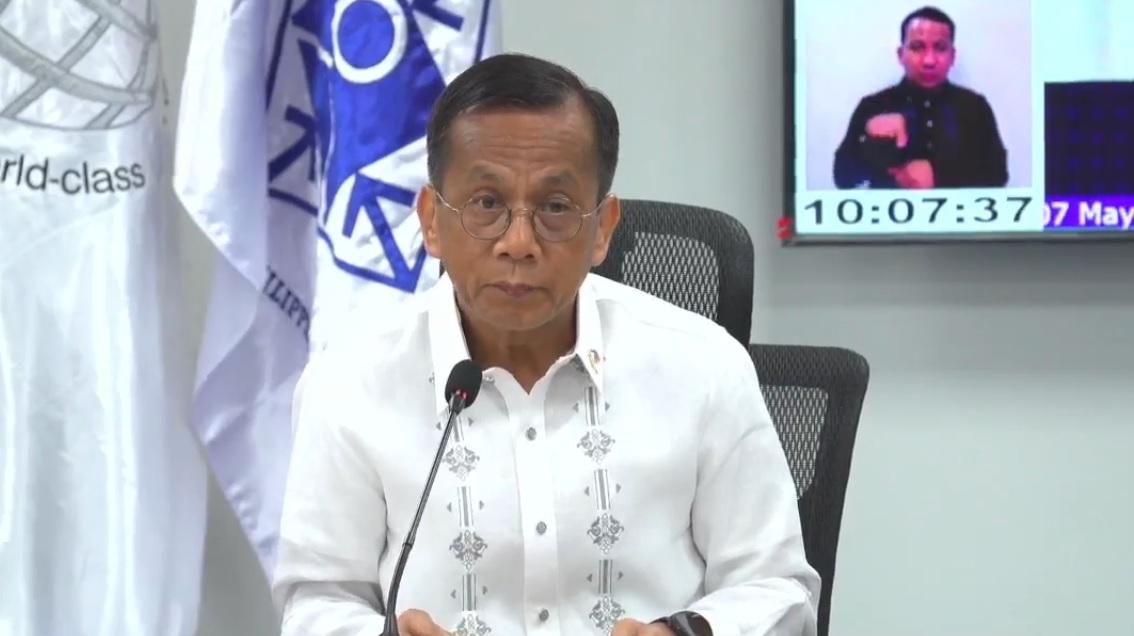
The Philippines' chief economist brushed off the likelihood that the country's economy has fallen into stagflation, even as the domestic product (GDP) growth slowed in the first quarter of 2026.
“I don’t see it that way,” Department of Economy, Planning and Development (DEPDev) Secretary Arsenio Balisacan said at a press conference on the nation's economic growth in the first quarter of the year. He added that before the US-Israel-Iran war that began at the end of February, “we [were] seeing improvements in the economy.”
Stagflation is characterized by simultaneous occurrence of slow or stagnant economic growth, persistent high inflation, and high unemployment.
The Philippine economy, as measured by GDP—the value of goods and services produced in a period—grew 2.8% in the January to March 2026 period, slower than the 3% growth seen in the last quarter of 2025.
This is the economy’s slowest footing since the 3.8% contraction during the COVID-19 pandemic lockdown in the first quarter of 2021.
This is the third straight quarter of GDP growth slowdown recorded since the fourth quarter of 2025.
Meanwhile, the inflation rate saw consistent acceleration in the first three months of 2026 from 2% in January to 2.4% in February and further jumping to 4.1% in March driven by the series of hikes in the retail prices of petroleum products due to the ongoing war in the Middle East.
In April, inflation rate soared to its fastest in three years at 7.2% as higher global fuel prices brought about by the Middle East petroleum crisis spilled over to food, local petroleum, and utilities costs during the period.
In March, unemployed Filipinos slightly declined to 2.58 million from 2.66 million, bringing the unemployment rate (as a percentage of 51.65 million persons in the labor force) to 5% —which means 50 in 1,000 individuals have no jobs or livelihoods.
Balisacan, however, said there is no “standard definition for stagflation.”
“As I said, we are quickly addressing the issues like inflation. We are able to manage inflation to come down. So that's our track. Obviously to ensure that the growth, the momentum that we had in the past will be regained as fast as we can,” he said.
“Obviously, [momentum] slowed down a bit, but we were doing also many structural reforms that are intended to address… issues like infrastructure, connectivity, ease of doing business, public-private partnership. All these many new laws that we’ve passed recently and now are being implemented were intended to raise productivity growth,” he added.
In anticipation of the El Niño risk, Balisacan said the agency backs the reactivation of the El Niño Task Force to “ensure a coordinated national response aimed at minimizing economic losses and protecting livelihoods.”
“Our focus will be on sound water and irrigation management, ensuring the reliability of critical infrastructure, and strengthening climate risk mapping and weather forecasting to support timely and science-based interventions,” he said. — BM, GMA News

