

 GMA Brandtalk
 Tracking
 Archives

ADVERTISEMENT
Filtered By: Money
Money
How to deal with your credit card bill
 It is quite alarming to find yourself in a quandary in the form of a credit card bill falling due and running in the tens of thousands of pesos.
 Impulse buying in the past months finally caught up, and you didn't factor in the compounding interest in your computation.
Don't panic. You can still remedy the situation.
Take a deep breath. Now look at your credit card bill. There are two important details you need to understand: the minimum payment or minimum amount due and the due date.
Before you got that credit card, the issuing bank or credit card company already took into account your monthly earnings. Your monthly income forms the basis for your debt ceiling or how much you can charge on your credit based.
In case you max out your credit limit, the bank has made sure you’ll be able to settle the minimum payment which is roughly 5 percent of what you owe.
If you feel daunted by your bill, it’s OK to settle the amount in installments – just be prepared to shoulder the interest rates and other finance charges.
Determine how much you can actually pay in any given month. The amount should be greater than or equal to the minimum payment indicated on your bill. Make sure you settle it before the due date.
After getting through the first month, brace yourself for the months ahead. Avoid using your credit card until you feel confident you’ll be able to settle the remainder of the debt. Otherwise, you’ll be back in square one.
If settled only the minimum amount, you’ll notice that this hardly made a difference in your succeeding bill. Settling the minimum amount due will only be enough to pay for the interest and finance charges, and probably a nick off the base amount that you owe.
To settle your debt in the shortest time possible, plan ahead by allocating a bigger portion of your salary like a couple of thousand pesos more than the minimum amount due.
Another option is to go for a balance transfer. BDO, BPI, HSBC, Citibank, Metrobank and EastWest Bank let you convert your credit card debt into manageable fixed monthly payments. Some banks even accept the balance that you transfer from another bank.
Balance transfers let you wiggle your way out of debt, with rates averaging 0.6 percent a month. Definitely, much lower than the 3.5 percent charged by most credit card companies. You need to have a decent credit rating to qualify.
Make sure you do your homework by comparing rates and computing if you’re getting a good deal instead of deeper in debt.

What happens if you can’t pay even the minimum amount due?
This definitely sounds like trouble, and it has several implications.
“The day after your due date, the bank’s system will immediately tag your account as unpaid if no payment has been posted to your account,” Credit Card Association of the Philippines Executive Director Alex G. Ilagan told iMoney in an email message.
“After another 30 days, your account may be blocked and you can no longer use your credit card,” he said.
If somehow you've been able to turn the situation around by paying at least the minimum amount couple of days late, or within the 30-day window, then good for you! You have averted the imminent danger of defaulting and the hassle of reapplying for a credit card. Take note that the incident will reflect negatively on your credit score. To know more about credit score and credit history, read Credit Reports In The Philippines – What You Need To Know.
Apart getting a negative rating, late payments are also slapped with penalty fees ranging from 4 percent to 7 percent of the total amount due depending on your bank. Add this to the 2.5 percent to 3.75 percent compounding interest you’ll incur each month, and you’ll shell out an extra 6.5 percent to 10.5 percent on top of your debt each time you pay late. If you only settle only the minimum amount due, it may not be enough to cover the penalty fees.
If you’re really strapped for cash and haven't settled your credit card bill after three months, your debt will be tagged as in default. Being in default means you failed to pay your debt obligations at the agreed terms. For credit card accounts, this means you failed to pay the at least the minimum amount due for three consecutive months. And this will have short- and long-term consequences.
“If you fail to pay at least the minimum amount due on your credit card for three consecutive months, your account will be canceled and your name will be included in the negative file which is shared with other banks,” Ilagan said. “This will prevent you from applying for new cards or other types of loans,” he added.
Apart from not being able to use your credit card anymore, you will have to reapply in order to use your card again. Only this time around, it will be much difficult to get an approval not just for a credit card but for all types of loans such as personal, salary, housing, or auto loan from banks.
Banks – not just the one you've defaulted on – will be wary of lending you money. This can hit you hard, especially once you need to borrow money for an emergency like fixing your home after having been damaged by storms or floods, or if someone from your family gets hospitalized for a serious condition.
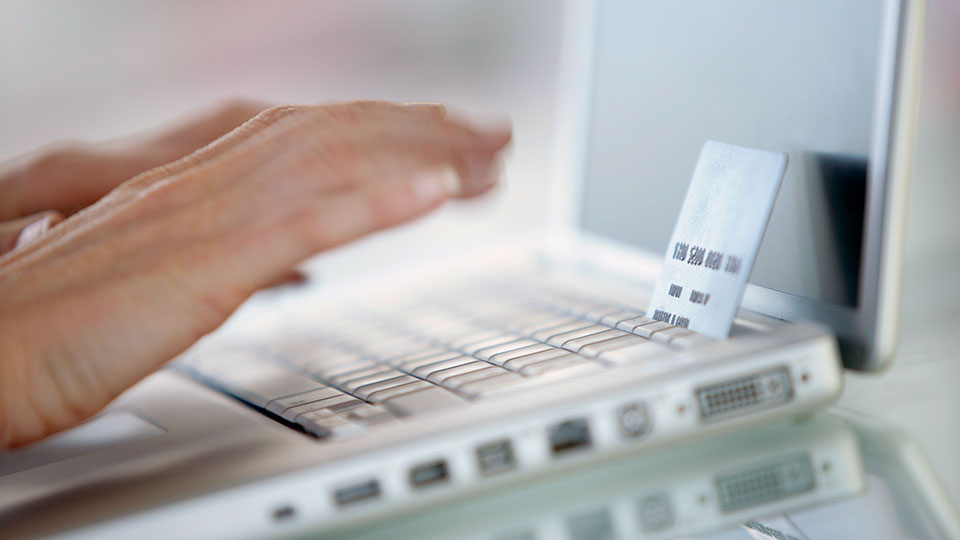
How do you prevent this from happening?
As soon as you realize you won’t be able to pay for your credit card bill, the best option is to negotiate with the bank for a restructuring of your debt.
“This will involve providing the bank with proof that you can repay your debt given the chance to pay it over a longer period and in installments, usually from 12 to 60 months depending on the size and age – number of months past due – of your obligation, your source of repayment like present income, co-maker’s income, properties, other sources, and the internal policies of the debtor bank,” Ilagan said.
Banks are more than willing to negotiate than nurse a bad debt. Make sure you stick to the new arrangements you made with your bank. This means paying your obligations on time.
“Financial discipline and living within your means are the best ways to prevent over indebtedness,” Ilagan noted.
“Never take on debt obligations that your cash flow cannot handle. And always be ready for unexpected emergency situations or life events like sickness, loss of job, death in the family, etc. that could trigger a sudden increase in household expenses that will disrupt your normal cash flow,” he added.
Want to know how to fix a bad credit history? Here are six ways to boost your financial credibility.
=============================================================================
This article first appeared in slightly different form on iMoney.

