

 GMA Brandtalk
 Tracking
 Archives

ADVERTISEMENT
Filtered By: Newstv
NewsTV
Fossilized flowers: A colorful look at Quirino’s export product
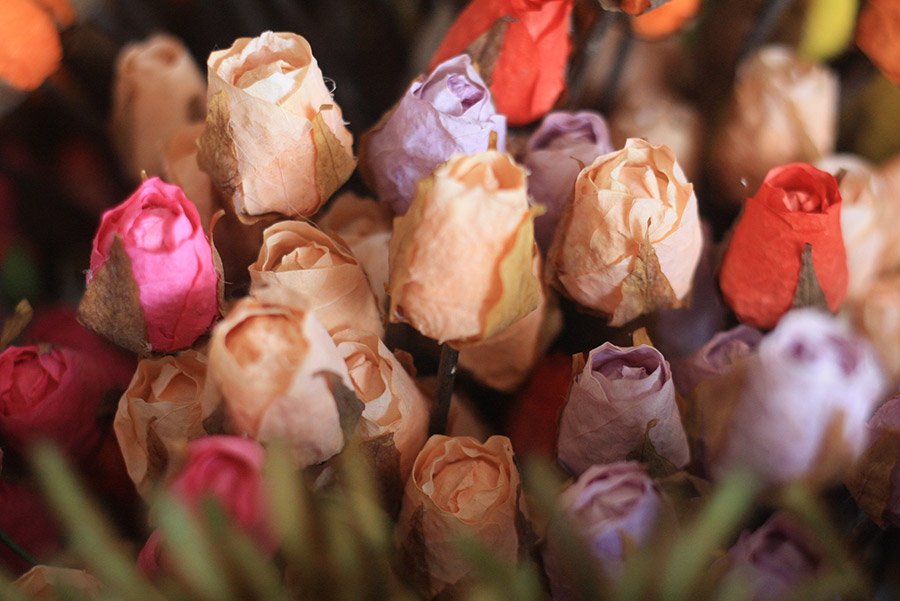
The success of Quirino province’s fossilized flowers is a success story for local artisans, too.
Walking into Lucena’s shop feels surreal. Roses of every size and color line the walls and cover every table in sight – and yet they will never wilt or dry up. Known in Quirino as “fossilized flowers,” these blooms are made of dried leaves, meticulously dried, dyed and arranged to create lifelike bouquets.
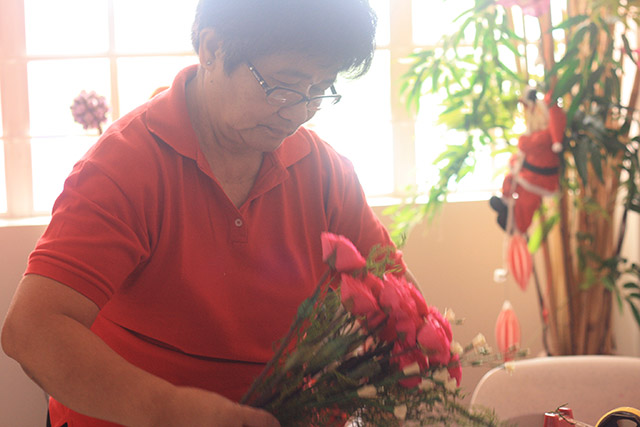 Lucena Aguas did not plan to be a florist. Most of her life was devoted to her family and to her career as a medical technician at the local hospital. But when she retired, Lucena decided she needed a hobby.
After floral arrangement classes and enterprise lessons, Lucena’s hobby grew. She is now exporting her flowers around the world via her shop, Alvin’s Floral Designs and Blooms – one of many artisans who make up Quirino’s thriving fossilized flower industry.
She let the “Biyahe ni Drew” crew inside her shop to see how they work their magic.
From leaves to flowers
Fossilized flowers use fibrous leaves such as guyabano, guava, avocado and alugbati (Basella alba) leaves to form each petal. These are all abundant in Quirino province. Housewives act as suppliers to shops like Alvin’s; a steady flow of leaves come in.
The idea to commercialize fossilized flowers came from Quirino’s local government, as part of the Department of Trade and Industry’s One Town, One Product (OTOP) campaign. Now, the flowers are a main source of income in the municipality of Cabarroguis, which supplies decor shops in Manila and abroad.
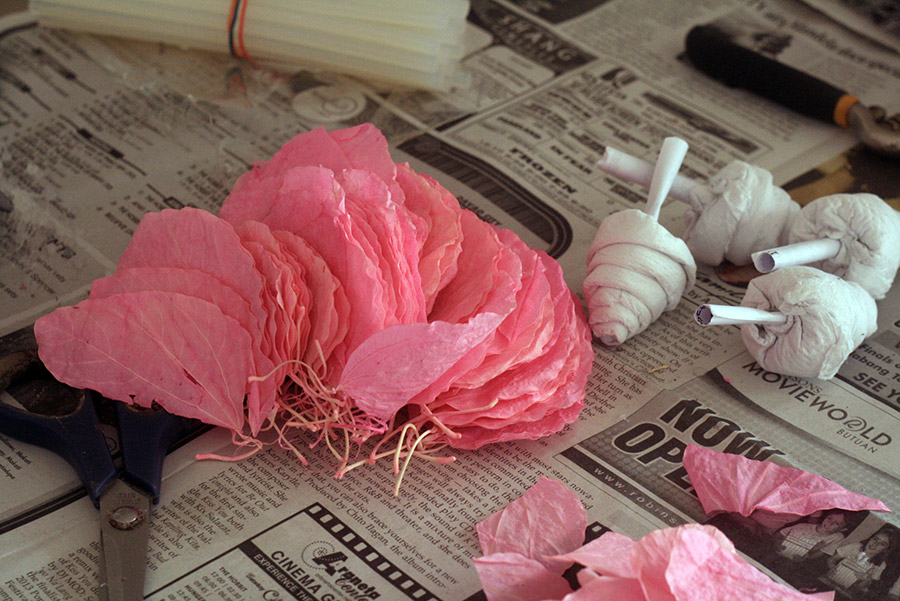
The leaves are dried for up to two weeks, scoured and dyed. Some are dyed a solid color, while others a dyed with several colors to produce a natural, variegated look.
The assembly
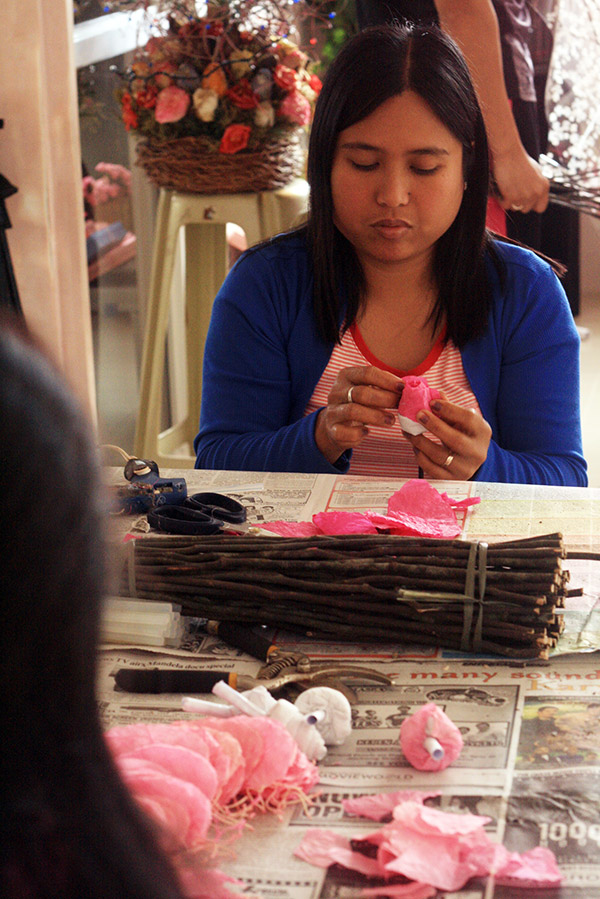 While Lucena started out making flowers all by herself, she now has several employees who take care of assembling the dyed leaves into flowers.
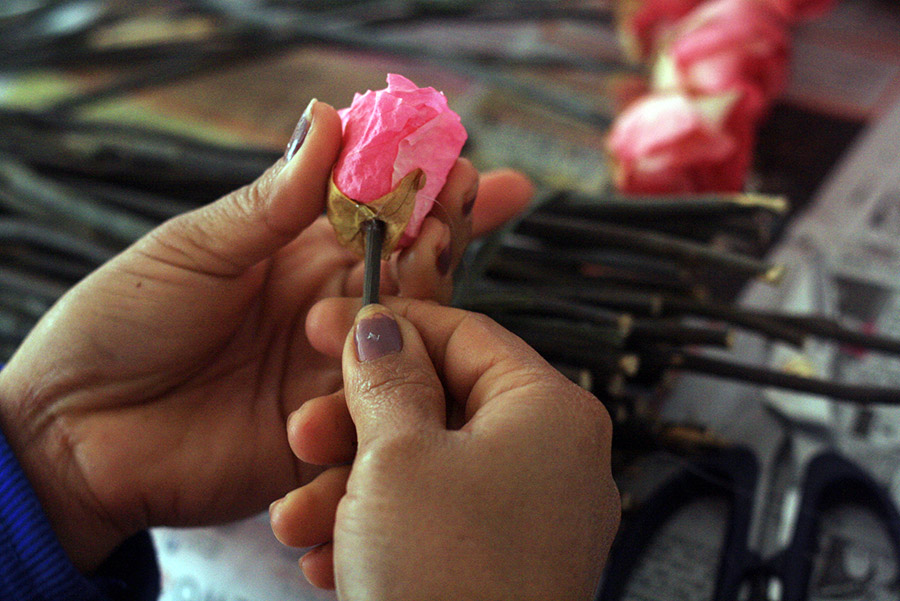
A coil of tissue paper serves as the base for each rosebud. Leaves are attached in layers until a flower is formed. It takes around two minutes to assemble a rosebud; bigger roses that look like they’re blooming take longer. Other flowers like chrysanthemums and baby breath may also be made.
A little hole is left at the bottom of each flower, where the florist can later insert stems or wires. After this, they are packed by twelves in plastic bags.
Final touches
Fossilized flowers are versatile. Lucena has supplied local churches with standing arrangements, and does large bouquets for celebrities in Manila. While we were touring Quirino, we spotted topiaries of the flowers in the Governor’s Cottage!
The most common and affordable arrangements are simple bouquets, and Lucena herself handles this part of the operations.
Of course, the “Biyahe ni Drew” team could not resist ordering a bouquet for themselves, each picking twelve roses in their favorite colors. After Lucena’s assistants attached stems to the blooms, she added fossilized baby breath and dried leaves, chose a cellophane wrapper to match and tied it all up with a fancy ribbon.
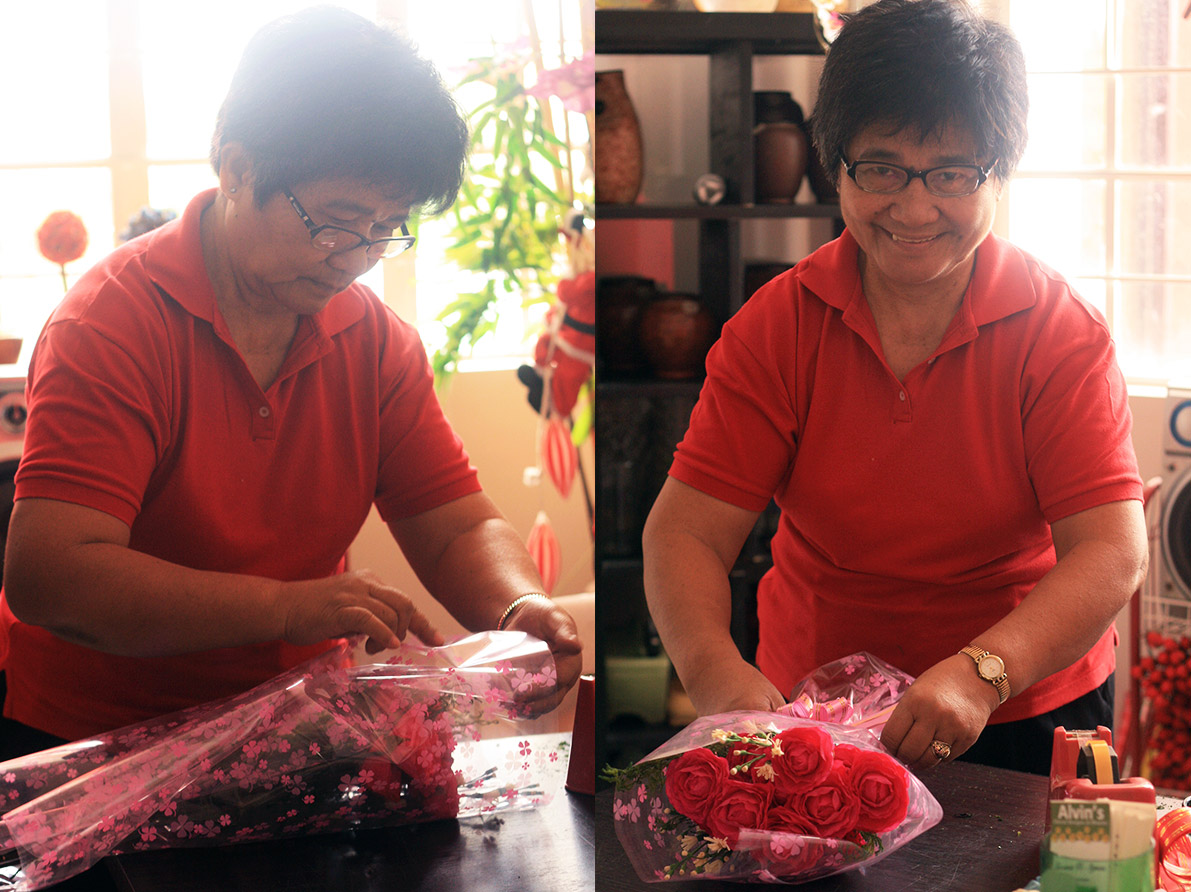
Lucena says it gets tiring when they have to supply large orders, but she doesn’t complain. The way she sees it, she has the chance to pursue an old passion later in life. “Dati pa talaga akong mahilig sa mga bulaklak,” she says. —CM, GMA News

