

 GMA Brandtalk
 Tracking
 Archives

Cherry blossom viewing and an underwater surprise, a day of new discoveries in Okinawa
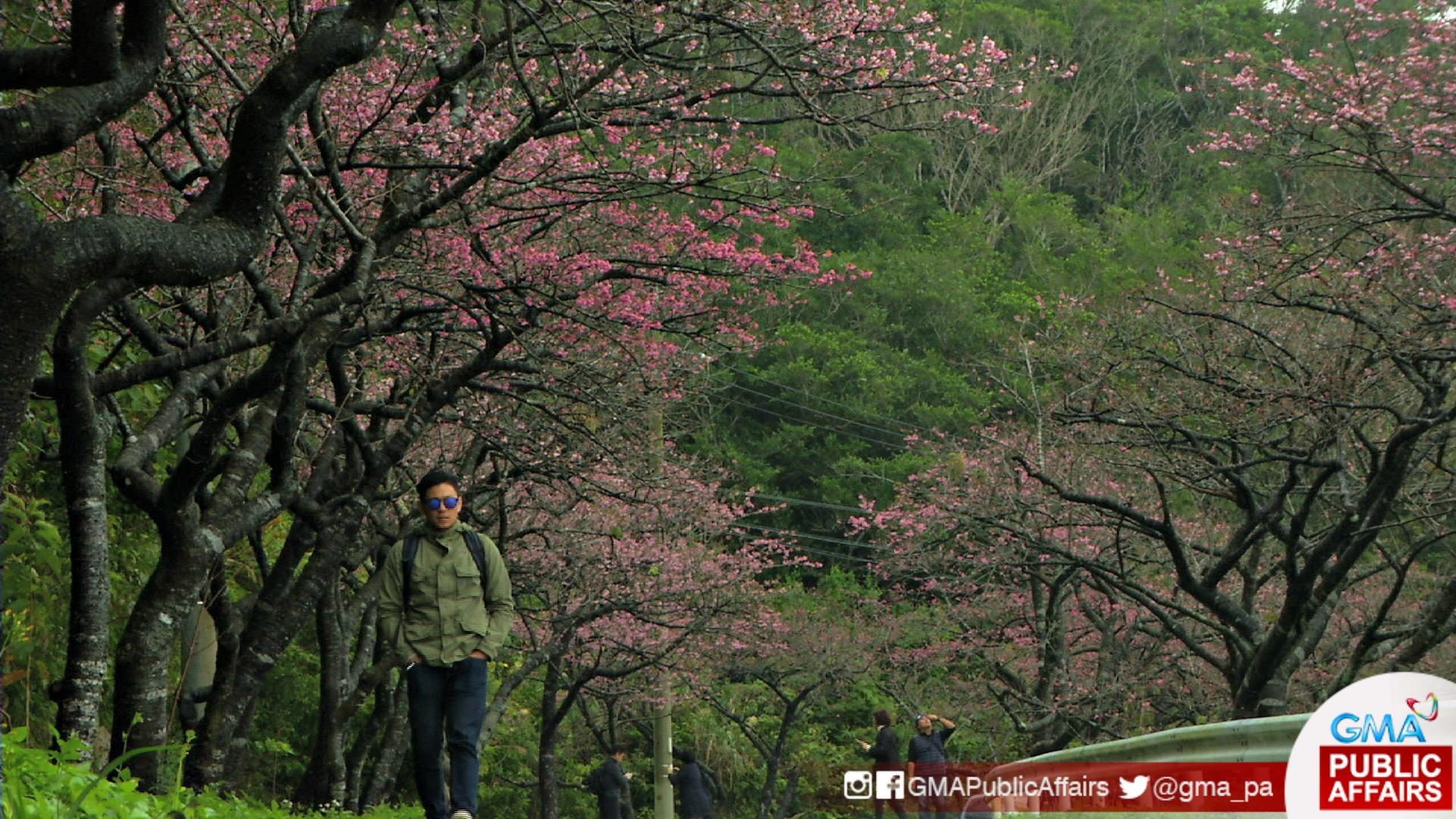
The blooming of cherry blossoms signifies the advent of spring to the Japanese. Around the end of January, Japan’s first cherry blossoms begin to appear in Yanbaru, the northern part of the Okinawa Island.
At this time of the year, these trees will start dropping bell-like petals in various shades of pink, enticing every local and tourist to participate in the island’s annual sakura festivals and traditional Okinawan-style hanami or what Japanese call as “cherry blossom viewing.”
Aside from Okinawa’s sakura festivals that take place across the island for a week or two and the bright pink blanket that moves slowly from south to the northern part of the mountains, there are other reasons why sakura is significant in the Japanese culture.
First, the beautiful petals symbolize a woman’s beauty, blossoming for a small amount of time but will definitely linger in someone else’s memory. Another meaning attached to the cherry blossom is the life of a samurai, who sacrificed his life fighting for their masters and countrymen. Also, Buddhists believe that life is tragically short, so one must live it meaningfully.
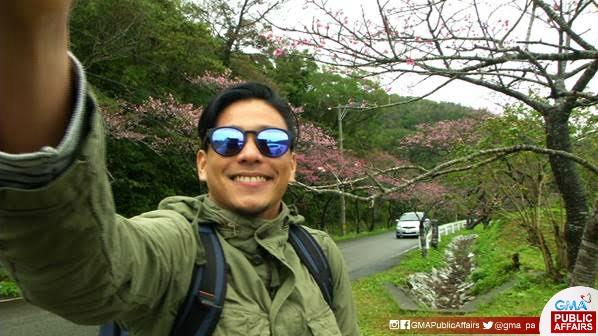
Moreover, Okinawa Island is not just about experiencing sakura in full bloom. In fact, there are other tourists destinations that you and your family may want to try.
Where to go
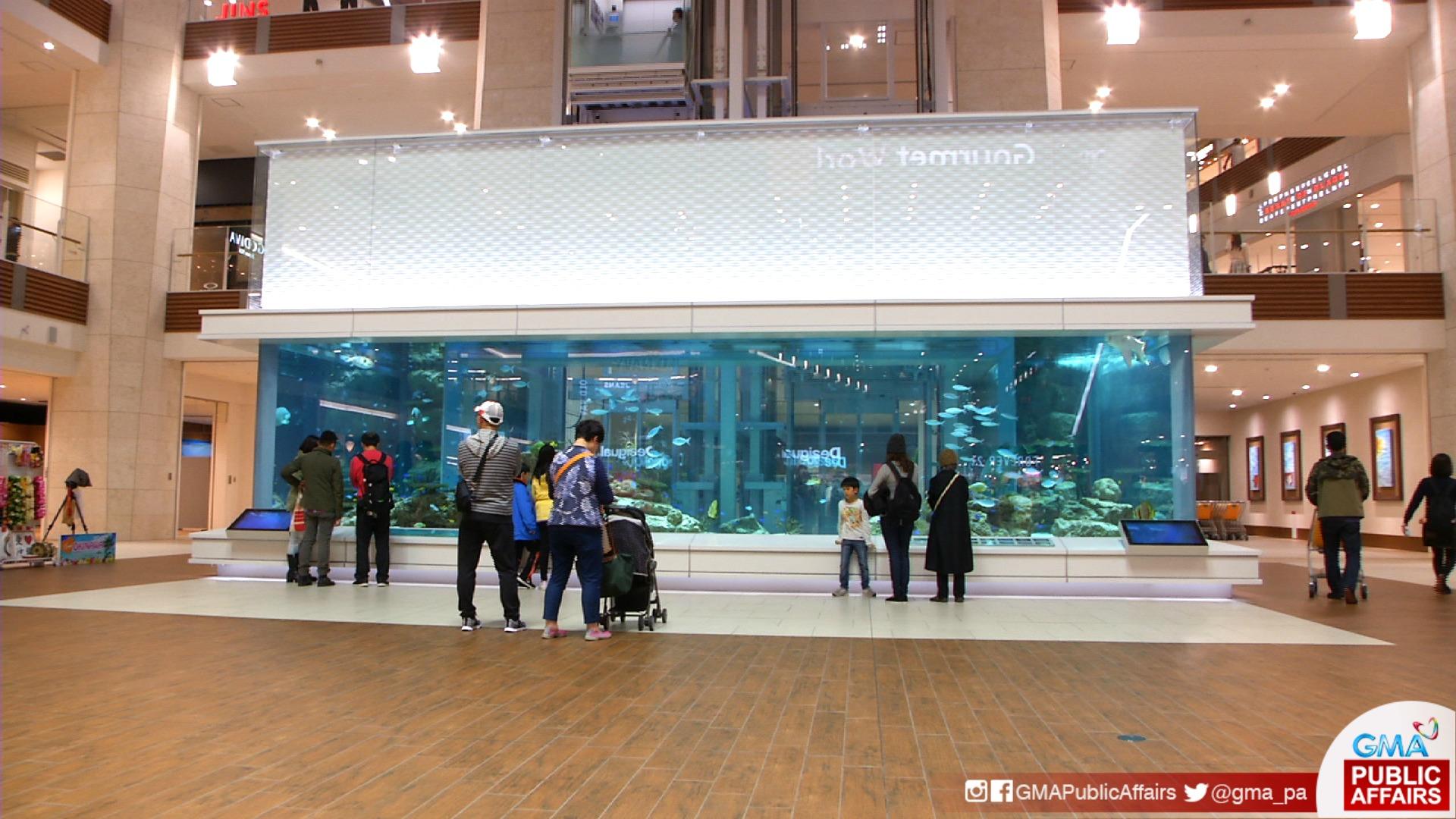
Another must-visit destination in Okinawa is their largest shopping mall -- the Aeon Mall Okinawa Rycom. With a space area of 175,000-square meters, Aeon mall offers extensive shopping, sumptuous cuisines, and entertainment while reflecting the diverse culture of Okinawans.
Also, another amazing thing is that this mall has 219 stores which sell American, Japanese, and European brands. So, if you are tired of online shopping, there are a lot of items that you may choose from a line of these clothing and accessory stores.
After a long day of walk around this mall, it’s time to fill your growling stomach with some delicious Okinawan delicacy! Drew Arellano, together with his crew, tries Kushiya Monogatari, a buffet style restaurant that serves kushiage, a deep-fried dish made with meat, fish, vegetables as well as other ingredients like asparagus, shiitake mushrooms, cherry tomatoes, and bacon slices placed on a thin bamboo skewer.
For ¥2,999 or P1,500, each tourist and local are given only 90 minutes or one and a half hours to prepare, fry, and eat all the kushiage that they want!
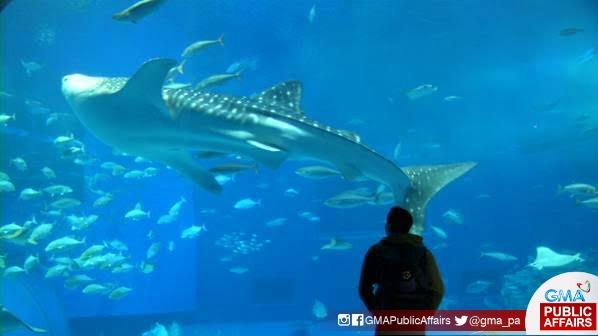
Ever wonder how sea creatures live underwater? Here at Ocean Park Expo, a new attraction called Churaumi Aquarium, was built to give tourists and locals a one-of-a-kind underwater experience -- without going scuba diving!
In August 2002, Okinawa Churaumi Aquarium opened its doors to locals and tourists as one of the world’s largest aquariums inside the Okinawa Commemorative National Government Park located in the northwest area of Okinawa Island.
This gigantic aquarium has 4 floors with themes that recreate Okinawa’s mystery-enshrouded seas. The aquarium which has the theme “Encounter the Okinawan Sea” can be entered from the 3rd floor (Coral Lobby), and heading to the 2nd and 1st floors. Unlike any other typical buildings, visitors need descend from the three floors to get to the 4th floor, where the Deep Sea is located.
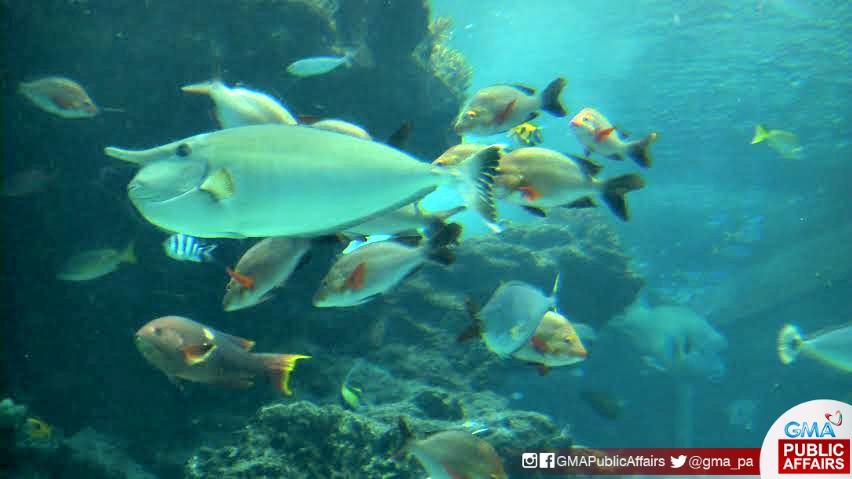
As Drew Arellano journeyed into the deep sea, he also experienced the aquarium’s number 1 highlight which is the Kuroshio Sea -- the largest water tank in Japan. This tank has a boasting depth of 10m, a length of 35m, and a width of 27m. It contains several migratory fish from Kuroshio, including 3 whale sharks and 6 manta rays.
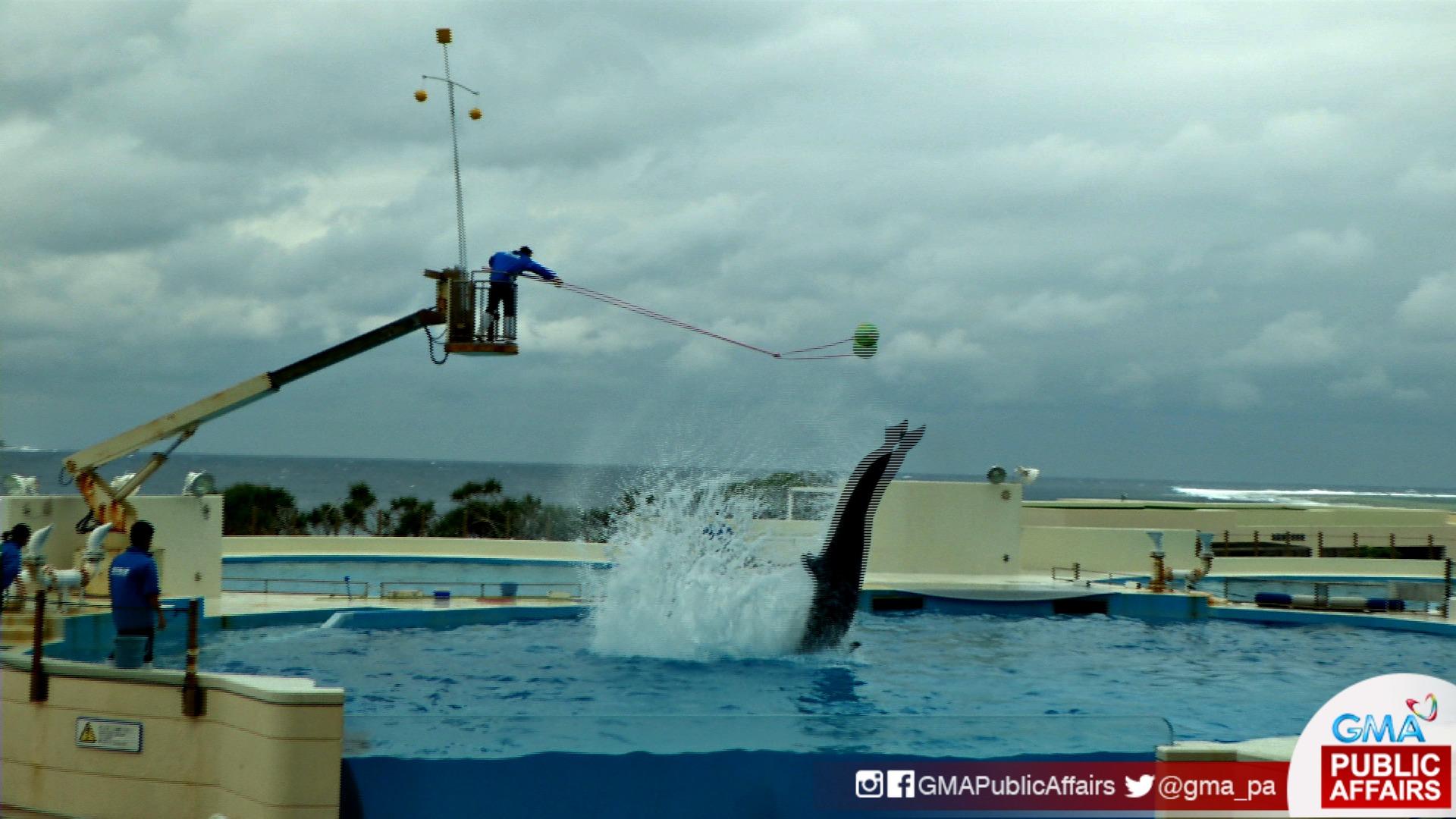
The Okinawa Churaumi Aquarium is not just home to whale sharks, manatees, and manta rays. One of the highlights of your Okinawa Churaumi Aquarium tour is their fun and entertaining dolphin show at the Okichan Theater.
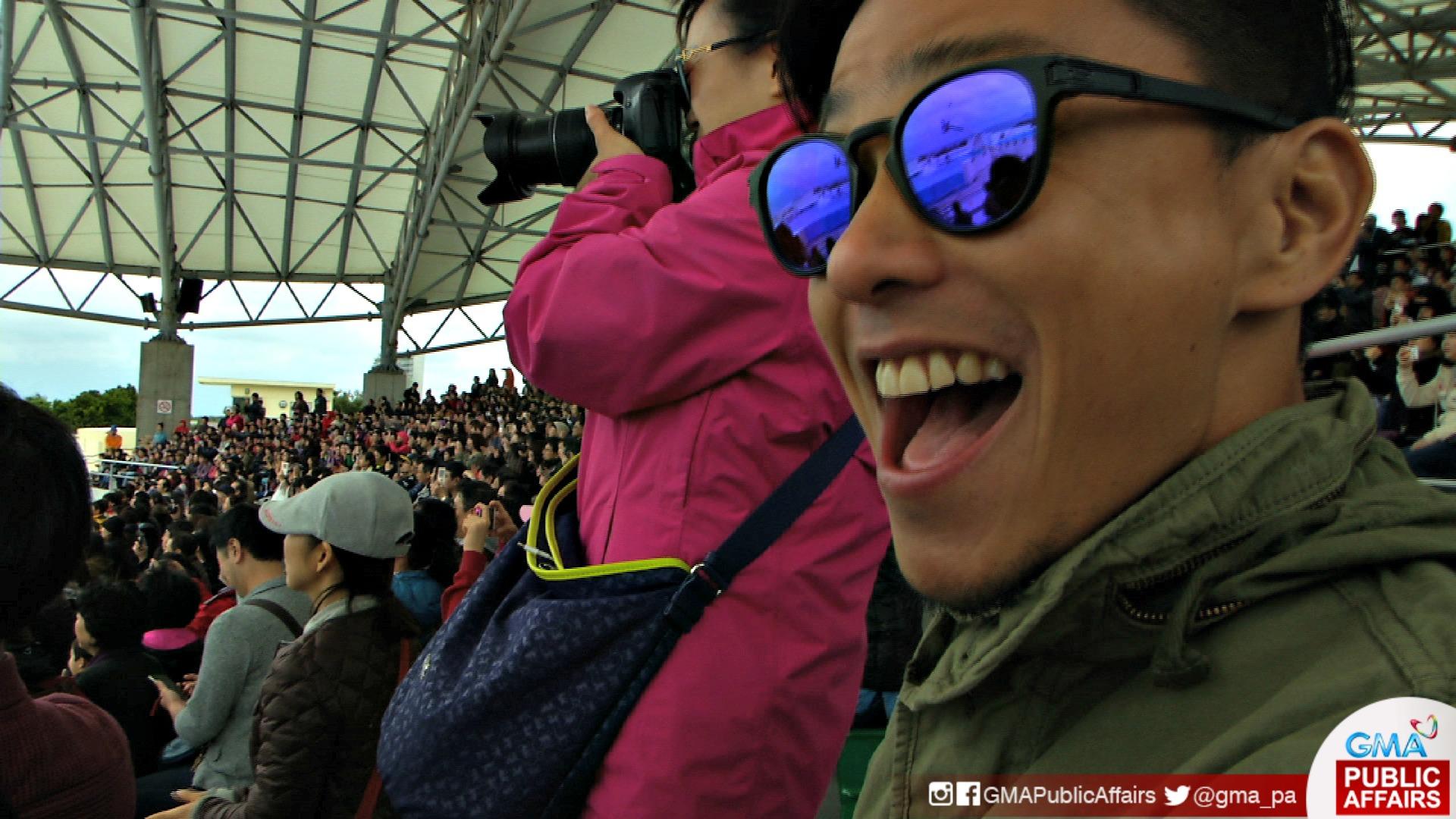
But the Okinawa Churaumi Aquarium is not just about entertainment, the management’s foundation hopes to enlighten everyone about the importance of these sea creatures. According to Hiroko Konno, a member of the foundation, says that “The goal of the aquarium is not only to produce fish and corals so that we can distribute them back to the sea. Sometimes the fishermen inform us of injured fish or marine mammals so we can rescue and cure them.”
Biyahero facts! “Churaumi” was chosen as the name of the aquarium by public vote. “Chura” means “beautiful” or “graceful” in Okinawan dialect, and “umi” means “ocean” in Japanese.
What to eat
The Kokusai Street or International Street is the most popular street in the city of Naha, the capital of Okinawa. It is also called “International Street” for it was named after the Ernie Pyle’s now-closed International Theater which was a popular movie theater for U.S troops during their occupation in Okinawa.
You will find everything here on Kokusai street, from cheap accessories sold by vendors to exquisite and high-end jewelry shops to several individual stalls of local delicacies.
Now, which of these delicacies are perfect for pasalubong? Don’t worry, Biyaheros, because here on Kokusai street, you get to taste all the food before paying for it. Just like their best-seller Okinawa sweet potato that is made from pure ben-imo or purple kamote. This deep purple potato is a little sweeter than a typical sweet potato and is often served as a desert in Japan.
If you are into biscuits, why not try Okinawan’s chinsuko biscuits? This 400-year-old traditional sweet is often sold as pasalubong in Okinawa, Japan. It is a small biscuit made of lard and flour with a mild and sweet flavor that is quite similar to shortbread.
While other people gather around to watch these sakura trees in full bloom or spend most of their time walking leisurely along this spectacular sight, let us not forget to always pay respect to the Japanese’ history, and diverse culture. -- Tyne Villan/BMS, GMA Public Affairs
"Biyahe ni Drew" airs every Friday, 8:00 PM, on GMA News TV. For more information, follow the show on Facebook, Twitter, and Instagram. For updates on your favorite documentaries, follow also the official Facebook page of GMA Public Affairs.

