

 GMA Brandtalk
 Tracking
 Archives

ADVERTISEMENT
Filtered By: Newstv
NewsTV
Brigada Blogs: The hanging coffins of Sarangani
In the mountains of Kiamba in Sarangani province stands a pomelo tree that holds not only fruits but also bodies of the deceased. In Kiamba, it is a T’boli tribe practice to hang the bodies of dead infants and children on trees instead of burying them. The T’bolis believe that children who pass away are angels that should not touch the ground and should not be buried.
The deceased bodies are covered in cloth and damay leaves before they are hung. The herbal damay leaves, found only in Sarangani, are used to cover the smell of the decaying bodies. 
In a report for the GMA News TV program “Brigada,” GMA General Santos correspondent Jen Solis this story uncovered some problems behind the tribe's practice. The local government of Kiamba worries that the practice is unhygenic and can harm the health of the tribe members. Add to that the growing alarm over the increasing stats of infant mortality in the area, which they say could go down if the mothers had access to proper medical treatment instead of resorting to traditional "hilots."
Jen Solis shares her thoughts on her Brigada report. 
Q: How did you feel when you found out that you were going to do a story about “hanging coffins” in Sarangani?
A: It was quite exciting even if I couldn’t imagine how the “hanging coffins” would possibly look like. Going to the exact place where we were going to shoot the story was not easy, but my courage and the challenge to do this story eventually won out. When I saw the tree, it felt a little weird as I have this fear of dead people. I was also conscious about the smell around the burial area, but it wasn’t gory at all. The only place where I saw a skull was inside the T’boli hut burial, which was near the tree.
What do you think about the T'boli tribe’s loyalty to this tradition despite the local government’s concerns?
The traditions and culture of every tribe has to be respected despite the changing of the times. When I went to their community, I saw that they were happy and content with the way live as a community. 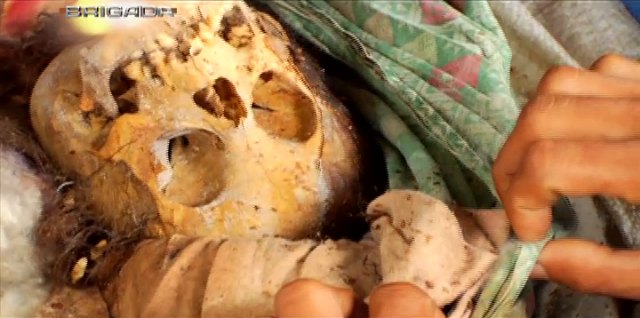
What do you think of the government's response to the high mortality rate of infants among the T'bolis in Kiamba? Do you think their response is enough?
The local government of Kiamba is responding well. They have been selecting members of the tribe whom they train to work as midwives. The local government also provides scholarships for the members of the tribe to be able to study midwifery and return to their community after graduation.
Yes, the infant and mother mortality rate in Kiamba today has lessened. The tribe also shared that they are being educated through a series of information campaigns given by the local government units of Kiamba regarding the need to give birth in health centers instead of through the help of the traditional “hilot”.
What other angles of the story would you like to pursue?
Perhaps I could do a story on the community as a whole. When we arrived there, they presented a T’boli welcoming ritual. I joined in and tried on the T’boli costume. It made me feel one with them, and I understood what they wanted to impart to us. I also met the artist Ronald Tamfalan who uses T’nalak cloth as a medium in his work.
What did you learn from doing this story?
Doing this story touched me a lot because I saw in the T’bolis how to be happy despite what we don’t have, to be content and grateful for what we receive everyday. As a journalist, this story taught me how to be content, and I realized that I have so much to be thankful for. — Angelita Bombarda/CM, GMA News
Watch "Brigada" every Monday at 8 PM on GMA News TV Channel 11.

