

 GMA Brandtalk
 Tracking
 Archives

Brigada Blogs: Cesar Apolinario on preserving Filipino film heritage
Six decades after Filipino director Manuel Conde’s masterpiece “Genghis Khan” first wowed the world in 1950, the film has finally come home to the Philippines. The epic film was about the young Mongol prince Temujin, played by Conde himself, who had to face competing tribes in the fight for land. It took almost a year for the original reels discovered in Italy, France and the UK to be restored. Last Sept. 29, Pres. Benigno S. Aquino III himself received the film for its Philippine premiere. Multi-awarded filmmaker and GMA News reporter Cesar Apolinario recently did a story on the homecoming of “Genghis Khan” for the GMA News TV news feature program “Brigada.” GMA News Online spoke with Cesar about the Conde masterpiece, how his passion for film has influenced his reporting, and the need to preserve classic Filipino films.
 Apolinario won the Best Director award at the 2007 Metro Manila Film Festival for his film entitled “Banal.” He won another Best Director award for his film “Puntod” at the 2010 PMPC Star Awards.
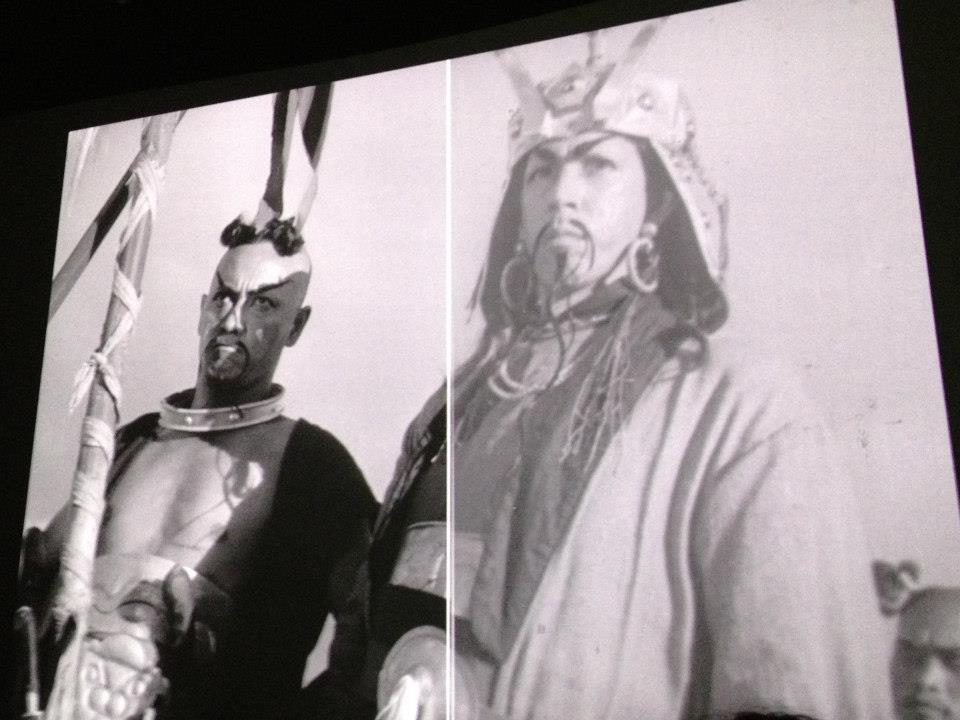 The digital restoration work undertaken by Italian experts has made Manuel Conde's "Genghis Khan" look almost new, as seen in this side-by-side comparison of restored and unrestored images.
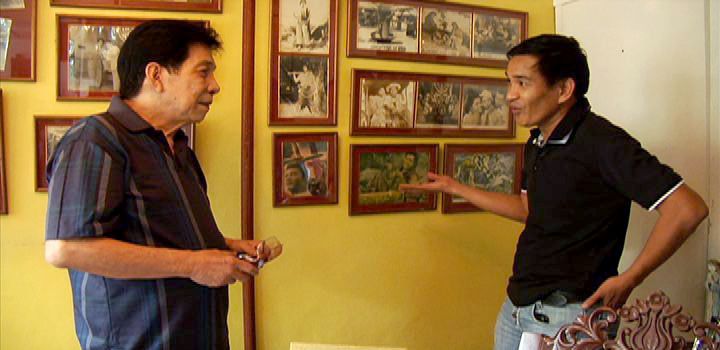 Cesar Apolinario interviews Manuel Conde's son, actor Jun Urbano, for "Brigada." Conversely, how does your work as a news reporter influence your vision and method as a director? I learned that even when you’re doing film, which is fiction, it has to be close to reality and our culture. Hindi bobo ang viewers. Do you think there's a conflict between writing fiction and reporting? I don’t think there’s a conflict. It’s not difficult for me to switch between writing fiction [as a filmmaker] and reporting. My being a filmmaker helps me as a reporter and vice versa. It doesn’t affect my credibility as a reporter that I am a filmmaker. My being a filmmaker helps me as a journalist in many ways, too: doing a story, and being in front of the camera. The film director's role is to lead the team. Like the captain of the ship, he decides on the team's planning and execution. And as far as I am concerned, that's the best job in this world one can ever have. As a director, what are your thoughts on the decaying state of some of our original old film reels? Nakapanlulumo. In doing my story for “Brigada”, I visited Escolta, which used to be a film hub. Naghanap ako ng mga lumang film reel at nalaman ko na iyung iba palang mga film, ginagamit na sa paggawa ng torotot. ‘Di ko lubos maisip na ganoon na ang kalagayan ng mga luma nating pelikula. In search of forgotten films, I felt that the film industry already died. Naramdaman ko na kinakausap ako ng mga gumawa ng mga lumang pelikula na ngayon ay ginagamit na sa paggawa ng torotot, “May magagawa pa ba?” “Bakit pinabayaan iyong mga lumang pelikula?” In what ways can directors like yourself promote to the younger generation interest in classic Filipino movies? Well, I also take advantage of my being a reporter. I tweet about films and because of that, I am able to reach thousands of netizens. I’ve realized that especially when you’re both a filmmaker and a journalist, people listen when you have something to say about films. That’s how I promote classic films to the younger generation and there are a lot of these young people online. Famous directors like Jose Javier Reyes and Brillante Mendoza also promote Filipino classics by writing about them and starting conversations about them. It’s important to uphold our old films because they tell us who we are. It’s our culture and our identity. —Angel Bombarda/PF, GMA News 1The 2009 National Artist award became controversial when four individuals were named as awardees upon the approval of then Pres. Gloria Macapagal-Arroyo even if they were not in the list submitted by the selection committee, comprised of representatives from the National Commission for Culture and the Arts and the Cultural Center of the Philippines. Manuel Conde was named National Artist for Film, and was included in the list approved by the selection committee, but he and the other awardees were not conferred because of a TRO issued by the Supreme Court due to the controversy.
