

 GMA Brandtalk
 Tracking
 Archives

ADVERTISEMENT
Filtered By: Newstv
NewsTV
PUBLIC AFFAIRS WEBEXCLUSIVE
Five millennials seek to change the world through their passions
You go through the internet and you would probably see memes and blog posts that say, “Kids these days.” No matter what that means, it sure isn’t purely negative.
We got to meet five millennials who all pursued their passion and showed the world that there are young people who are making the world better than how they found it. May it be through building a Sunday school for underprivileged children or disrupting the filmmaking scene, these Generation Y-ers attempt to make a difference.
The girl who set up a school in her house to teach poor kids

(Photo courtesy of: Gladis Morales)
Building a Sunday school for poor children sounds like the humanitarian dream for many. But for Gladis Morales, 21, this was just exactly the action that she immediately took upon having conversations with kids from a poor community in Porac, Pampanga, where she grew up.
Founding a community school wasn’t exactly a breezy walk. To start with, you need financial and human capital resources. Gladis, then a high-school student upon the founding of her Sunday school, initially had none of these.
But was she scared? Not at all. She knew exactly what she wanted to do.
The first days of her Sunday school were held under a tamarind tree. Later on, the classes were moved to the community chapel, and then to her own house. Gladis was very persistent of having a school where the community children could learn at least fundamental writing, reading, arithmetic, and values formation.
This should be true; her passion in helping the young kids in her hometown didn’t stop with the Sunday school. Even though she’s now studying in Manila for college, she still managed to set up a school-supply store in the community to bring these materials closer to the students. Back then, the children had to walk three kilometers away from their community just to buy school supplies.
Given her hectic academic demands in her university, where she’s now on her fifth year taking up BS Accountancy, Gladis should have a very limited spare time for her community projects. But at the end of the day, she still manages to do everything in place.
When asked what drives her, “Volunteering or any community work is personal. You see yourself working for it because it’s what you love and enjoy doing for a long-term basis,” she says.
The guy who started with filmmaking at the age of 14
The guy who started with filmmaking at the age of 14

(Photo courtesy of: Mikhail Red)
Fourteen is never a young age to start creating films. In fact, Mikhail Red produced his first short film at this age. When he turned 15, he found himself on his way to Germany where one of his films would be screened in an international film festival. Since then, he was on a roll.
Mikhail doesn’t snub the fact that filmmaking today has become more democratized, more accessible, and more affordable. While that’s well and good, he sees it as a reason to have a stronger voice as an auteur to stand out in the field of up-and-coming movie makers.
“My personal approach is to push the medium through new boundaries, creating strong story premises where imagination takes precedence while conveying a movie’s message through a more classical method: visual language,” says the 23-year-old filmmaker.
This isn’t easy, most especially if you’re in a country like the Philippines where the market is used to stories that are rooted in reality. Mikhail admits that it’s something that he couldn’t just ignore.
If you’re a typical filmmaker, you would probably just join the bandwagon. But if you’re like Mikhail, who does things his own way, you wouldn’t follow others’ footsteps. Rather, you would dig your own path by finding your own niche, sticking to it, and hoping that it helps cinema’s taste. He uses his zeal for the craft to disrupt the filmmaking scene.
Mikhail says, “What I would like to see for a change are plots that are imaginative and creative, with strong emphasis on telling stories through visual language… rather than an abundance of dialogue.”
This is exactly what he did in “Rekorder,” his first feature film, where he used several filmmaking formats such as outdated distorted video, webcams, CCTVs, and modern 2K technology. For Mikhail, it was the best way to convey the story and message of the film, which is about “the evolution and bastardization of cinema.”
Mikhail’s style and advocacy in filmmaking must be working. As a matter of fact, “Rekorder” has already made it to more than 10 international film fests and won five international awards, including the Best New Director award at the 2014 Vancouver International Film Festival.
“After years of making shorts, I had to learn things the hard way,” he says. “But it all paid off in the end.”
The guy who aims to feed the world
The guy who aims to feed the world

(Photo courtesy of: Gerald Marin)
Filipino scholar Gerald Marin, 24, knew all along that there should be a solution to world hunger. For him, it isn’t an unsolvable phenomenon.
So Gerald formed a team of five--all are master’s students in food innovation and product design in Europe--and produced their very own passion project: FoPo Food Powder, a startup that sourecs overripe fruits from groceries and transforms them into food powder, stretching the food’s shelf life from two weeks to two years, or even more.
Freeze-drying saves a fruit from spoilage as it reduces its microbial growth, given that bacteria thrive in wet substances. So there’s a promising potential in maximizing this technology, he says, as food wastage is an issue not just in the Philippines but around the world.
Gerald’s team is not easily daunted. He tips that one of the brave steps you need to do as a game-changer is to “explore options and be open to new ways of doing your business.” So now, even though they’ve already managed to make food powder made out of overripe fruits, already a feat in itself, they’re still continuing with their research as they want to eventually come up with food powder made out of vegetables and meat.
They’re now in negotiations with some non-government organizations and local government units as they plan on having their product included in disaster relief operations--which makes sense, given that the Philippines is in a disaster-prone part of the region.
It’s pretty obvious by now that Gerald and his team are very ambitious with their brainchild. “We’re not allowing another person to go hungry again,” he says, whose team uses their knowledge, experience, and passion in food technology in their quest to make the world free from hungry people.
“Work hard and work smart,” Gerald tips. And just as how his team doesn’t want another food to rot, he adds, “Don’t let your billion-dollar idea go to waste.”
In the case of Gerald and his partners, obviously, they didn’t.
The girl who turns her passion into profit
The girl who turns her passion into profit
(Photo courtesy of: Apple Alegro)
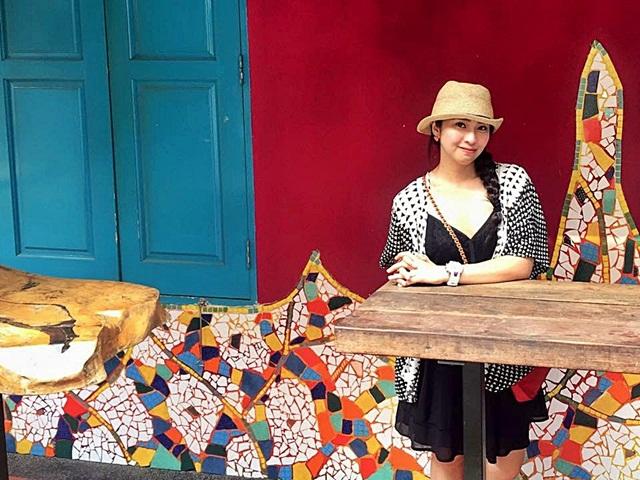
Passion is what pushed young entrepreneur Apple Alegro, 31, to leave her corporate job and start a business: Uke Box Caffe, the country’s first ukulele-themed coffee shop.
Apple and her partners Michelle See and Celina Baraoidan are all passionate about coffee--that’s what brought them together in the first place. In fact, before they cut the ribbons of Uke Box Caffe, they traveled to the mountains of Benguet and flew all the way to towns like Vienna, Austria and Budapest, Hungary to learn more about artisanal coffee.
The ukulele factored in because of Apple’s love of the instrument. She grew up playing and collecting ukuleles, so she knew that she would want to take her love for it to the next level.
So Uke Box Caffe is not just any artsy coffee shop in the metro; it also intensively promotes the instrument. Actually, aside from the usual coffee-shop operations, they’re also lending and selling ukuleles that are crafted by the local creative craftsmen of OB of Pampanga, known for their well-crafted and genuine ukuleles. The cafe also provides ukulele workshops and holds open-mic sessions on Friday and Saturday nights for those who want to sing and play the ukulele.
“While watching a performance is enjoyable, participating in that art form is life-enriching,” Apple believes.
She shares that founding a brick-and-mortar business really pushed them to their limits. For one, they lacked the experience in hands-on business management when they entered the start-up arena.
“When I was still working as a general manager in a BPO [company], we work or not, we get paid,” says Apple. “[In managing your own business], if you don’t work, the lower chances of getting your investment back.” But she’s quick to add that if you’re really passionate about your craft, nothing can take you down.
How do the girls make sure that Uke Box Caffe won’t fade out amid the growing artisanal coffee-shop industry in the country? They built their own community through the things they’re most zealous about: coffee and music.
Apple tips that budding entrepreneurs need to bank on their passion for them to last in the business scene. “We have strengths we need to use and weaknesses we need to improve.” And that, she adds, take a lot of hard work, too.
The guy who helps a Dumagat tribe to have an eco-sustainable community
(Photo courtesy of: Michael Miatari)
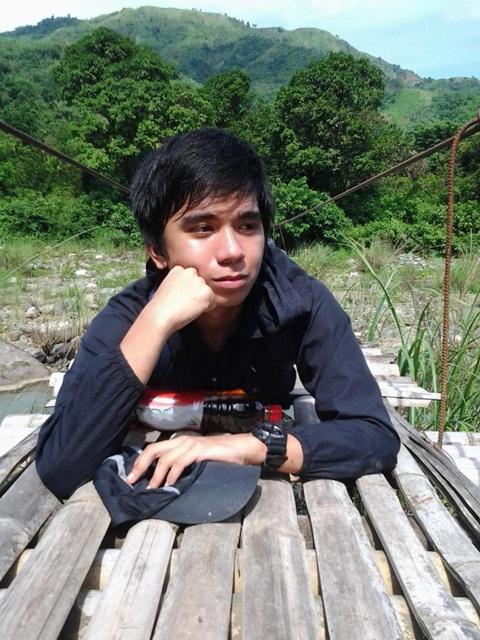
Sitio Malasya is a Dumagat community situated at the boundary of Antipolo and Rodriguez, Rizal. To get there, you need to cross two rivers and four mountains by walking for four hours. The area does not attract much tourists so only few people would actually visit it.
One of them is Michael Miatari, a 22 year-old community volunteer. At least once a month, Michael and his team would go to Sitio Malasya to educate the tribesmen about new ways to have an eco-sustainable community, noting that the sitio’s residents were prone to lung diseases due to their unsafe practice of charcoal production, which involves illegal logging and burning of trees.
The path to Sitio Malasya is rocky. It has no smooth pavement nor any other strong infrastructure that would ensure safe journey for those who traverse it. Michael knows this risk but still continues to help.
He knows only too well that being a volunteer comes with its trials. One of the biggest challenges that he encountered on his journey is his loss of part of his hearing, or Cholesteatoma. This caused him to take a pause from his projects as he had to go out of the country for surgeries.
But fortunately, this didn’t stop Michael from pursuing his projects.
“I may become deaf but it doesn’t mean that I’d also become deaf to the needs of my country,” he says. “This incident further strengthened my passion for inclusivity.”
As in his case, despite his hearing condition, he helped Sitio Malasya through his and his fellow volunteers’ very limited means.
Sitio Malasya doesn’t have access to electricity, clean water systems, and adequate medical and educational facilities. So Michael and his battalion of volunteers founded Luntiang Alab, a project where volunteers immersed themselves in Sitio Malasya to educate the tribesmen about recycling and effects of illegal logging, among others.
This is, of course, to stop the Dumagats from their then-practice of kaingin, or the illegal charcoal production and logging in the area that brings risks to the environment’s health and, later on, to the community’s.
Michael also spearheaded Edukahon, an initiative that aims to provide Dumagat children access to alternative forms of education to develop their specific learning areas. Education is obviously one of Michael’s primary advocacies; aside from his projects, he’s currently working as a technical assistant at the Department of Education and is also pursuing his master’s in education, major in special education.
Today, the Dumagat community in Sitio Malasya already has a modest source of light through the solar panels that Michael’s team got to install in their area.
“It’s a duty of every Filipino to help in the journey of their fellow Filipinos,” Michael points out. “If we want to see and experience change for our generations and the next generations, we have to be that change.”--BMS, GMA Public Affairs

