

 GMA Brandtalk
 Tracking
 Archives

iJuander: Popular Pinoy Holy Week traditions
The Philippines is predominantly a Roman Catholic nation, tracing its religious roots back to the 1500s when Spain first introduced Christianity to the country. Roughly 80 percent of the population are Roman Catholic, according to latest data by the National Statistical Coordination Board.
For Filipino Catholics, Holy Week or “Semana Santa” is one of the most important religious festivities of the year. The lenten season actually starts on Ash Wednesday, when people get ash in the form a cross on their foreheads. It culminates on Good Friday, which commemorates the crucifixion and death of Jesus Christ. And it ends on Easter Sunday to celebrate the risen Lord.
There are different traditions observed during Holy Week, and while some of the younger folks may not be as familiar with it anymore, many still devoutly practice these traditions. Thinking of doing some of the rituals this year? Here are some of the most popular Pinoy Holy Week traditions.
Palm Sunday

Today, Filipinos bring palm fronds or palaspas to the Church for blessing. Either before or after the mass, churchgoers wave the palaspas in the air for the priest to bless. After the mass, the palm branches are hung on doors and windows and are believed to ward off evil.
Fasting and abstinence
For the more devout Catholics, fasting is a ritual that requires reducing normal food intake to usually one meal a day. More commonly, others avoid eating meat, especially on Ash Wednesday, Good Friday, and Fridays within the Lenten season.
Nowadays, some Filipinos observe their own personal way of fasting by choosing one habit that they are willing to give up, as a symbol of sacrifice for Lent. Some decide to give up smoking, while others give up on certain kinds of food.
Pabasa
The traditional pabasa involves chanting or singing the words from the Pasyon, a narrative book of the life, passion, death and resurrection of Christ.

Today, some even throw in melodies of popular songs alternating with the chanting! Older practitioners of the Pasyon who have tried doing this in recent years said they do so to make the pabasa more lively and appealing to the youth.
Thinking of joining a pabasa this Holy Week? Quiapo Church in Manila is holding a traditional pabasa on Holy Week until Wednesday, April 16, at 3 p.m. Saint Jude Church in Manila will also be holding pabasa on Holy Wednesday at 3 p.m.
Washing of the feet
Historically, a host may provide water for travelers to wash their feet before entering the house. The act of washing of others’ feet was considered lowly, done by slaves to guests of a home.
During the Last Supper, Jesus washed the feet of his apostles, as a sign of humility and being of service to others — a recurring message throughout Holy Week.
This act is commemorated during the Holy Thursday mass, when priests wash the feet of 12 churchgoers representing the 12 apostles.
Visita Iglesia
Catholics have a tradition of visiting a number of churches - usually seven - on Holy Thursday or Good Friday. This church visitation is called the Visita Iglesia.
 During the Visita Iglesia, churchgoers either recite the Stations of the Cross or pray silently on their own. Others even visit as many as 14 churches to symbolize the 14 stations.
If you’re in the Manila area, be sure to stop by some of these famous churches: Malate Church in Malate, Sta. Ana Church in Pedro Gil Street, Binondo Church in Binondo, San Beda Church in Mendiola, San Sebastian Church in Quiapo, the newly-reopened Manila Cathedral and the historical San Agustin Church, both in Intramuros.
Can’t leave home to do Visita Iglesia? Not to worry! The Catholic Bishops’ Conference of the Philippines has a Semana Santa website that features churches, as well as messages from Pope Francis and other Church leaders.
Stations of the cross
The Stations of the Cross is the scene-by-scene reenactment of the events leading up to Christ’s crucifixion and resurrection. It begins with Jesus being condemned to His death and ends when He is laid in the tomb.

This is done with literally 14 stations found within a church or compound, each depicting a particular scene, where the faithful stop at each to pray and meditate.
Those who participate in Visita Iglesia opt to stop at two stations per church, to maximize their visit to seven churches.
Here are some unique sites for Stations of the Cross: Visit the “Walkway”, which features interactive stations at Fort Bonifacio; or see the Our Lady of Lourdes Grotto in San Juan, Bulacan, and the Calvary Hill in Tacloban, Leyte – both featuring life-size statues of the stations.
Senakulo
These colorful plays unfold in installments throughout Holy Week, beginning on Palm Sunday. These plays are performed in different places – on the streets, even in theatrical stages – and draw throngs of tourists to watch.
In San Fernando, Pampanga and in other provinces in the country, performers take the senakulo to a whole other level – an act of repentance for their sins called “penitensiya.”
Some, dressed in costumes, are crucified in public. Others walk the streets under the scorching sun and lash themselves on the back, to the point of bleeding.
The senakulo culminates with a reenactment of the resurrection of Jesus on Easter Sunday.
Salubong
Salubong is a ritual that dramatizes the first meeting of Christ and Mary after His resurrection, and takes place at dawn on Easter Sunday. It is famously celebrated in provinces like Cebu, Camarines Sur and Pampanga.
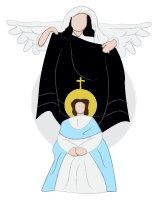
It begins with two processions, where statues of Christ and Mary are carried from opposite ends of the community. The statue of Mary is covered in a black veil of mourning called lambong.
Eventually, they will meet at midpoint, during which an angel (typically played by a young girl from the community) will lift the veil, ending Mary’s mourning and Holy Week celebrations. — Aimee Dacanay/CM, GMA News

