The Poles are warming up twice as fast as the rest of the earth. If this continues, it won’t just affect the people and wildlife that live there – it will affect the planet as a whole. On January 5, GMA News TV presents Frozen Planet’s special episode “On Thin Ice” that looks at the rapid warming of the polar regions, and considers what this might mean for the future of the planet. Overwhelming evidence collected during the filming of the BBC’s blockbuster series Frozen Planet shows the speed with which climatic changes are occurring. The movement of the glaciers in Greenland is a prime example of this. The Greenland glaciers are the world’s second largest ice sheet. Using extraordinary timelapse photography, On Thin Ice is able to show how they are moving towards the sea – at an astonishing rate of 120 feet a day, almost fast enough to view with the naked eye.
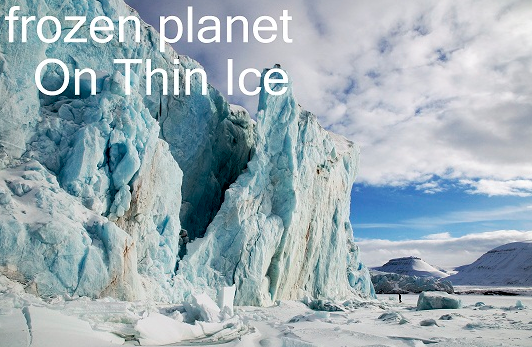
From pioneering camera techniques, to satellite imagery and scientific experimentation and prediction, On Thin Ice looks to the future of not just the landscape of the poles, but also of those that live within them. The polar bear is reliant on the sea ice, and without it, their future is seriously threatened, with some experts predicting that the species will not last to the end of this century. However, no one has to adapt faster to the changing nature of the Arctic than the indigenous people that live there. The hunters face daily dangers attempting to hunt prey on ice that is too thin, buildings can topple due to melting permafrost and coastal villages could be washed away as the absence of sea ice exposes them to the full fury of the winter storms. With access to the poles’ most extraordinary locations and featuring interviews with leading scientists, Frozen Planet’s “On Thin Ice” looks for definitive answers to some of the most pressing questions mankind has ever faced. Dubbed in Filipino, this special airs on January 5, 2013, Saturday at 10PM only on GMA News TV Channel 11.


 GMA Brandtalk
 Tracking
 Archives


