

 GMA Brandtalk
 Tracking
 Archives

Stephon Marbury: Playing basketball in China has rejuvenated my life
Former NBA All Star Stephon Marbury is now a long way from home. These days, you can find him in China, playing for the Beijing Ducks of the Chinese Basketball Association. His transfer was a bold move that surprised the world. Many said that he moved to a lower-profile league because he couldn’t cut it in the NBA. Others saw it as an exile because of the controversies that he was involved in when he was still in the NBA, most notably his feuds with his coaches in the New York Knicks. However, “Starbury” sees it differently. He says his move to China not only invigorated his basketball game, but changed his life for the better.
During a recent visit to the Philippines, “Sports Pilipinas” host Chino Trinidad got to chat with the former 4th overall pick of the 1996 NBA Draft about his decision to play for the Chinese Basketball Association. They also talked about how he has dealt with detractors, and how he’s found newfound passion for the game.
Read the full interview below.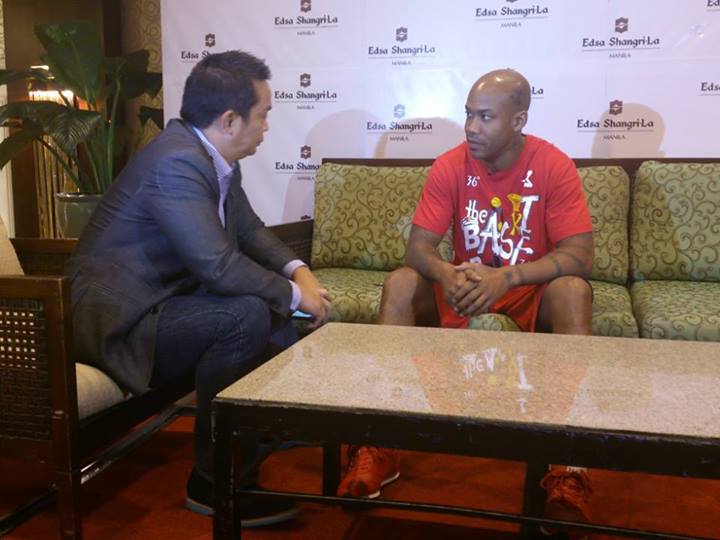
On the varied reactions to his move to China
Chino Trinidad (CT): Your journey such that, if you look at it on the other side, you might say, “This is a guy who has all the talent in the world. Why do you see (him) spending time in China?” But I tried to listen in and read your story. It’s a story of triumph.
Stephon Marbury (SM): Exactly. That's exactly what it is. For me it’s been exactly what you said when we first met. It's been a blessing having opportunities to go someplace else, and play basketball, and learn something totally different from life. Learn, learn, new coach. It’s been a real triumph experience.
CT: You know, when you first went to China, people said he was like being sent to exile. But then all of a sudden, you come out and you become this new man and just enjoy the life that ... You found your peace.
SM: Exactly. You know, a lot of people said a lot of different things when I left to go to play (in) China. People didn't know why I was going to China. People couldn't understand the change and the difference, what I saw, and what I believed to be certain for myself and for my career. It was a ... I took a leap of faith. I put all my faith in God, and doing something totally different when I went to China. My father had passed away, I had no desire to play basketball anymore, I was depressed, I was down, and when I went to China, just ... It was rejuvenated. And the fans there, the people in Xiang Xi, when I first landed off the plane, they showed me so much love that I couldn't even, I couldn't go back. It was too much love.
CT: But see, outside looking in, I was under the impression that someone who was born and grew up in Coney Island, his dreams to play for the New York Knicks, you were there, you actually achieved a dream. But the dream turned out to be a nightmare. How is that so? I mean, you have everything.
SM: It just didn't go the way (you might have) have liked. Playing basketball in New York was great. It was a great experience for me. It would look like a nightmare from so many different angles but when I look at it now, it was a ... Everything happened for a reason.
CT: There was a purpose.
SM: Exactly. What the purpose (was), I had to learn something doing that course in time, in my journey, in my life in order for me to be ready for what was to come. And going to China, playing basketball in China, has not only rejuvenated my life but it has rejuvenated my basketball game. It's like, I pretty much picked up where I left off when I was playing at the height of my career in the NBA. And for myself, basketball is what I do and what I love. That's my passion, that's my joy, that's where I have the most fun, when I’m on the court.
On the challenges that come with growing older
CT: And the journey continues. It's not about to end, it's just starting.
SM: Exactly. I mean, people say, “Oh, you're 36.” I love people talking about my age. I like when they talk about my age and then when I play, you know it's like, “You don't play, or you don't seem, or look like a 36.” When I'm on the court. It's basically how you take care of yourself. You know, I train. I train hard. I keep myself in proper shape. I eat right. So I pretty much put myself in a position where I'm able to play at that high level for as long as I want, based upon the things that I do to prepare myself.
CT: You look at your life, it's like a basketball game. The first off was so and so, turbulent years. Things like this. Everything was like in disarray. And this is like, what part is this? The 3rd quarter? Fourth quarter? Which part of your basketball game, your life are we at now?
SM: I mean, I'm still hoopin’. I'm still hoopin'. I'm hoopin' and the game is still going on. I'm enjoying it. I've embraced it. I’m enjoying all the challenges that have come my way. Without the challenges, I mean, how would you know what success is? How would you know what's hard? How would you know how to maneuver, how to get by, how to do the things that you do when those obstacles come about? And for me, being able to do what I'm doing globally has been, it's been bigger than playing in the NBA. It's been way bigger. It's been gratifying by far, (more than) anything that I've done in the NBA. The little bit of time that I've been in Asia, it's been way more meaningful as far as just life. Forget about just basketball, but being able to change, being able to go to a whole other country and have the impact and change in the coach and basketball and allowing people to see who you are like a human being.
CT: I think that's the most important thing.
SM: Exactly.
CT: Because of all the turbulent years, all those trials all those heartaches, it made you the person that you are right now.
SM: Ah, 100 percent. I mean, when people say, “Oh, you did this, you did that.” I was 25. I'm 36 years old. You still want to talk about what I did 10 years ago? I mean, you can't hold something over somebody here forever. But you know, some people, they can't get over the fact that there are new things going on. They want to stay in the old, of what's been going on 'cause they're in the old in their life so, they can't really see.
CT: You have moved on.
SM: Right. For sure. You’ve got to move on. You grow. Everybody grows from 26 to 36.

“Going to China changed my life and my basketball game completely.”
CT: What turned it around for you?
SM: I mean, to be honest, when I ... Going to China, that changed my life and it changed my basketball career around completely. From the way I was perceived, from how I was looked upon ... I mean, people don't know the story and what happened when I was in the NBA because the story was ...
CT: You were portrayed as the villain.
SM: It was told by so many different people. So if 10 people telling 10 different stories, something got to be, there's something got to be off.
CT: But they never got into what was going inside your mind, your heart..
SM: No, they never got inside, what's going inside my heart or my mind. So I pretty much was just fighting, answering questions, and basically battling, and eventually said, “You know what, I don't have time for people who are talking about what it is that I did, without them even knowing what went on, for a story to make money.” So I knew that I was sold to the media, from the media in America to make money, to see myself on the back page for nothing of every newspaper in New York City, and I was like, “Oh, okay. The pages going off the shelves and using me for that, I got it. I get it.” You know what I'm saying? But it was okay because as I said, it built me up and it hardened me to where my heart got hard. It hardened me to the point where I worked harder and made me see something very different when I went to China. People was like, “Oh, he's crazy. He can't play anymore.”
CT: Oh, come on.
SM: How can you stop knowing how to play basketball? How can you be one that leaves?
CT: It's in your blood. It's in your balls.
SM: Something that you do.
CT: And a player of your caliber would dominate in that part of the world, yeah?
SM: Yeah, but like I said, I mean, I dominate there but the way, how I played in the CBA now, I will play the same way in the NBA, because people saw that already. It's not like I'm doing something that wasn't done before. I'm doing something that I already did, you know what i'm saying? So for me, you know, I love when people say, “Oh, you're playing in a weaker league.” If you think it's weak playing there, try.
CT: It's easy to say, but to live your life, come on, it's always easy for us observers to say things are easier our side of the fence, but try playing the way you're playing.
SM: But it's not ... I'm saying, you got guys that come to China, and it's hard because you have to do more things than playing in the NBA. I was trying to explain to somebody here, I'm like, what happens is, when you play in the CBA, you have to do a variety of different things on the court.
CT: They expect you to do everything.
SM: Exactly. It's not like you’re an assigned position. Like the NBA, you play the point guard, you play guard, you play the two guards, you play the two guards, and you have four men, and we want you to rebound, all you have to do is rebound. It's not like that. You got to rebound, get assists. You got to guard the best players. If somebody gets hot, you got to guard that player, you know? You got to score when you need buckets ... It's a lot of different things.
CT: You're a do-it-all guy.
SM: Got to. Got to.
On giving back
CT: We look at your marvelous journey and we, at least I, sense someone who's just willing to give everything. I mean, back in Coney Island, you put up a barber shop and everyone can just come and have free haircut. Is it still up?
SM: Yeah, well it's still up right now.
CT: And you put up a shoe brand. Each shoe on average is like a $100, and you came up with a brand that was selling at $14, yeah?
SM: $15.
CT: $15. Where is this coming from? I mean, you having it all could have just enjoyed the life of a millionaire, yeah?
SM: I mean, my mom always taught me. She says, “You can have all the money in the world, but if you’re not happy, what can all that money do for you?” You know, giving back and doing the things that I do, I don't do it for you to speak about it for recognition, talk about. I do it because I'm supposed to do it. I feel like that's what God put me on this earth to do. To be one of his kids to do the things that are needed for those who can't do for themselves. Any time I'm able to provide and help a family, buy sneakers–something so easy, sneakers and clothes. We don't think about it but it's peer pressure for parents you know to buy their kids what they want ‘cause kids want a hundred, hundred-fifty dollar sneakers and they can't afford it. My mom couldn't afford it so by me knowing that, doing what I did, was something that was gonna be craving for people to be able to have. You know, it's a difference when people want something and they need something and I felt like, during the time when I did it and going into the rest of my career, it's on providing something that people need is something that's good.
CT: That the spirit of sharing which is obviously you.
SM: For sure.
CT: That's something that you were born with and you were raised with?
SM: Raised with.
CT: You were raised with it. It's a spirit of sharing to others.
SM: Exactly. I come from seven kids in my family so, you know, my mom had five boys and two girls, and we grew up in the projects. Three, four bedroom apartment. I know all about it, I know exactly how it is. Roaches, rats ... I seen it, I've been there.
CT: You grew up with them.
SM: I grew up with that, you know what I'm saying? So I overcame seeing things that you don't want human beings to see, but it's something that happens and it goes on. It's a part of people's lives.
On being revered in China
CT: What about the love that, I mean, you've given love, but right now, people are showing they are returning the love. China, of all places, erecting a statue of yours. What must that feeling be? After all the turbulent years, all those hatred in the NBA, here you are in a strange place, strange language, strange food, and first thing after your championship, they built a statue for you.
SM: You know, it's one of the most deeply humbling experience any human being can ever go through, to be able to see you erected at ... You see your presence of a moment that they felt was the best moment in their lives in sports, in playing basketball. Every time you get the opportunity to see that and be a part of that is just deeply humbling. It just brings you to a different place where you feel different, you see things differently, you treat moments different in your life. And you know, all I can say is I'm blessed and I'm thankful and I just thank God dearly for me being able to do the things that I've done and people to see me for who I really am as a human being and see it on that scale. ‘Cause that scale is totally different than the scale in America. People in America can't even understand that skill. They can't even understand that for another 10 to 15 years, you know what's going on in China. They can't see what's going on because they don’t take the time to understand what's going on some place else.
CT: And you know what, truly, God has his purpose for everyone and I think you have found your purpose. You are a great ambassador of basketball, but truly a wonderful human being. It's an honor to meet you. You take it easy and watch out for the local roaches.
-Grace Gaddi/PF, GMA News

