

 GMA Brandtalk
 Tracking
 Archives

ADVERTISEMENT
Filtered By: Topstories
News
Dying for the sake of honor
My sister and I were talking over a plate of sushi and she mentioned seppuku (the Japanese ritual of suicide by disembowelment) being discussed in her class. She found the practice extreme and near unbelievable, saying she was thankful to live in a society where we have no such traditions.
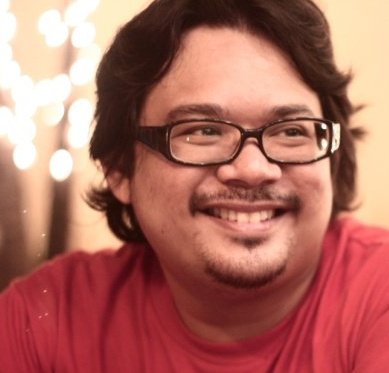
Prof. Carljoe Javier
While I agreed that the practice is extreme, we started thinking about how different our society would be if we had such a rigid system.
It’s not that I want people to adopt seppuku (literally "stomach-cutting" in Japanese) or ritual suicide, but I think what that reveals is a moral belief system.
While it’s clear that Japanese society has its own problems and failings, one thing we can take from it is their value of honor, and the extremes to which they will go to regain it once dishonored.
While it’s clear that Japanese society has its own problems and failings, one thing we can take from it is their value of honor, and the extremes to which they will go to regain it once dishonored.
In our youths, there is a mad race for honor, in particular, being called first honor, second honor, and so on. But that’s just getting good grades. I think the concept of honor, the sense of what is honorable, isn’t properly instilled through this system. In the academic sense, we equate honor with performance and distinction, being the best among peers. But we’re starting to see that the race for distinction doesn’t necessarily equate to honor.
Many students, by the time they get to college, are so blinded by the desire to graduate with that “laude” attached to their names that they will resort to dishonorable means, such as plagiarism. And in a society where people are hungry for fame and recognition, people will resort to the dishonorable just to get their fifteen minutes or some extra cash.
Need we look further than those who submit plagiarized work to contests? As a teacher, I’ve always felt sick when catching students who plagiarize.
Larger than plagiarism is the question of what a lack of value for honor does to us or says about us. I asked my sister to think about what would happen if our elected officials and high ranking government officials were to live under such a system. Would a good chunk of our government be obliterated if we demanded seppuku of everyone who had ever dishonored their office?
In the same thought, how different would our country be when, if someone were revealed to have done something wrong, corrupt, and dishonorable, that person would just off himself. We have to endure a dishonorable display every time corruption comes to light.
First comes the blanket denial. “Of course I would never have anything to do with that, I would never be involved in something like that because I am a good person.”
Then as more evidence is discovered it becomes, “Yes I was part of that, but I wasn’t really involved.” And when the evidence makes things clear, there are a number of excuses, “I didn’t mean to,” “I did it for my family,” “You would have done it, too,” “Everyone else was doing it.”
In big publicity cases this all crescendos in the culprit breaking down on national TV and crying, sporting some kind of medical problem like a neck brace, a faux heart attack, or whatever. Oh please, with the amount of money these people have stolen, I’m sure they’ve got their health insurance well covered.
Never do we see people stepping forward and saying, I take responsibility. This one’s on me. This happened under my watch. If they can, people will weasel their way out of things, let other people take the fall. Notice how quickly politicos move to take credit for things. How many public works projects must we suffer to have politicos’ names pasted on them? Must we be reminded who authorizes budgets when relief goods are distributed? And yet, when wrongdoing is revealed, each and every one of these schmucks will point a finger at the other guy.
Even when their name is on a list, they’ll go through the motions of denial, and then as if it would make things right, they’ll point out how corrupt everyone else is. Any student who has ever studied logical fallacies can have a field day with the kinds of arguments we are offered in the news.
What irks me most is the excuse that people do things for their families. It is the attempt to justify bad behavior because the person values their family. I only stole because it would benefit my family. I think it’s a flimsy excuse, especially when you consider that in effect, this kind of thinking perpetuates the idea that stealing for your family is okay. It’s not like you’re out in the street stealing a loaf of bread to give to your starving child, now is it?
The large scale corruption that occurs on all levels of the system shouldn’t be a function of family values. Though when I think about it, I do have to admit that political dynasties and political corruption do seem to be a family business to an overwhelming number of politicos.
The large scale corruption that occurs on all levels of the system shouldn’t be a function of family values. Though when I think about it, I do have to admit that political dynasties and political corruption do seem to be a family business to an overwhelming number of politicos.
People commit seppuku when they have dishonored themselves, and in effect dishonored their families. They must restore that honor. How do we as a culture work towards restoring our honor?
I suppose one question is, how much do we value honor? Enough to end our lives if we lose it? Enough to undertake great labors to restore it? Enough to demand it of others in interactions big and small?
A larger question I haven’t examined yet is, what is honor? What exactly does it mean to be honorable? A quick dictionary search yields, “the quality of knowing and doing what is morally right.” I know that we can run circles around the question of “moral right.” It is slippery, morality is relative and defined by culture and circumstance. We won’t ever all agree in all situations on what is morally right. But I do believe that there are many glaring things in our society that are clearly morally wrong, and I think it’s about time we started holding people to honoring their obligations.
There is no big philosophical discussion necessary when we look at the major problems our country is facing (and really, how many of our lawmakers and officials are actually capable of big philosophical discussions anyway?).
To act with honor, or to give up one’s place in society. I wouldn’t go so far as asking people to slice up their own guts, but I would demand that we all start at least trying to act and live up to knowing and doing what is morally right. – KDM, GMA News
To act with honor, or to give up one’s place in society. I wouldn’t go so far as asking people to slice up their own guts, but I would demand that we all start at least trying to act and live up to knowing and doing what is morally right. – KDM, GMA News
Carljoe Javier is a professor at the University of the Philippines, Diliman, and the author of the non-fiction book “The Kobayashi Maru of Love.”

