
 GMA Brandtalk
 Tracking
 Archives

Czech adaptation course now interpreted in Filipino
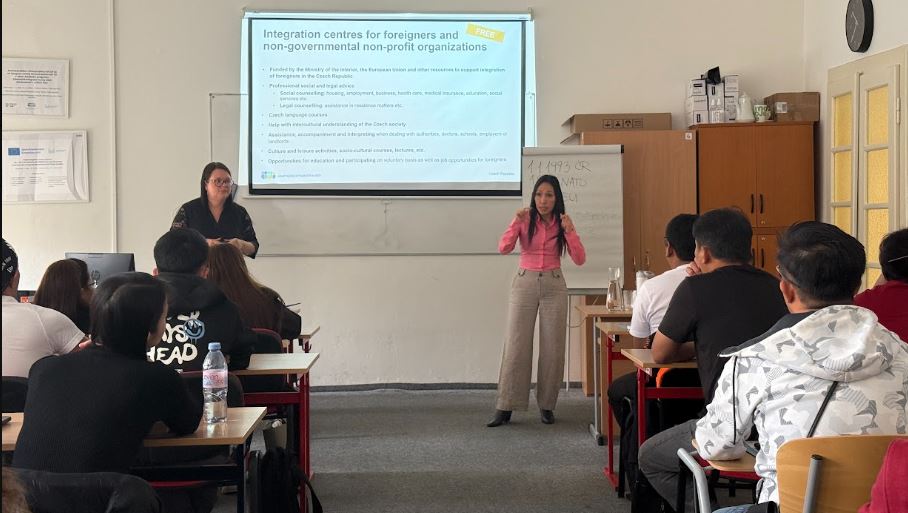
PRAGUE, Czech Republic – A mandatory course to help incoming migrants and workers adapt and integrate into Czech society is now offered in Filipino.
The four-hour course titled “Welcome to the Czech Republic” provides attendees with essential knowledge about living and working legally in the Central European nation.
Long-term Filipino migrant Aileen Vejmolova is one of four Filipinos accredited by the Czech Ministry of Interior to provide simultaneous interpretation for the mandatory course.
“Importante sa mga Pilipino na bago ngayon dumarating mula sa Pilipinas na malalaman ang mga pamumuhay at mga batas dito sa Czech Republic para hindi sila magkaroon ng mga problema, at para na rin sa kanilang mga kapakanan,” Vejmolova told GMA News.
(It’s important for new Filipinos to understand life and the laws in the Czech Republic so they can avoid problems. It’s for their own good.)
Growing number of Filipinos in the Czech Republic
According to Slovo 21, the Prague-based non-governmental organization that handles the course content and materials, the sessions are designed and mandatory only for selected groups of nationals from outside the European Union.
Filipino interpretation was launched in June 2025, Mgr. Madulin Oostrom, the organization’s interpreting and translation coordinator.
“The need arose precisely because of the high number of Filipinos arriving in the Czech Republic,” she said.
With over 14,500 Filipinos residing in the country with valid residence permits, and Philippine Embassy estimates reaching up to 18,000, the Filipino-interpreted version has already reached around 2,300 Filipino participants.
This figure doesn’t include Filipino newcomers who chose the English version before or after June 2025.
During the four-hour session, a Czech lecturer and a Filipino interpreter guide attendees through topics including residence permit extensions, employee rights, employment contracts, healthcare, housing, and educational opportunities.
The course also addresses local Czech customs and civic norms, such as quiet hours, public transport ticket inspections, waste sorting, and zero tolerance for domestic violence.
The project materials are also regularly updated to reflect legal changes, and other materials are planned for translation into Filipino soon.
Crucially, participants receive direct contact details for state integration centers and non-profit organizations that offer free legal and social counseling.
When asked about Filipino attendees since 2025, Oostrom observed that the participants were attentive and curious.
“The common questions and concerns that they raise are like other nations, and there’s no difference in particular. [Filipinos] are very curious and hardworking people, which is very good! They want to integrate fast and want to get familiar with the Czech culture and become active members of Czech society,” Oostrom shared.
Bringing relief
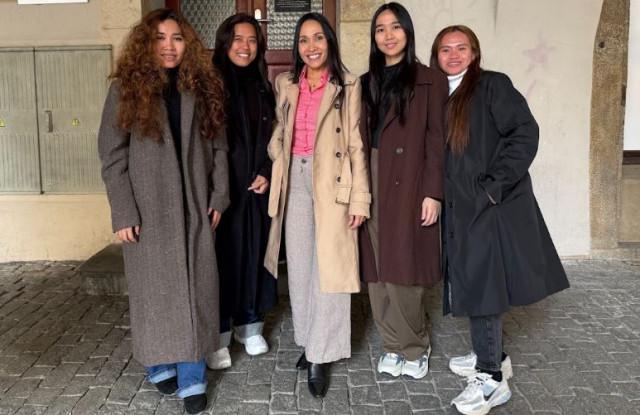
For Odesa Bianca Navarro (32, Pangasinan), Erica Jimenez (24, Nueva Ecija), Maria Jessa Ancalaw (28, Bulacan), and Cartney Ching (Negros Occidental), the course they recently attended provided immediate relief and practical guidance.
They arrived together in March 2026 through the same recruitment agency to work in hospitality as waitresses, housekeepers, and room attendants.
Seven months in, the four Filipinas were grappling with serious problems, such as a breach of contract, workplace exploitation, and severe mental stress, which left them feeling helpless in a country where they did not yet speak the language.
After the session, they consulted the lecturer, who informed them of their labor rights. They were also referred to legal counsel and migrant support agencies to resolve their contract issues, which brought immense relief.
“Nabunutan kami ng tinik (A huge weight was lifted from us),” Ching told GMA News, noting how comforting it was to know help is accessible.
Vejmolova, who has lived in the Czech Republic for 25 years after arriving in 2001, deeply relates to their struggles. As one of four accredited ad hoc Filipino interpreters alongside Grace Bantol, Marites Gliklecova, and Atea Herrera, Vejmolova recalls arriving when almost no Filipinos were around, and language barriers were immense.
“Czech is indeed hard, and it’s considered one of the hardest languages in the world. Its grammar is complicated. You can't learn it in a year or two. You need many years to be fluent and understand the language. I wish such courses existed back when I first arrived; I wouldn't have had so many problems,” Vejmolova said.
Oostrom reminded Filipino newcomers to register within a year of arriving in the Czech Republic, rather than waiting until the one-year deadline.
“The sooner, the better! This is what the law requires. If you fail to do so, you may face fines, up to CZK 10,000 (approx. P29,200). Paying fines does not exempt you from the obligation to complete the course. In some cases, this may even affect your residence status,” she said.
Vejmolova also urged prospective migrants to use online resources such as the “Next Stop Czech Republic” (Příští zastávka ČR) pre-arrival portal to prepare before landing. —LDF, GMA News

