

 GMA Brandtalk
 Tracking
 Archives

ADVERTISEMENT
Filtered By: Pinoyabroad
Pinoy Abroad
PHL envoy: No anti-immigrant sentiments vs. Pinoys in France
Amid the supposed escalation of anti-immigrant sentiments in Europe, Filipinos in France are generally spared from any such treatment, the Philippines' top diplomat there said.
In an email to GMA News Online, Philippine Ambassador to Paris, France Cristina Ortega described France as “a very tolerant society which has a strong human rights tradition.”
She, however, admitted that “some extremist groups do exist in France, but their anti-immigrant sentiments have never been directed towards Filipinos, or Asians, in particular.”
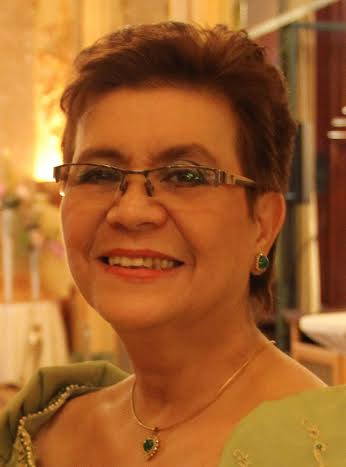
Ambassador Cristina Ortega considers the visit of French Prime Minister Jean-Marc Ayrault to the Philippines in October 2012 as her major achievement as Philippine Ambassador to France.
Ortega has been Philippine Ambassador Extraordinary and Plenipotentiary to Paris, France and Monaco since September 6, 2011. According to the curriculum vitae she shared with GMA News Online, her term ends on January 31, 2014.
France has been the world’s most popular tourist destination for decades and is home to 51,785 Filipinos, based on the latest Stock Estimate of the Commission on Filipinos Overseas.
Anti-immigrant sentiments on the rise?
Anti-immigration sentiments are reportedly on the rise in Europe, which is still reeling from the global financial crisis, a report on Sky News site said.
In France, jobless claims rose to 10,200 in December 2013, hitting a new record. This week, the French Labor Ministry data said the number of people registered as out of work in mainland France reached 3,303,200 in December.
The figure represented an increase of 0.3 percent over one month and 5.7 percent over a year, a Reuters report said.
A report of the France 24 news site earlier quoted former prime minister François Fillon as saying France needs to “reduce the number of immigrants.”
Based on latest figures, France has granted 194,000 permanent residency cards to foreigners in 2010 alone.
Fillon said the rate of legal immigration was too high considering France was struggling with unemployment, recession, and high public debt.
What Pinoys in France are seeking
Ortega said while Filipinos have never been the object of anti-immigrant sentiments, “the number one challenge of Filipinos in France is their immigration status because majority of Filipinos here do not have the necessary documents which allow them to reside in French territory.”
“Being in an irregular situation poses risks to Filipinos, such as the risk of deportation. It prevents Filipinos from fully availing of all the social benefits provided by the French government to migrants,” she said.
“It also means that they cannot go to the Philippines to see their families since they risk not being able to return to France if they do so,” she added.
Aside from their immigration status, Ortega said a problem that Filipinos in France have to deal with is loneliness as they are unable to see their families and loved ones for long periods of time.
“Given the huge amounts of money they often have to pay in order to come to France, they incur obligations which place them in financial difficulty. This then has a negative impact on their health because most of them work extra long hours in order to pay off their debts,” she explained.
Pinoys and the French
Ortega said her biggest challenge as Philippine Ambassador to France has been “the lack of awareness among both the French and Filipinos of each other.”
“Since France and the Philippines do not share a common history or language, it has been hard to increase awareness of the Philippines in France,” she said.
“For a time, the Philippines was the darling of France when former President Corazon Aquino came into power after several years of dictatorship. As a defender of democratic values, France was one of the first countries to acknowledge the government of then President Corazon Aquino,” Ortega said.
Ortega recalled how French Foreign Ministry Didier Bariani made an official visit to the Philippines on May 21, 1986, calling those days as a period of “Philippine renaissance.”
“A few days later, former French Prime Minister and current Foreign Minister Laurent Fabius visited the Philippines and met with President Corazon Aquino,” Ortega noted.
“Since then, not a single President or Prime Minister of France has visited the Philippines. This was until October 2012 when Prime Minister Jean-Marc Ayrault visited the Philippines,” she added.
Ortega said she considers Ayrault’s visit to the Philippines as her major achievement as Philippine Ambassador to France.
“This was truly historic since this was the first time that a French head of government visited the Philippines since the establishment of bilateral relations between the Philippines and France in 1947,” she said.
“Thanks to this visit, the profile of the Philippines was raised to a different level in France. The trip was made more significant because this was the first foreign trip of the Prime Minister after his assumption of office,” she added.
Art exhibit
After Ayrault’s historic visit, the largest collection of pre-colonial Philippine art was exhibited at the Musée du Quai Branly from April to July last year.
Ortega said this “was the largest exhibition of this kind in France and even in Europe and in the weeks leading to the exhibition, posters on the Philippines were put up all over Paris to the delight of the Filipino community in France.”
A month later, in May last year, Philippine Foreign Affairs Secretary Albert Del Rosario visited France to conduct political consultations with French Foreign Minister Laurent Fabius.
Ortega said Fabius “promised to assist in the the removal of Philippine Airlines from the European Union’s (EU) blacklist as well as the removal of the Philippines from the French fiscal blacklist.”
By July last year, the EU lifted its ban on Philippine Airlines.
“While this was an EU decision, France had a lot to contribute because it sent civil aviation experts to the Philippines to assist the country in meeting the EU’s air safety standards,” Ortega said.
Ortega, born in Quezon City on November 5, 1948, is a Foreign Service graduate of the University of the Philippines (Batch 1968). She also graduated with a degree in Political Science from the same university (Batch 1970).
Ortega likewise holds a Certificate in International Business from the California State University, Los Angeles, California in the US (1979) and MBA in International Relations (with distinction) from the University of Southern California, also in Los Angeles (1983). — KBK, GMA News

