

 GMA Brandtalk
 Tracking
 Archives

NGO asks gov’t to put overseas employment back on track
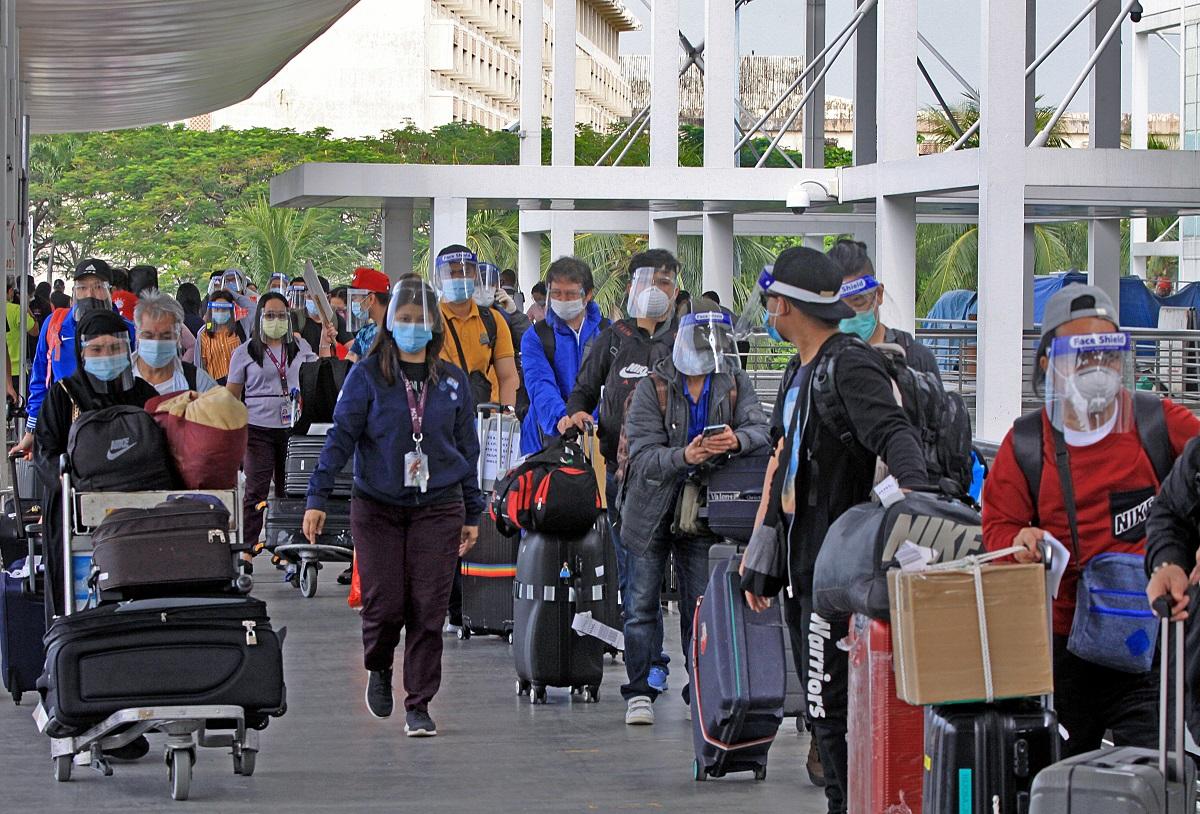
An official of the Blas F. Ople Policy Center and Training Institute on Tuesday appealed to the government to bring overseas employment back on track as demand for Filipino workers is high despite the COVID-19 pandemic.
At a Senate hearing, the non-governmental organization's president Susan Ople made the statement after conducting consultations with seafarers, land-based workers and the recruitment industry.
“First of all, we would like to seek the help of the government and also of the Senate, please help us put overseas employment back on track,” Ople said.
“We have an 8.7-percent unemployment rate, there are employers who are willing to take in our workers and provide even COVID insurance for them,” she added.
Ople cited various problems that hinder the employment of Filipino workers abroad.
Among the top problems of OFWs are the difficulties in securing passports and the lack of a vaccination program for Filipinos who are wanting to be employed overseas.
“Ang balakid po is that, una, ‘yung workers natin, walang makuhang passport. They have to travel minsan to Laoag, minsan to Tuguegarao just to be able to get a passport, so ‘yung passport shortage is one burden,” she said.
[Our workers cannot get their passports. Sometimes, they would travel to Laoag, Tuguegarao, just to get a passport. The passport shortage is one burden.]
“Pangalawa po is ‘yung vaccination, we would like to request that there be a vaccination program for both the land-based and the sea-based workers,” she added.
[Secondly, vaccination is a problem. We would like to request that there be a vaccination program for both land-based and the sea-based workers.]
Ople also asked vaccine czar Secretary Carlito Galvez and testing czar Secretary Vince Dizon to convert the Occupational Safety and Health Center in Quezon City into an OFW vaccination center.
The place can service OFWs that have already undergone pre-screening by their employers, she said.
Ople said foreign employers are looking at the Philippines as a major source of employees as the country’s former competitors in terms of foreign employment, such as India, Bangladesh, and Pakistan, were not considered due to the COVID-19 variants that have spread in the said states.
“Ang problema po yung foreign employers are asking ‘Ano ba talaga ang policy ng government niyo? Nalilito na kami.’ Walang predictability,” she said.
[The problem is the foreign employers are asking 'What is the policy of the government? We are already confused.' There is no predictability.]
Moreover, Ople raised the concerns on the lost potential income brought by the government’s cap on the deployment of healthcare workers.
“May 4,000 health workers po tayo na nasa pipeline, inaantay lang ng employers until the end of the year. Ano ang range ng sweldo nila? From 150,000 to 200,000,” she said.
[We have 4,000 healthcare workers in the pipEline. Their employers are waiting for them until the end of the year. What is the range of their salary? It's around P150,000 to P200,000.]
“So the longer they stay here, that income, that income potential is lost and isang OFW na umalis and may disenteng trabaho naman… Isang household na po ang katapat na hindi na kailangang maghintay ng ayuda sa gobyerno,” she pointed out.
[For one OFW who will be deployed there will be one household that will not have to wait for the government's financial aid.)
Furthermore, Ople appealed to the IATF to cut the OFWs' quarantine to seven days.
She said OFWs are planning to spend their Christmas in the Philippines but that they are confused with the government’s quarantine policies.
'Discriminating against OFWs'
Ople also cried foul on the IATF’s perception that some OFWs may present fake vaccination cards once they arrive in the country.
“Hindi po ganyan ‘yung OFWs po natin. Ang dami po diyan ang tatagal na sa mga employers bakit naman nila ije-jeopardize ‘yung trabaho nila para mang-peke ng vaccination card?” she asked.
[Our OFWs are not like that. So many of them have been with their employers a long time; why would they jeopardize their jobs for a fake vaccination card?]
She then questioned why fully vaccinated foreign investors are allowed to undergo quarantine for only seven days while OFWs are asked to isolate in quarantine facilities for 10 days.
“Why are we discriminating against OFWs especially those who got two doses of vaccines and saying their vaccination cards might be fake?” she asked, appealing to the IATF to conduct dialogues with the OFWs.
Ople said some OFWs are “feeling discriminated” and some of them are getting the impression of being “unwelcome modern day heroes” due to the government policies.
“We really respect our medical experts. We’re not against [preventing] doom via the Delta variant. We agree with doom prevention but please be spreaders of hope din kasi kawawa yung mga OFWs po, ang feeling nila they are being discriminated dahil bakit sila…they are entitled to come home e. And they are entitled to time spent with family,” she said, expressing hope that the government will harmonize its policies with the demands of the OFWs.
On the other hand, Senator Pia Cayetano asked Galvez about the government’s seven-day quarantine requirement for foreign investors.
Galvez confirmed that the IATF allowed exemptions on “highly-technical people” who are involved in the investments in power sector, Build, Build Build projects, and those who have more than $500-million investments in the country.
“Basically, ‘yung pinapayagan lang natin, very limited number. Highly exceptional, technical at saka yung high profile in terms of business investment. Konti lang po yun, mabibilang po natin sa kamay po natin,” Galvez said.
[Basically, we allow a very limited number, highly exceptional, technical and those who are high profile in terms of business investment [to quarantine for seven days]. that is only a few we can count it with our fingers.]
Under the IATF-approved quarantine protocols, returning Filipinos and OFWs are quarantined in a government facility. They are given an RT-PCR test on the seventh day of quarantine .
Once they test negative, they will finish the remainder of the 14-day quarantine at home.
Meanwhile, quarantine period for inbound travelers to the Philippines who are fully vaccinated against COVID-19 has been shortened to seven days from 14 but only if they got vaccinated in the country. — BM, GMA News

