

 GMA Brandtalk
 Tracking
 Archives

Filipinos and Holy Week in Australia: Blending old traditions and adopting new ways
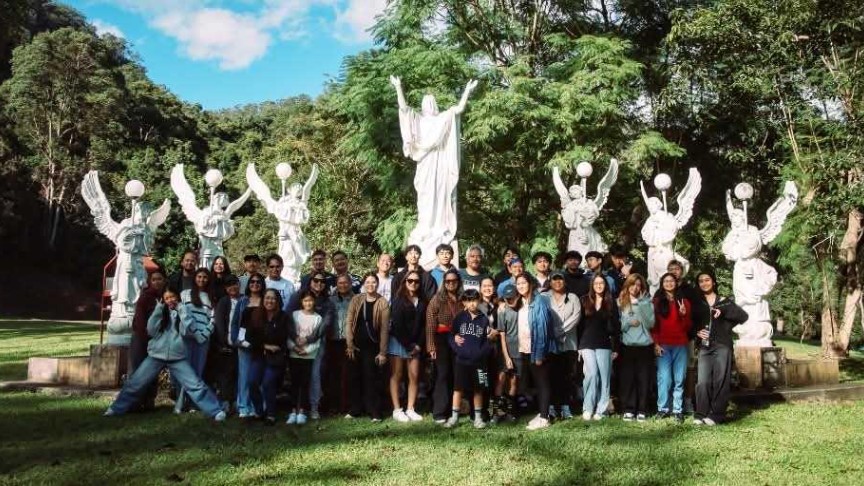
GOLD COAST, AUSTRALIA — For Catholic Filipinos in Australia, the Lenten season is not just a time for praying, reflection and deepening of their faith. For many families, it is also a time for sharing and passing on traditions to their Filipino-Australian children.
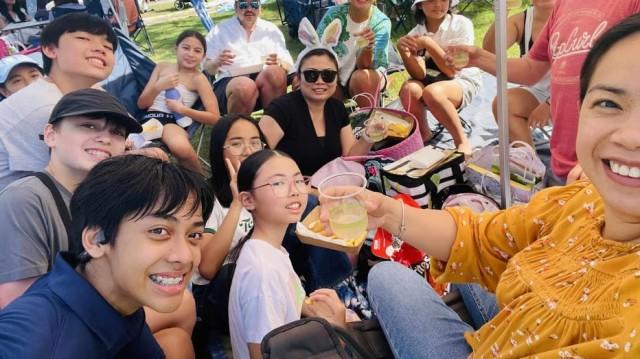
From attending Ash Wednesday to going on a pilgrimage or doing the Stations of the Cross with the community, migrant Filipino parents who remember how they spent Holy Week during their years in the Philippines try to give the same experience to their children. After moving to Australia, they have also adopted new traditions, such as picnics at a park with friends and family during Holy Week.
“After hearing mass, Easter Sunday picnics have become our little tradition – sunshine, stories, snacks, picnic blankets, and an egg hunt for the kids,” says Bernadette Berboso. She and husband Marlon both grew up in Bulacan and worked in the Middle East before migrating to Australia. They have two kids, Bianca and Bea.
Keeping traditions alive while making new ones
Husband and wife Rommel and Christina Pangaruy have lived in different parts of the world –New Zealand, Canada, Germany, Australia –in the last three decades. They eventually settled down in Australia in 2008 to raise their three children, Krista, Franco and Cerise, who are now in their early adulthood and teens.
“As a Filipino who left the Philippines 30 years ago, I found myself practicing the Holy Week traditions more than when I was in the Philippines. I have become more aware of their relevance than when I was little. I remember when I was young the only thing we did was fast from eating meat on Fridays and the whole weekend. My vivid recollection was we wouldn't do any housework at all on a Friday and our neighborhood and street would have a very eerie feel,” says Christina, an office manager at an aged care facility.
Being overseas, Christina says they would attend the Washing of the Feet and do Stations of the Cross followed by a small picnic. “This has been a tradition that we share with close friends. Then we go back for the Seven Last Words at 3pm and the kissing of the cross,” she adds.
“I have been participating in Holy Week devotional practices since my childhood days in Quezon province, which continued when I met my wife and we started a family together. We try our best to attend all masses and liturgical events in our parish, from Palm Sunday to Easter vigil and Easter Sunday mass. We also try to do fasting, one way or another, in the weeks leading up to Holy Week. It has also become a yearly tradition for us and other Filipinos and Catholics in the area to visit the Marian Valley - Shrine of Our Lady Help of Christians on Good Friday. We would do the Stations of the Cross devotion with family and friends here,” adds Rommel, who is an IT consultant.
Like the Pangaruys, Joy and Franco Mar Gara are showing their three young adult and teen children Franchesca Joy, Franco Jayden and Francis Jethro how Filipinos observe Holy Week.
“The traditions we had in Catanduanes are pretty much similar to what we do here in Australia, except that it is more extravagant back home. For example, there is this Salubong tradition we do back home which is not done here in Australia. This happens before dawn on Easter Sunday. It is the reenactment of the meeting between the risen Jesus Christ and Mama Mary, where an angel will lift the veil of sorrow from the face of Mama Mary. When I was eight years old, I was chosen to be one of the angels in this reenactment. To be chosen is believed to be a blessing for me and the family,” Joy, who moved to Australia in 2000 to join husband Franco, shares.
“Here in Australia, we start by attending the Ash Wednesday mass as a family. On Good Friday, we do Stations of the Cross either at the church in St Mary's Parish or in Marian Valley. Then at 3pm, we attend the Adoration of the Cross. We have no meat on Friday for adults, and the children have the option to follow or not. On Saturday, we practice silence or we do minimal work. We also attend the Easter Vigil mass. On Easter Sunday, we celebrate by attending mass then at times we will have simple gatherings with friends to celebrate the day. We have been doing this practice consistently for five years,” adds Joy, who, despite her varying work schedule as a nurse, makes it a point to attend these with her family.
“Growing up to that traditional practice, it becomes second nature for me to pay my respects and remember this time of the year what Jesus Christ has sacrificed for us,” says Francis Jethro.
Holy Week and traditional Pinoy food
For Dong Corvera, Holy Week also means cooking an array of native Filipino delicacies such as binignit or ginataan. A Filipino snack of tubers and fruits cooked in coconut milk, Dong says it is a Filipino Bisaya tradition to cook the dish during Holy Week as a substitute for eating meat.
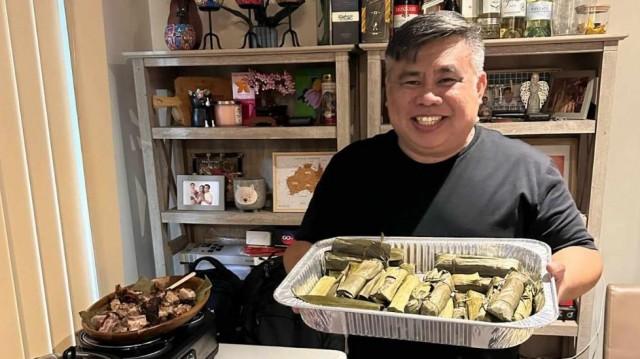
“It’s a popular delicacy in the Visayan region. It’s what we eat before fasting or when we try to avoid eating meat,” shares Dong, who grew up in Surigao Del Sur. Dong also prepares traditional Filipino dishes, suman and bread, which he brings to gatherings and makes picnics uniquely Filipino.
A lead structural designer working for a global company, Dong moved to Australia in 2006 after a stint in Singapore. She and Tricia have a son, Nico, who is also active in church. He plays the piano during the mass, and is part of the church’s youth band and choir who perform during Easter Sunday mass.
“Holy Week is a big week for Filipinos. It’s very passionate and emotional,” Nico observes. —RF/ VDV, GMA Integrated News

