

 GMA Brandtalk
 Tracking
 Archives

Three lessons a city boy learns in remote sitios
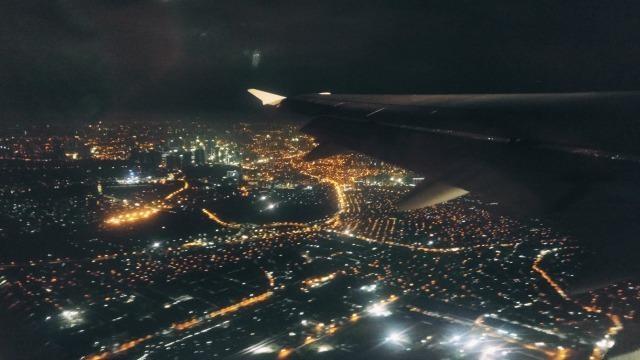
My program manager and executive producer sent me to Cagayan De Oro (CDO) and Bukidnon last month to look for a rich and compelling story for our Sixth Anniversary Special. As media practitioners who always aspire for the best content, we all believe that the stories we have to look for should be something we can't find on Google.
And for this task, I had to do everything alone.
It was my first time in Mindanao, first time to fly solo, and first time to be in a community where locals speak a different language. But above successfully accomplishing all these firsts, I was surprised to have gotten three valuable lessons during my five-day stay in Northern Mindanao that, I know, have changed not just how I do my work but also how I see the world.
First lesson: Seek for real experience over comfort
Typically, staff members from a media company who will be deployed to provinces for work would make a courtesy call with a local government unit so they could be assisted during their stay.
I didn’t do that. I went there without any assistance from any local office. I really planned to go around these provinces by commuting. That way, I would have a better feel of their culture and be able to talk to locals about certain issues in their town.
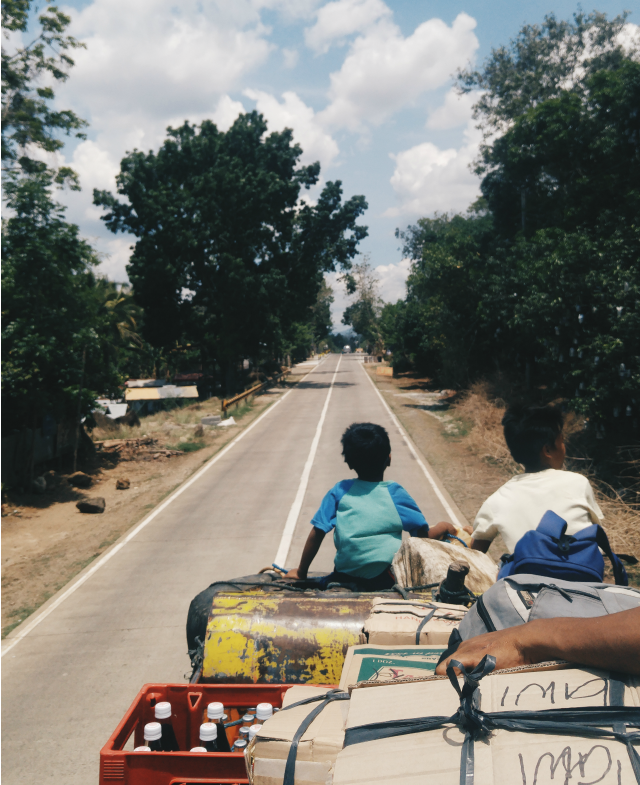
On my second day in CDO, I rode atop a jeepney from Brgy. Carmen in CDO’s city proper to the rather quiet place of Brgy. Mambuaya, which was about 17 kilometers away from our starting point. We left at around 10:30AM and the sun was already up. Needless to say, the temperature was so high that I already knew I would be going home darker than I was when I got there.
I didn’t mind though being on the top bunk going through the zigzaging mountain roads as I had a good time chatting with the locals who were also sitting atop the jeepney, guarding their products such as rice, fruits, and vegetables.
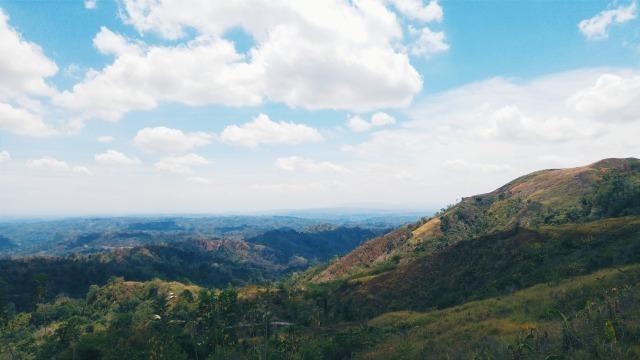
It was there where I met Tatay Eddie, a sari-sari store owner in the remote Brgy. Mambuaya. Perhaps our acquaintance was destined as he got to share so many interesting stories about their humble town, including about the kids from a remote sitio in Bukidnon who cross through the strong currents of the CDO River just to get to school.
“Now I have a story,” I told myself.
Second lesson: Dreams fuel these kids’ drive to succeed despite the odds
One inspiring thing that I learned from my immersion with the locals is that there are some kids who literally cross rivers and mountains to get to their school. Although I have already heard about such stories somewhere before, it was still a different learning experience when I saw them with my very own eyes.
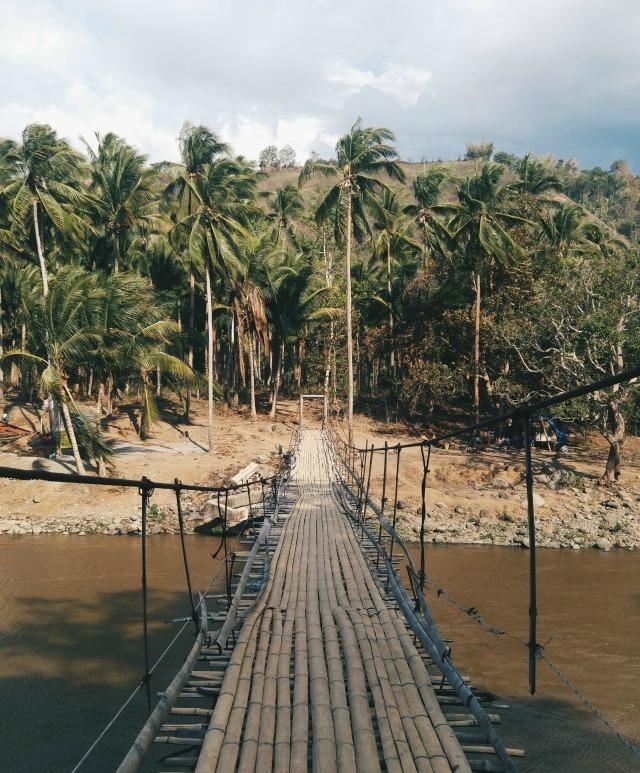
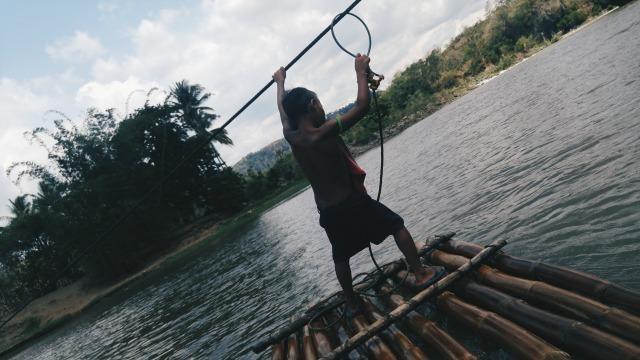
While resting in a store and chatting with some locals, I saw a young boy named Jonel who was about to cross the river using a bamboo raft. Jonel caught my attention because I wasn’t so sure if he could actually cross the raging river by his own. I called him out and asked if I could join and help. He didn’t say anything, but he signaled that I should hop in.
Apparently, he was going home to his house five kilometers from where we were. He came from the market to buy rice for his family.
I learned also that he walks about six kilometers every day to get to school, and another six kilometers to get home.
“Hindi ka ba napapagod sa mahabang paglalakad araw-araw?” I asked.
The eight-year-old kid looked at me as though I just asked a silly question. “Ganu’n talaga. Mahirap kami eh. Iniisip ko lang lagi na makakarating din ako sa pupuntahan ko kaya nilalakad ko kahit nakakapagod,” he said in Bisaya.
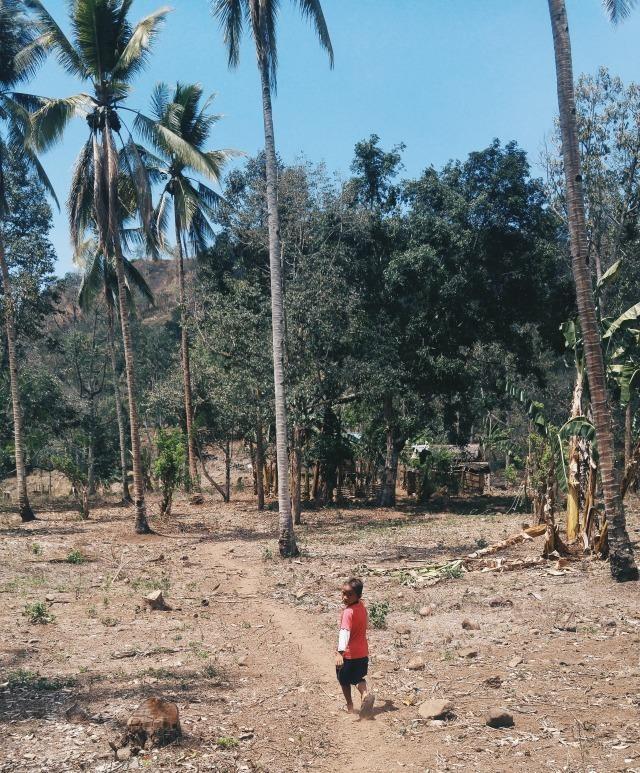
This made me realize how my problems with occasional MRT wrecks and EDSA traffic jams are nothing compared to Jonel’s daily exhaustion just to get to school. Sometimes, he even walks barefooted! But unlike me and perhaps many others back in the city, these kids don’t really make a big issue out of their situation. They don’t think about how hard the present situation is--they just think about how promising the future can be.
“Sabi ni nanay, pumasok lang daw ako sa school para maging doktor ako ‘pag malaki na ako,” said Jonel. “Kaya kahit nakakapagod, papasok pa rin ako sa school.”
Third lesson: Joys don’t have to be expensive
On my third day, I was walking around and interviewing locals in Sitio Kitaro, Brgy. Lingating in Baungon, Bukidnon when it suddenly started to rain hard. As it was a remote area, there was no electricity, the telecommunications signal was so poor, and houses were separated by about a kilometer apart. So when it poured, I didn’t know where to go to keep myself dry.
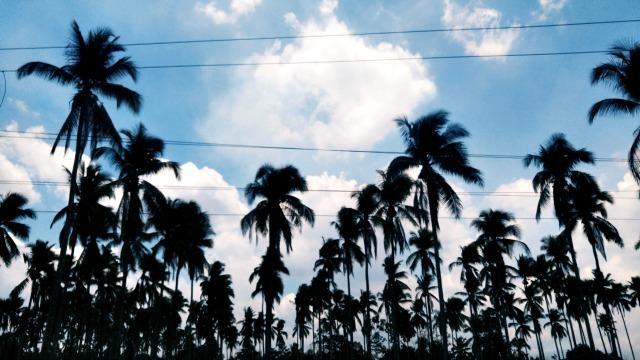
Good thing though that after running for some minutes, I saw a house hiding behind a row of trees beside the CDO River. I knocked and asked if I could stay until the rain stops. The family welcomed me warmly--offering me hot coffee and a platter of biscuits.
While I was trying to send a text to my executive producer for updates (but to no avail because of the lack of signal), the household’s three kids (Angelica, Jamaica, and Nigos) stood behind me, watching me use my smartphone. “Ang galing, umiilaw!” the youngest said in Bisaya. And then I remembered that they had no electricity so a simple artificial light would amaze them easily.
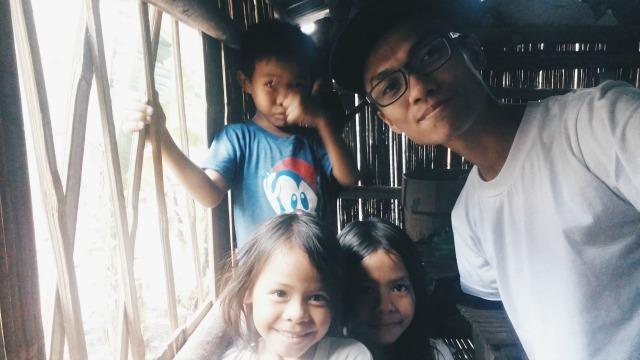
I took a video while telling them “Ngiti ka!” and “Kumaway ka sa camera!” because it was their first time to be recorded on camera so they didn't know exactly what to do.
As we watched the output later on, they all exclaimed, “Ang galing!” They borrowed my phone after this and started taking more photos and videos. My battery drained but I didn’t mind; their smiles and laughter while taking videos sufficed.
It was a very humbling experience. When I was young, I would cry when my parents wouldn’t buy me toys. And even today, I would feel so down when I couldn’t afford that piece of handsome polo in my favorite store. But those kids in the sitio, they have very simple joys. When the rain stopped, they ran out immediately and climbed trees to get mangoes for me.
“Masaya sila kapag nakakakuha sila ng mangga,” their father, Tatay Ramil, said. “Nagpaparamihan sila ng makukuha. Kung sino ang may pinakamarami, siya ‘yung panalo,” he added.
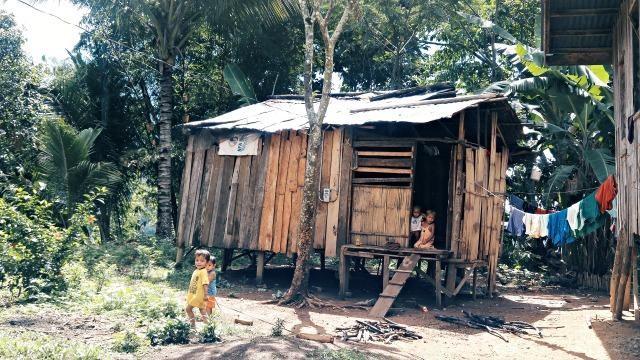
These encounters in the remote sitios in a span of five days really hit me. There are these sad but beautiful stories right here that are more important than mine, and I was so busy with my life in the city thinking that I’m having the worst of everything.
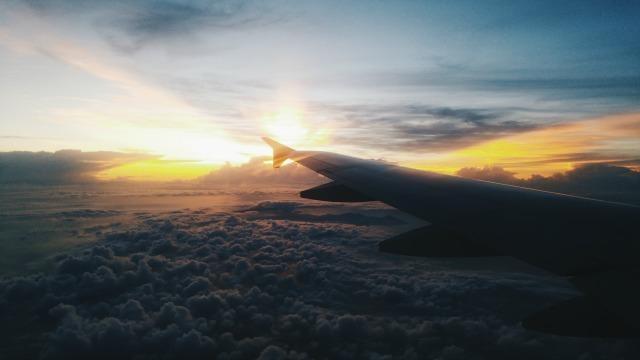
While I was on the plane on my way back to Manila, I couldn’t understand the music playing on my earphones because all I could hear were the sounds of the raging river, the cracking roofs caused by the strong rains, and--of course--the laughter of the kids, having the time of their lives, as they shoot videos and take selfies for the first time. They touched me. They really did.
Juju Z. Baluyot is a Program Researcher for the science-information show AHA! He is also a Multimedia Producer for the shows Unang Hirit and Pinoy MD, and is an MA in Media Studies student at the University of the Philippines Diliman.

