

 GMA Brandtalk
 Tracking
 Archives

Despite marine riches, Bohol’s fishermen struggle to survive
Bohol is famous because of its natural attractions, unique culture, and abundant marine resources. But despite all of these, its fishermen still remain among the poorest in the Philippines.
In her report for the GMA News special series “Biyaheng Totoo,” Sherrie Ann Torres went to Bantigue, one of Bohol’s smaller islands, to see for herself how the fishermen are affected by illegal fishing activities in the area.
Eugenio Abapo, a fisherman who has three children studying in elementary school, says he can’t even buy his own fishing net. His income is just enough to get his family through the day, and to cover the cost of his children’s education. On days when he doesn’t catch enough fish, he borrows rice and canned goods from the sari-sari store on credit.
According to the National Statistics and Coordination Board (NSCB), two out of every five fishermen are considered poor. This is equivalent to around 41.1 percent of all fishermen in the Philippines. Sadly, Mang Eugenio and most fishermen in Bohol belong to this segment.
Will their concerns be addressed by the country’s new batch of leaders to be elected this 2013?
Here are some behind the scenes photos from Sherrie Ann’s “Biyaheng Totoo” report: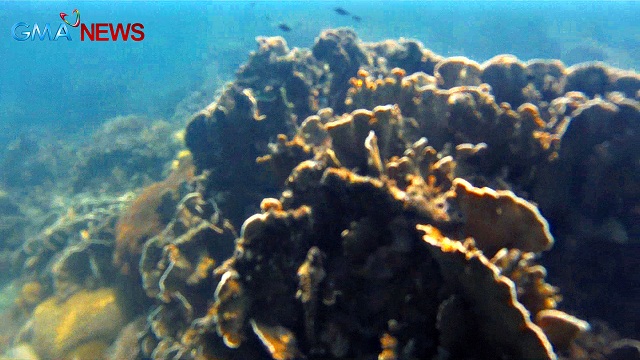
Bohol serves as the home of the only double barrier reef in the Philippines, more commonly known as the Danajon bank. But despite the island’s rich marine resources, Bohol’s fishermen struggle to support their families with their meager income.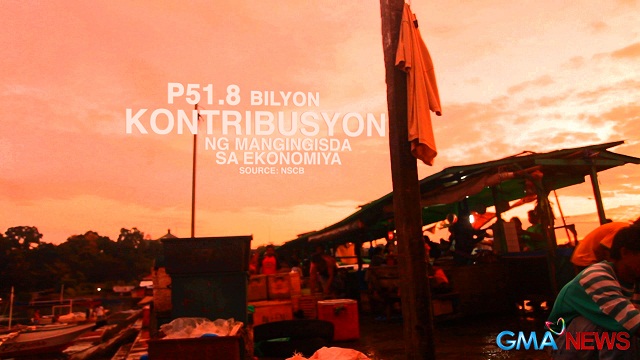
Bohol’s contribution to national fisheries production is declining, says Emilia Rosalinda, the Executive Director of Participatory, Research, Organization of Communities and Education towards Struggle for Self-Reliance (PROCESS)-Bohol. “The fishing grounds of Bohol, Bohol waters, is (sic) very rich in coastal and marine resources. Unfortunately, kung makikita mo sa data, talagang nag-de-decline siya,” she said.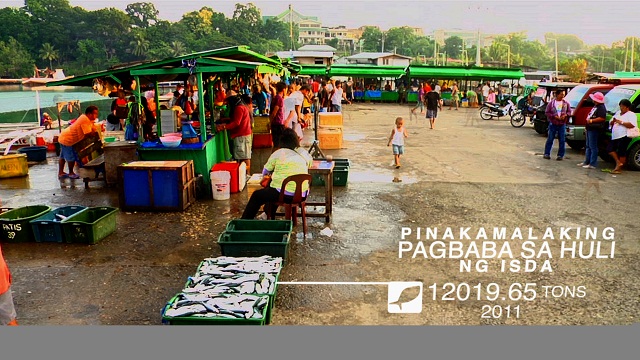
According to Engr. Maximino Servillon, head of Bureau of Agricultural Statistics-Bohol, the major reason of Bohol’s fisheries decline is fishing malpractice, like the use of illegal fishing gear or overfishing by commercial vessels in restricted or protected areas. “This is a very big challenge on the part of the local government units kasi ang daming gastos, mag-me-maintain ng sustainability ng law enforcement nila, ng mga bantay dagat nila,” Engr. Servillon said.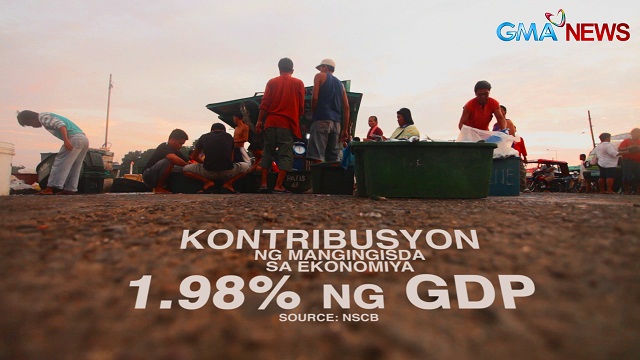
Fishermen are poorest sector in the Philippines despite their huge contribution to the economy. In 2012, they contributed at least P51.8 million or 1.98 percent of the country’s total gross domestic product (GDP), according to the NSCB.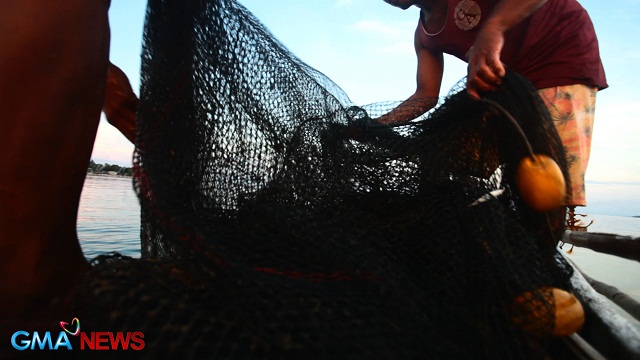
According to the NSCB, the Philippines has a coastline 36,289 kilometers long and maritime waters spanning 2.2 million square kilometers in area. Despite the country’s access to a wealth of natural resources, 26.5 percent of the population or 23.14 million Filipinos remain poor.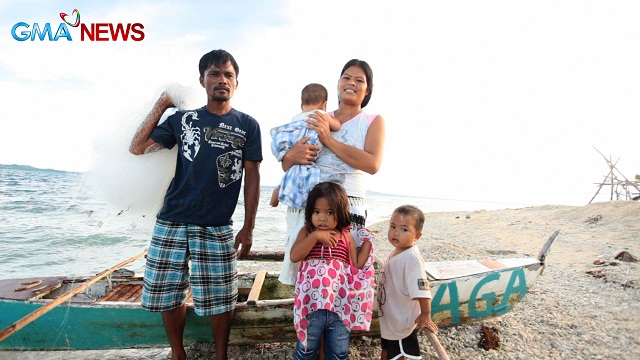
Eugenio Abapo (left), a fisherman in Bohol, says he can’t even buy his own fishing net. He earns just enough to meet his family’s daily needs, including his three children’s schooling expenses. All of them are in elementary school, but Mang Eugenio knows that if the fishing problems will continue, it might be impossible for them to go to college or even high school. “Gusto ko sila lahat [makatapos] kapag meron ako pera. Kung wala akong pera, hindi. Kawawa naman ang mga anak ko. Hindi sila makakatapos ng pag-eskwela.”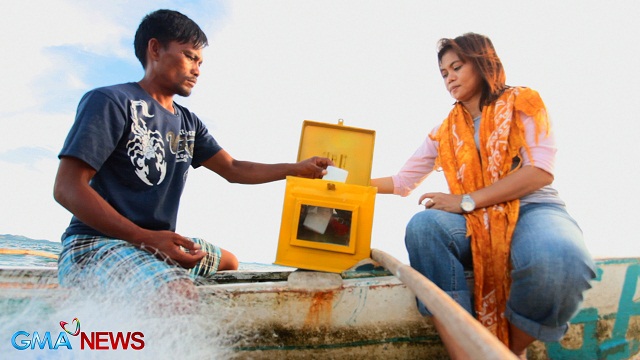
The “Biyaheng Totoo” team asked Mang Eugenio to write down his “wishlist” for the government. Reporter Sherrie Ann Torres helps him put his letter into the “Biyaheng Totoo” ballot box. Mang For his family, Eugenio hopes that the government will more strictly enforce the ban against destructive fishing methods, provide more affordable and better quality education for his children, and make affordable health care services available to all Filipinos.
Research and photos by GMA News Special Assignments Team.
Photo essay produced by Rica Fernandez.
-PF, GMA News

