

 GMA Brandtalk
 Tracking
 Archives

ADVERTISEMENT
Filtered By: Publicaffairs
Public Affairs
‘Born to be Wild’ Animal Spotlight: Honey bees
The GMA-7 environmental and wildlife program "Born to be Wild" regularly features a different animal in its "Animal Spotlight" online feature. For more fun facts about wildlife, like the Born to be Wild Facebook page or follow the @BorntobeWildGMA Twitter account. "Born to be Wild" airs Sundays at 9:30 AM on GMA-7 and is hosted by Doc Nielsen Donato and Doc Ferds Recio.
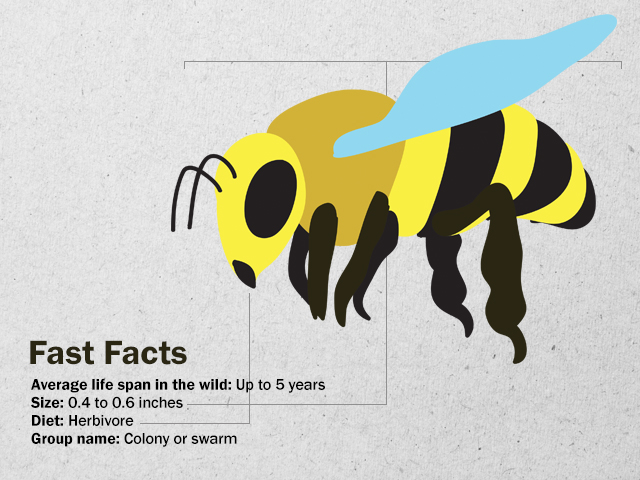
The honey bee is one of the most recognizable insects in the world, with its familiar orangish-yellow rings on its abdomen.
They are especially important for pollination and the production of nectar, honey and beeswax.
Kinds of honey bees
Taxonomists recognize between four to seven species of honey bee, with even more subspecies. There are four native and one exotic species in the Philippines:
The honey bee caste system
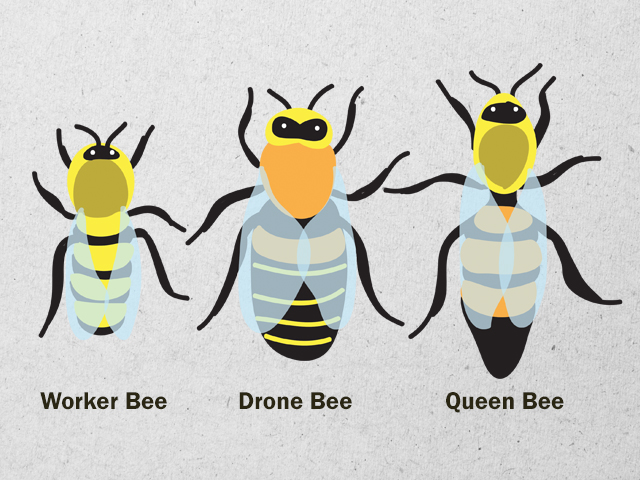
Honey bees are social insects! They live in a nest called a hive, which can hold up to 35,000 bees! Each bee has a role:
 Honey bees are not aggressive by nature. They won’t sting unless they are provoked into protecting their hive.
Stung by a bee? Not to worry! Most reactions to bee stings are mild, causing itching and swelling that disappears within the day.
Apply a cold pack to reduce pain and swelling. But if you’re allergic, see a doctor immediately!
Honey bees and pollination
Bees gather pollen and nectar to bring back to their hive. As they move from flower to flower, the pollen may fall off into the flower, resulting in pollination.

Honey bees’ yearly contribution to US crop production: $14.6 B!
Disappearing bees?
Throughout the years, there have been reports of seemingly healthy bees suddenly disappearing. Often, there is still honey in the hive but there are little to no adult bees. This is called Colony Collapse Disorder.
33%: Average yearly decline in US bee population 2006-2011
Possible causes of disappearance: Pesticide exposure, parasitic mites, pathogens.
Sources:
Bureau of Animal Industry
National Geographic
The British Beekeepers Association
American Beekeeping Association
United States Department of Agriculture
Food and Agricultural Organization of the United Nations
Text by Aimee Dacanay, Illustrations by Isabelle Laureta
–PF, GMA News
The honey bee is one of the most recognizable insects in the world, with its familiar orangish-yellow rings on its abdomen.
They are especially important for pollination and the production of nectar, honey and beeswax.
Kinds of honey bees
Taxonomists recognize between four to seven species of honey bee, with even more subspecies. There are four native and one exotic species in the Philippines:
- Apis cerana or the Eastern honey bee (known locally as laywan)
- Apis dorsata or the giant honey bee (known locally as pukyutan)
- Apis andreniformis or the black dwarf honey bee
- Trigona spp. or the stingless bee
- Apis melliferia or European honey bee
The honey bee caste system
Honey bees are social insects! They live in a nest called a hive, which can hold up to 35,000 bees! Each bee has a role:
| Worker Bees These are emale bees that are not sexually developed. They are responsible for food and for building and protecting the hive. | Drone Bees These are male bees whose sole function is to mate with the queen. | Queen Bee There is only one queen to a hive and she lays over 1,500 eggs a day! If she dies, a new queen is made by feeding a worker bee a special diet called “royal jelly.” |
Honey bees are not aggressive by nature. They won’t sting unless they are provoked into protecting their hive.Stung by a bee? Not to worry! Most reactions to bee stings are mild, causing itching and swelling that disappears within the day.
Apply a cold pack to reduce pain and swelling. But if you’re allergic, see a doctor immediately!
Honey bees and pollination
Bees gather pollen and nectar to bring back to their hive. As they move from flower to flower, the pollen may fall off into the flower, resulting in pollination.
Honey bees’ yearly contribution to US crop production: $14.6 B!
Disappearing bees?
Throughout the years, there have been reports of seemingly healthy bees suddenly disappearing. Often, there is still honey in the hive but there are little to no adult bees. This is called Colony Collapse Disorder.
33%: Average yearly decline in US bee population 2006-2011
Possible causes of disappearance: Pesticide exposure, parasitic mites, pathogens.
Sources:
Bureau of Animal Industry
National Geographic
The British Beekeepers Association
American Beekeeping Association
United States Department of Agriculture
Food and Agricultural Organization of the United Nations
Text by Aimee Dacanay, Illustrations by Isabelle Laureta
–PF, GMA News

