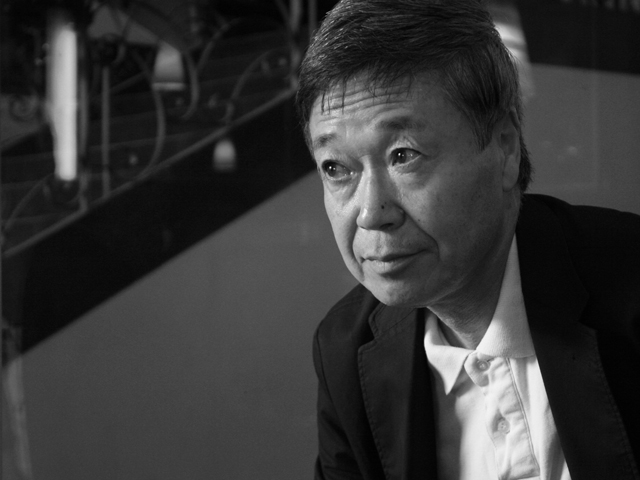
“Making documentaries is universal,” says Yukinori Fuchizawa, Executive Director of TV Iwate’s News Department. Japan’s Iwate Prefecture was one of the hardest hit by the 2011 tsunami, and TV Iwate was one of the first to cover the tragedy. Last February, GMA’s flagship documentary program ‘I-Witness’ and TV Iwate co-produced the documentary‘Pagbangon ng Japan’ (‘The Recovery of Japan’), which featured the stories of those affected by the devastating 2011 tsunami. Now, Fuchizawa is in Manila to view the footage for ‘Kampai! Let’s Drink to That!’ the second co-production of GMA News and Public Affairs and TV-Iwate. Hosted by Sandra Aguinaldo, the documentary hopes to showcase a different side of Japan—that of its rich culture, delicious food, and resilient people. “Some people say Japanese food is no longer good after the disaster—after the explosion of the nuclear power plant,” says Fuchizawa. “But, in fact, Japanese food is still safe. It’s still good.” If given the chance, Fuchizawa would like to make a documentary about Filipino culture and use it to introduce the culture to Japanese audiences. “There are so many things that the Japanese can learn from Filipinos, especially from their lively personality,” he notes, saying his country’s aging population may appreciate a dose of Filipino cheerfulness. Distance and differences between cultures are inevitable, but Fuchizawa believes that media plays a part in bridging these gaps. “Visual media, like documentaries, have a really strong effect because they are easy to understand,” says Fuchizawa. “Once you see it, you don’t need so much explanation.” --
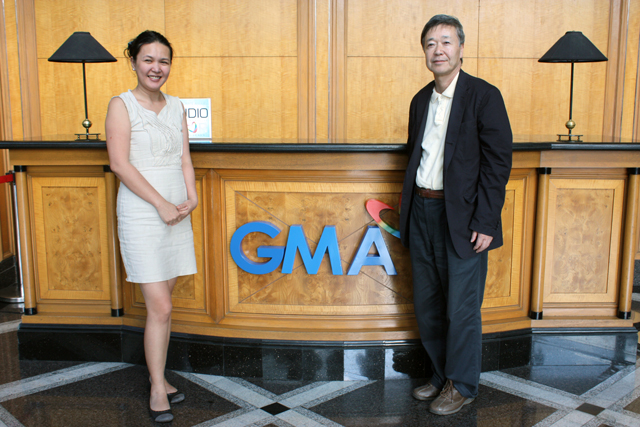
Fuchizawa-san with Ms. Joy Madrigal-Monzon, program manager of 'I-Witness'
GMA News Online: This isn’t the first time you worked with I-Witness. The first time, you worked on a documentary with Kara David about the tsunami recovery.
Fuchizawa-san: Yes. There were many Filipino victims in our district, and we wanted to describe their actual situation through our documentary.
GMA: With this second documentary, what other side of Japan would you like Filipino viewers to see?
Fuchizawa-san: Some people say Japanese food is no longer good after the disaster—after the explosion of the nuclear power plant. But, in fact, Japanese food is still safe. It’s still good.
GMA: After working with Filipino journalists, what would you say are the similarities between the Filipino style and Japanese style of making documentaries?
Fuchizawa-san: I believe making documentaries is very universal—everything is in common. We don’t feel any differences in how we make TV programs. So, I think we can understand each other
GMA: Many Filipinos are interested in Japanese culture because of the food and movies. But as someone who’s lived there for many years, what would you like Filipinos to learn more about?
Fuchizawa-san: We have plenty of Japanese food. Japanese cooking is one Japanese culture’s many elements. One of them, I think, is the Japanese geisha performance. Fortunately, we could film the ‘new face’ of geisha girls; this time, we would like to share a performance, which may be attractive for you, through this program.
GMA: What one biggest similarity between Filipinos and Japanese people?
Fuchizawa-san: The most familiar quality is adaptability. In Japan, there are many Koreans and Chinese, but they don’t immediately mix in with the Japanese culture. However, Japanese and Filipino people can easily get used to new places and cultures. For example, our experience working with Kara—it was so easy for them to interact because they didn’t emphasize that they were different.
GMA: You’ve already made two documentaries shot in Japan. Would you be interested in making a documentary and shooting in the Philippines?
Fuchizawa-san: Now there are no plans, but if ever we get the chance to make one, I would like to introduce the culture of the Philippines in Japan—the cheerful qualities of Filipinos, for example. In Japan, our population is really decreasing and they’re very focused on technology. There are so many things that the Japanese can learn from Filipinos, especially from their lively personality.
GMA: You said earlier that documentaries are universal. Could you tell us how visual forms can bridge different countries, cultures and people?
Fuchizawa-san: Visual media, like documentaries, have a really strong effect because they are easy to understand. Once you see it, you don’t need so much explanation. --
Special thanks to translator Marvin Nisperos. Photos by Candice Montenegro. Watch a clip from 'Kampai! Let's Drink to That!" below:


 GMA Brandtalk
 Tracking
 Archives


