

 GMA Brandtalk
 Tracking
 Archives

ADVERTISEMENT
Filtered By: Publicaffairs
Public Affairs
The silenced past of Lola Lourdes
“Everyone is a historian. Everyone is his own historian.”
- Teodoro A. Agoncillo , Talking History: Conversations with Teodoro A. Agoncillo (1995)
This year marks the 70th anniversary of World War II and we all know of one dominant patriarchal narrative of this dark past.
The story of wartime valor is often told by men who fought the battles—stories of death, victory, and liberation. But there are significant narratives of hidden battles that are silenced until eternity.
There are a total of 174 Filipino comfort women who came out in the 1990s to testify about how they were all systematically forced by the Japanese Imperial Army to sex slavery during their occupation in the country. Seven decades after the war, justice has not yet been served and only almost a half of these comfort women are alive.
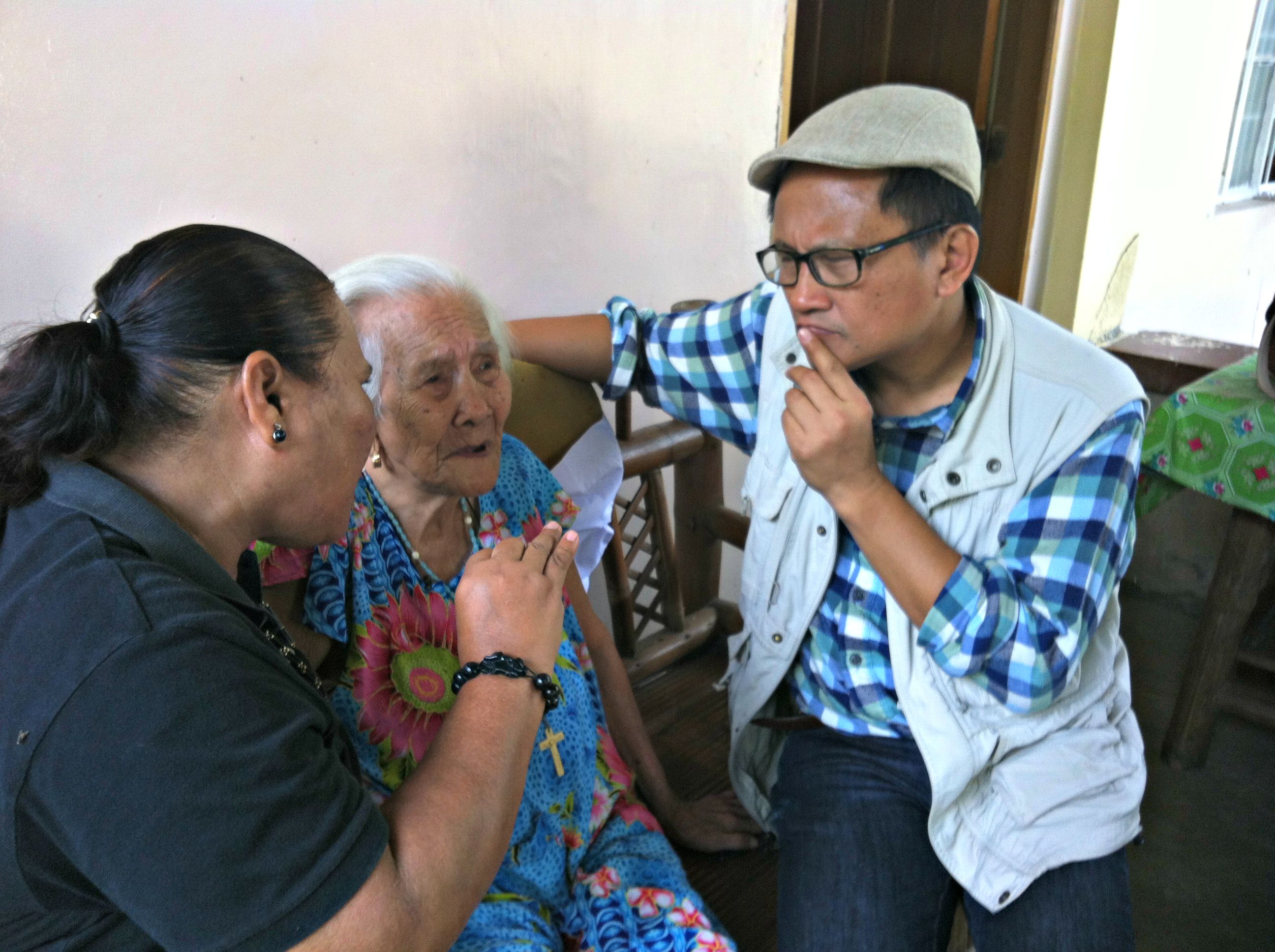
One of them is the 92-year old Lola Lourdes Sequio-Divinagracia of Iloilo, the only surviving comfort woman in the province.
A nanny turned comfort woman
The story of Lola Lourdes Divinagracia reveals an unknown account of a comfort woman hidden for seven decades that even her children never knew of. Her life story is a roller coaster of events that follow a narrative of how a woman fought her battle for survival during the time of war.
According to Lola Lourdes’ written testimony, she led a peaceful life as a nanny to the three children of Tokumori and Uta Miyasato before the Japanese occupation took place. The Miyasato family was just one of the pre-war Japanese migrants in Iloilo who had maintained a good relationship with the natives until war broke out. Tokumori was a fisherman while his wife Uta was a fish vendor in a market.
Iloilo was the largest province in Panay which fell under the control of the Japanese Imperial Army for three years.
When the Japanese occupation started in 1942, Lola Lourdes became a waitress at Kotobuki, a Japanese restaurant in Iloilo, where she was used by the Japanese army as a comfort woman. They would serve food to the Japanese soldiers and after they feed them, the soldiers would rape them. If they refuse, they would get killed.
When she found a chance to escape, Lola Lourdes ran to an apartment known as Dr. Caram’s Residence to seek refuge and there she saw the children of Tokumori Miyasato aching for parental care.
“Tumakbo kami papunta sa bahay ni Caram. ‘Yung dalawang bata umiiyak. Naawa ako,” she recalled.
(We escaped to Caram’s house. The two children were crying and I pitied them.)
A family formed from war
Despite the suffering she experienced from the Japanese, Lola Lourdes decided to take the Miyasato kids as her own, keeping them as family even after she bore her own children after marrying a Filipino in the 1960s.
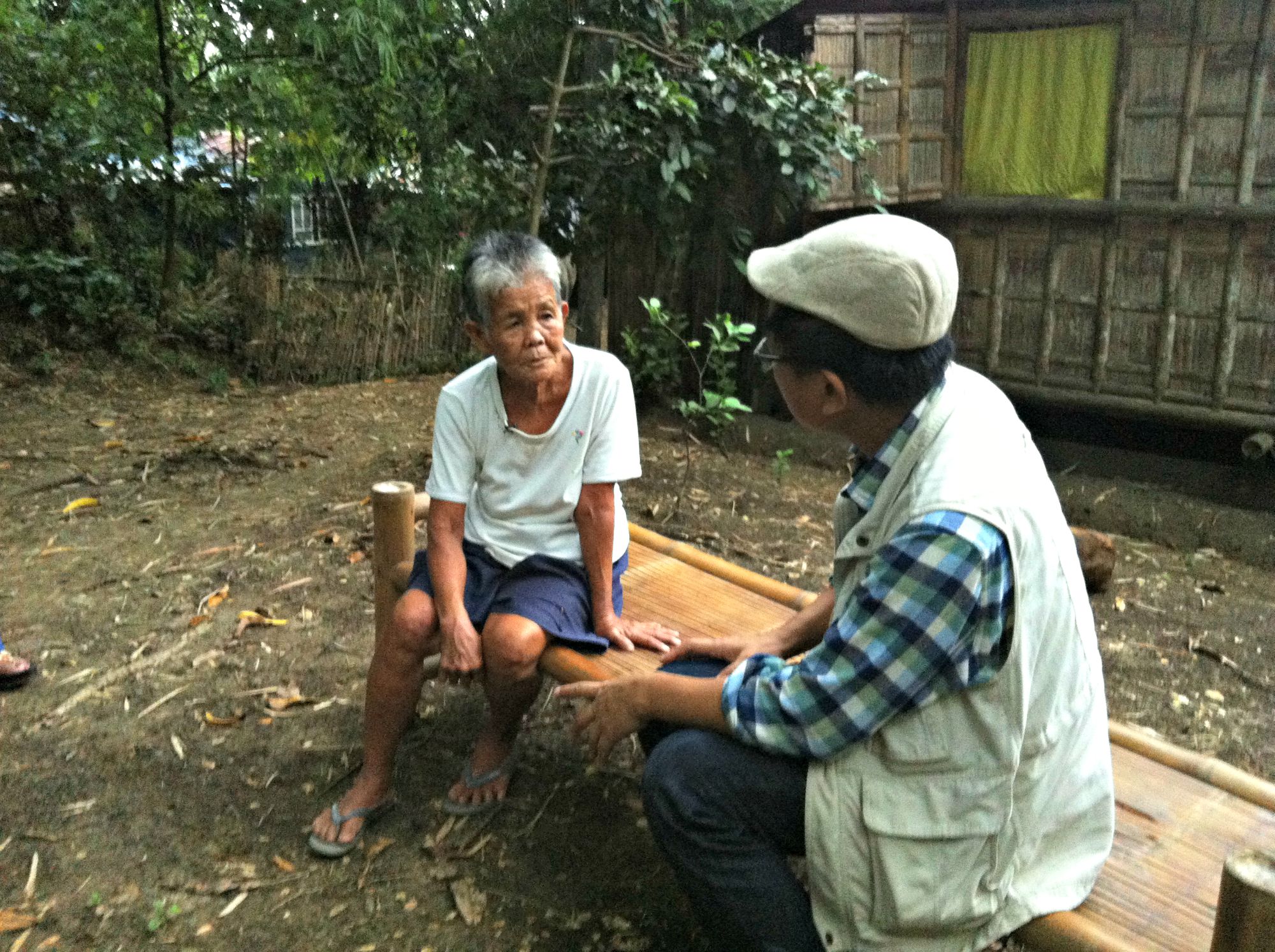
Seventy years after the war, only the youngest of these three Japanese children is alive. She is Salvacion Sequio (Setsuko Miyasato is her Japanese name), also known as Sichang, who is now 75 years-old. According to Sichang, she was only five years-old when she and her siblings became orphans. Her elder sibling, Juristang, died right after the war. Sichang and her eldest brother, Ikot, were then raised by Lola Lourdes.
After the war, majority of Filipinos felt harbored ill against the Japanese race so to protect Ikot and Sichang, Lola Lourdes made them believe that they were pure Filipinos. But because of their obvious Japanese physical traits, they were often the subject of humiliation by their Filipino classmates. They eventually quit schooling and led a difficult life in the province.
Lola Lourdes’ long-kept secret
At the age of 36, Sichang eventually learned of her real identity with the help of Aunt Haruko, her father’s sister, who was able to locate them in the Philippines in the 1970s. Sichang holds primary documents and an affidavit with the detailed account of her family before, during, and after the war. These documents did not only reveal her real identity but a part of the narrative of Lola Lourdes’ life story that she never told of for seven decades.
“Ang sabi ng tiyahin ko, si Haruko, katulong namin ‘yan (Lourdes). Nung nasa serbis ‘yung papa namin, siya (Lourdes) yung nag-asikaso sa amin tapos inasawa na lang ng papa namin kasi wala na kaming mama,” said Sichang.
(Aunt Haruko told me that she was our nanny. When my father was in service for the army, Lourdes was the one who took care of us then our father took her as his wife since we didn’t have a mother anymore).
Sichang revealed that more than just being a nanny, Lola Lourdes actually got married to her father Tokumori Miyasato after the death of her mother during childbirth in 1944. This happened when Lola Lourdes returned to their home after she escaped from Kotobuki. The affidavit said that their father entrusted the children to Lola Lourdes if ever he dies in his duty during the war.
Lola Lourdes confirmed that she really got married to Tokumori Miyasato and the three Miyasato children were entrusted to her. They were together as a married couple for just one year. Lola Lourdes bore a child with Tokumori but the baby shared the same fate with others who died during the war. The child died few days after birth.
That marriage with Miyasato might have saved her from other abusive Japanese but it also became a threat to her life after the war. She eventually had to keep it to herself because she feared for her life and her children’s lives,
“Mahirap kapag malaman ng mga sundalo (sundalong Filipino), papatayin ka,” said Lola Lourdes.
(It is difficult if the Filipino soldiers knew about it, they will kill you).
Lola Lourdes then married Juan Divinagracia in the 1960s and had seven children with him. With the help of Juan, she raised her own children along with her adopted ones.
Lola Lourdes may now be blind because of her cataract but these events that took place in her life 70 years ago are still very vivid in her memory. With this revelation, she hopes that a new narrative will be included to the discourse of wartime in the country---of women silenced but struggled to survive and refused to be defeated. ---BMS
Leonora Patricia de Guzman is a program researcher for Howie Severino's team in "I-Witness," GMA's longest running documentary program. Their documentary "Ang Lihim ni Lola" chronicles the story of Lola Lourdes. It was first aired in August 2015.

