

 GMA Brandtalk
 Tracking
 Archives

ADVERTISEMENT
Filtered By: Publicaffairs
Public Affairs
Senate President Juan Ponce Enrile gets personal on 'Powerhouse'
Many Filipinos know Senate President Juan Ponce Enrile for his participation in the recent impeachment trial of former Chief Justice Renato Corona. Some may remember him for the roles he played during Martial Law and the first People Power Revolution that eventually toppled the Marcos regime. But did you know that Senator Enrile is also a taekwondo black belter? And did you know that when he was a practicing trial lawyer, he never lost a case in court? Senator Enrile opens up to host Mel Tiangco in the June 12 episode of "Powerhouse." He shares stories about his family and his childhood, being called a bastardo and meeting his father for the first time. GMA News Online is publishing the transcript of his interview, including parts that were not aired on television. (A video excerpt of the interview is also available here.) — Candice Montenegro, GMA News 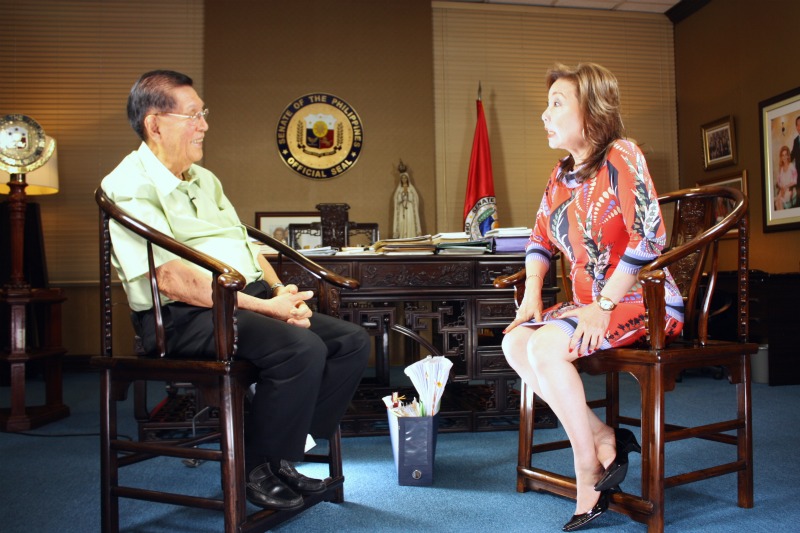
Mel Tiangco: Senator, sino ang mag-aakala na kayo pala ay dumaan din sa poverty, dumaan din kayo sa hirap noon kabataan niyo. Tell us a little about that time.
Juan Ponce Enrile: Alam mo Mel, maraming tao ang nag-iisip na ako ay kilala nila, pero hindi nila alam kung sino ako eh. Kung saan ako nanggaling.
MT: Would you care to tell us?
JPE: Ako talagang nasubukan ko ang tunay na buhay. Dinaan ko nang lahat – mangisda, nagtatanim ng palay…
MT: Construction worker?
JPE: Construction worker. My last job nung panahon ng war was I was a… part of a group of people that open the road all the way to the northern tip, or eastern tip of Luzon. Kaya ngayon dine-develop ko yun para sa mga kababayan ko do’n.
MT: Pero teka muna senator, tell us why.
JPE: Because I was born in a poor family. My mother was not well educated. Well, she spoke Spanish, she spoke Tagalog, she spoke Sambal, she spoke Ibanag, Ilokano, because...
MT: Multilingual…
JPE: My grandfather, her stepfather, was a Zambaleño and he also spoke Pangasinan… But anyway, she was married at the age of I think 16. And she was widowed at the age of 20.
MT: Widowed. Widowed siya.
JPE: Yeah. I have two elder brothers, one of them is now dead. The other one is still alive. So I was the third. And I was the product of a political campaign. Because my father, although he was from Baliuag…
MT: Baliuag, Bulacan?
JPE: He was. He found himself in the province of Cagayan as a clerk of court.
MT: So lawyer… your father was a lawyer, too.
JPE: He was. He was a graduate of Ohio State University. Law school, Ohio State University. At sa kontrata niya sa gobyerno ay siya’y pag-aaralin na nung panahon ng Amerikano kasama nung mga tinatawag na Filipino Pensionados pa, kagaya nina Bocobo, nina mga iba pa, palagay ko si Jose Espiritu kasama rin yun eh. Marami sila… napunta siya sa Ohio State University naging abogado. ‘Pag balik niya dito, nagtrabaho sa gobyerno ng limang taon. ‘Yun ang kontrata niya at ang kanyang kahuli-hulihang trabaho ay bilang clerk of court.
MT: In Cagayan? Sa probinsya niyo po yun?
JPE: At nagkaroon siya ng asawa na taga-Cagayan, isang anak ng pamilyang may kaya naman at ang kanyang mga ancestors ay Spanish speaking. Eh ‘yung tatay ko ay gwapo at mestizo, magaling mag-Espanyol. Magaling din sa Ingles. Ngayon, naging pulitiko siya sa Cagayan at nung 1921, 1922 ay naging member siya ng House of Representatives. Eh nung mag-reelection siya ng 1923, doon niya nakilala ang nanay ko during the campaign. They had an affair, eh ako yung produkto.
MT: Produkto ng affair. You are one and only from that affair?
JPE: Ganyan ang tadhana. Oo, ako lang.
MT: Kayo lang ang anak pero marami kayong kapatid sa iba?
JPE: Passing through lang. Eh noong matapos yung kanyang term, natalo siya nung reelection niya. Dahil doon, umalis sa Cagayan, dala-dala niya ‘yung pamilya niya. Hindi niya alam na meron pala siyang naiwanan na semilya sa Cagayan.
MT: Hindi niya alam, sir. Hindi niya alam na nagkaanak siya.
JPE: To be fair to him, hindi niya alam. Kaya lang nung ako ay lumalaki na ay kaiba ako doon sa mga ibang kapatid ko at....
MT: Because you were mestizo, you are good looking.
JPE: Ako yung tinatawag ng mga kababata ko, mga kaklase ko na bastardo. Eh tinanong ko sa nanay ko, ano ba ito?
MT: Oh wow, you confronted your mom.
JPE: Pagkatapos ay ayaw niyang sabihin. Sa bandang huli sinabi na. Ang tatay mo ay isang abogado, sabi niya. Ay wala na rito. Ayun, eh dumating ang panahon na nagkagiyera.
MT: Nag-gerilya kayo?
JPE: Nasa gerilya ako. ‘Yung pinasukan ko na gerilya, ‘yun ang underground government, Commonwealth government na iniwanan ni Quezon nung umalis. Ah doon naman kasama sina Abad Santos, ‘yung Abad Santos na mahistrado, member ‘yun ng underground Commonwealth government. Ang pangulo ng unang gerilya namin sa Cagayan ay ‘yung gobernador namin no’n, at lumago ‘yun at napasama ako do’n dahil ‘yung nagpaaral sa akin sa bayan namin sa Gonzaga ay mayor, Cesario Peralta. At siya ang head nung underground gobernador eh ako isinama niya na bilang member ng gerilya. Noong 1943, nabuwag ‘yung gerilya na ‘yun sapagkat nahuli yung headquarters namin sa Cabugao, Mountain Province.
MT: Pati kayo nahuli?
JPE: Ah hindi ako nahuli, pero ‘yung mga miyembro na nandoon sa Cabugao, wala ako do’n eh, sila nahuli, ‘yung iba may mga kasamang mga Amerikano. Samakatuwid na-dissolve ‘yung gerilya organization na ‘yun. Pagkatapos, wala akong trabaho eh pumasok ako sa Philippine Constabulary. ‘Yung Bureau of Constabulary... President Laurel. MT: Sir, teka muna, i-place ko lang, sir. Ilang taon kayo niyan sa kwento ninyo?
JPE: Ah 1941, 17 years old ako.
MT: 17 years old and I understand that you did not even finish your high school yet.
JPE: I finished only first year.
MT: First year high school at 17. Bakit po nagkaganoon, because of the war?
JPE: Hindi. Ang nangyari, eh di natapos ako ng elementarya nung Marso ng 1940. Pumasok ako June ng first year under scholarship. At doon sa Cagayan Valley Institute sa Aparri, ako naman binigyan ng scholarship pero dahil hindi naman kaya ng nanay ko na ako'y pag-aralin eh ang nagpaaral naman sa akin ay ‘yung pinsan niya na may transportation business. Isang sasakyan lang, ‘yun ang hanapbuhay niya. Doon ako nakatira sa kanila pero libre ang aking pag-aaral sa high school at ako ang house servant nila, alila. Ako ang nagluluto, naglalaba. MT: Ah, you had to serve them para paaralin kayo?
JPE: Naglilinis ng bahay...
MT: Pero teka muna, sir. Naguguluhan na ako ha, dahil you finished your pre law in Ateneo.
JPE: Later on
MT: And you finished your law in UP. But how did that happen? Saan na kayo kumuha ng pera from...
JPE: Alam mo, nung natapos ako ng first year, nagtrabaho ako sa transportation, kumita ako ng konti. Pumasok ako sa second year sa June of 1941. Marso natapos ako ng first year eh. Noong pagpasok ko nung Hulyo, nagkaroon ako ng problema sa eskwela. Isang araw, pinagsasaksak ako ng apat na senior students, mga third year students...
MT: Because?
JPE: Dahil sa isang babae.
MT: Chicks! Sabi ko na chicks eh. Si Senator talaga.
JPE: Hindi ko naman nililigawan, katabi ko lang.
MT: Biruin mo yun, second year high school pa lang yun.
JPE: Naging katabi ko siya eh. Kumokopya sa akin, nagpapaturo. Eh akala nila, nililigawan ko, pero kursonada lang yung mga yun nung mga iba. Eh in-ambush nila ako sa eskwela. Mabuti’t nakatalon ako, pero marami akong sugat sa katawan.
MT: Ah hindi naman kayo napaano, scratches lang.
JPE: Pati sa aking sikmura, dito marami sa kamay ko. Pero nalibre naman ako. Nag-file ako ng kaso, na-dismiss ako, in-expel na sa eskwela nung director dahil sa desisyon ng board of trustees. Ngayon eh wala akong trabaho. Pumasok ako ngayon dito sa construction. Bale gerilya ako… ‘yun nga na sinabi ko na sa buwag ‘yung gerilya namin, pumasok ako ngayon na sundalo. Eh tinanggap naman ako. Noong 1943, early 44, dumating sa Aparri yung mga anak ng tatay ko sa kanyang tunay na asawa, mga half-sisters ko. MT: Half siblings…
JPE: At ako ay nakilala nila. Sinabi nung nakakakilala sa akin na may kapatid kayo rito. Doon ko nakilala ‘yung mga anak ng tatay ko, kaya nahuli ako ng mga Hapon, Kempeitai, at naging bilanggo ako ng 90 days. Nakatakas ako, bumalik ako sa gerilya. Pagkatapos ng labanan sa amin noong August 1945, eh kara-kara kami dumating na lalaki na pinadala ng tatay ko nang nalaman niya na buhay ako at ako'y kinuha at nagbyahe ako papunta sa Maynila sa 6x6. Maghapon sa likuran ng trak, walang tolda at samakatuwid, sa madaling salita ay tumira ako doon sa mga kapatid ko na nakilala ko dito sa Sta. Mesa, doon sila nakatira. Yun pala, ayaw na nila akong ipakilala sa tatay ko dahil gusto nila akong maging kasama nila at maging servant nila. Mabuti naman at meron din akong half-brother sa ibang... MT: Ibang babae naman ‘yun? Sir, masipag naman pala ang tatay niyo.
JPE: Sinabi niya, ganito ang gawin mo para....
MT: So hindi niyo pa nakita ang inyong ama?
JPE: Hindi pa.
MT: At this point ha, hindi pa kayo nagkikita.
JPE: Itinuro niya sa akin kung paano ko pupuntahan. So naglakad ako magmula doon sa Sta. Mesa, sa may riles doon…
MT: Up to?
JPE: Up to Dasmariñas Street. Doon sa Plaza Moraga sa ibaba ng Jones.
MT: Sa may Chinatown…
JPE: Oo, doon. ‘Di ba pagdating mo sa Jones Bridge, bababa ka, Plaza Cervantes. At sinabi sa akin kung paano ako pupunta sa 7th floor. Eh ‘yun ang primerong nakita ko ‘yung elevator. Hindi ko alam kung paano ako papasok, paano ako lalabas. Pinagmamasdan ko nang matagal ‘yung mga tao. Pagkatapos, umakyat ako, dumating ako doon sa 7th floor. Lumabas ako doon sa pintuan, pinakilala ko ang sarili ko doon sa teleponista. Binigay ko ang pangalan ko, dinala sa kwarto. Pagbalik niya, sinamahan ako. Doon ko nakita ang tatay ko. MT: How did that feel?
JPE: For the first time?
MT: How did that feel?
JPE: At nung makita niya ako, sabi niya eh niyakap niya ako at sinabi niya, “I'm sorry, my son,” sabi niya “that I have not known that you were alive.” Sabi niya something to that affect anyway. Sabi niya, “what can I do for you?” Kako wala, gusto kong mag-aral. Ayun, dinala ako sa Malabon, sa pamilya naman niya ngayon, sina Armida, ‘yung mga kapatid ko.
MT: Iba na naman ‘yun, sir. Iba pa ‘yung Sta. Mesa?
JPE: Marami kami eh.
MT: Buti na lang marami ano po…
JPE: Labingwalo kami.
MT: Mabuti na lang marami, dahil marami kayong napuntahan. Alright, so you went to Malabon and this is where you were able to enrol.
JPE: Napunta na ako, doon na ako tumira sa Malabon.
MT: Kina Armida na po ‘yan?
JPE: Pagkatapos pinag-aral niya ako sa Maryknoll, in-enrol niya ako sa second semester ng third year. Kinausap niya ‘yung mga American Maryknoll sisters sa St. James. Eh mabuti naman mataas ang grado ko, nagkaroon ako ng validating examination sa Centro Escolar. Pumasok ako sa Ateneo de Manila bilang pre-law. Pagkatapos after pre-law sa Ateneo de Manila, eh lumipat ako sa UP at tinanggap naman ako doon. Doon ako nag-graduate ng law.
MT: And all this time you were living with the...
JPE: I was living with my father and my stepmother, Mama Purita. The mother of...
MT: Armida Siguion-Reyna...
JPE: What you call Tita Mids. 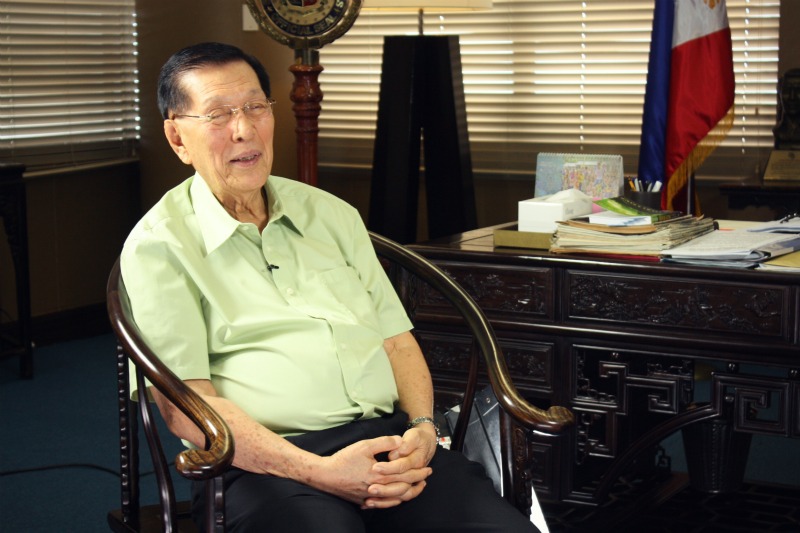 MT: In the meantime, ano po ang nangyari sa inyong tunay na ina?
MT: In the meantime, ano po ang nangyari sa inyong tunay na ina? JPE: Ah naiwan sa Cagayan. Then I stayed in Manila, I finished my high school, and then I went back to Cagayan to get a certification that I was a student there. I had to take the examination and that's validating examination at Centro Escolar, Colegio de Centro Escolar pa noon. Eh naipasa ko, nag-graduate ako, kaya all this time I never went back to Cagayan. And then I went back after graduation na, after high school. Then I entered the Ateneo de Manila, I graduated. I went to UP, I graduated from the College of Law of UP, and then after I went to Harvard. I came back, I practiced law. Then after 12 years, I entered the government service not on my design and decision but I was asked by President Marcos then to join his government. Doon na ako napako hanggang ngayon.
MT: Tell me about the college days in UP, na bakit daw hindi kayo ang nabigyan ng Magna Cum Laude at Cum Laude lang kayo because of this incident…
JPE: Isinulat ko na yan sa aking speech nung inimbita ako na maging graduation speaker nung graduating class sa College of Law. Alam mo, I was really a candidate for Magna Cum Laude, mataas ang grado ko, pero nung fourth year na ako eh meron kaming subject doon na Civil Law Review. Five units ‘yun eh, medyo napika sa akin yung propesor ko dahil sinalungat ko ‘yung opinion niya dahil sa point of law. Eh binigyan ako ng 3, kaya bumaba ‘yung average ko. Kaya I graduated simply as a Cum Laude.
MT: And then you vindicated yourself because one day, you were already the part....
JPE: Well, he was my professor and when I was already in government, I became his boss. Because I was Secretary of Justice and he was a Bureau Chief in one of the bureaus under the Department of Justice. Naging kaibigan ko rin siya.
MT: Ah naging kaibigan niyo din siya?
JPE: He was a brilliant professor. Magaling na abogado rin, naging Justice of the Supreme Court. And he was also an Abad Santos. And his name was Justice Vicente Abad Santos.
MT: Pero Senator, ‘yung experiences niyong yun, the experiences when you were young, ano po, masasabi niyo ba na ito ang naging foundation ng pagiging.... JPE: When I was caught by the Japanese, I was a member of the Hunters ROTC guerilla. Because I was in the constabulary, I was recruited by them. I acted as a member of their intelligence group. Ayun. Anyway, as I was telling you, pumasok....
MT: Going back to my question, sabi ko ‘yun ho bang mga experiences ninyo when you were young, is this part of the paghubog na sa pagkatao ninyo?
JPE: Alam mo, ‘pag dumaan ka sa ganung buhay, you are tempered like steel. You gain a certain feeling of confidence that you can handle yourself under trying conditions and circumstances. So that's why probably some people think of me as an arrogant ass, because I don't really care what you say. I know myself and I can handle myself under any condition. I do not provoke any quarrel with anybody, but if I'm challenged, especially if I'm threatened, then I will take you on. ‘Di ba? Eh ganun. MT: And that you have proven through your career.
JPE: ‘Yun ang ugali at kultura ng lugar namin nung mga panahon na ‘yun.
MT: Bakit naman sa lugar ninyo, sir?
JPE: Eh jungle ‘yun eh. Malayo sa sibilisasyon. ‘Pag labas mo sa bahay mo, kailangan meron kang patalim. Hindi ka pwedeng lalabas na wala kang patalim. MT: Eh sinong mga kalaban niyo ba doon?
JPE: Eh hindi mo alam ang kung sino ang kwan sa’yo eh. Eh alam mo doon, siga-siga ang mga tao doon.
MT: And of course you were siga-siga also.
JPE: Hindi naman.
MT: You needed to be.
JPE: Alam mo, hindi mo malaman kung ano, kung dadaan ka at hahabulin ka ng aso o hahabulin ka ng isang lasing o anuman. Ganun ang kultura namin eh. MT: Now let's go to your career. You were with the Marcos administration during the Martial Law years. Siguro it is a good question to ask: Do you have any untold stories about Martial Law years?
JPE: Basahin mo na lang ‘yung... Hindi ko sasabihin sa’yo ang istorya niyan.
MT: Ay bakit sir?
JPE: Sapagkat gumawa ako ng libro.
MT: You have book on Martial law?
JPE: Hindi lang martial law yung buhay ko. Ang kabuuan ng buhay ko hanggang EDSA Revolution.
MT: Hanggang EDSA Revolution.
JPE: Wala na akong panahon na dagdagan pa eh. MT: Ayaw niyo bang dagdagan pa ‘yun kasi ang haba pa noon ha.
JPE: Eh bahala na ‘yung contemporary people na kung gusto nilang pag-aralan kung anong ginawa ko at anong mga kalokohan at kabutihan ang nagawa ko eh bahala na silang sumulat. Pero inistorya ko lang ‘yung buhay ko hanggang doon sa nangyari na kumalas ako doon sa gobyerno ni Presidente Marcos noong 1986. MT: Just one reason why you did that?
JPE: Hindi ko masasabi ang rason eh. Mahabang istorya ‘yan. Eh may kasaysayan kaya hindi ko masasabi ngayon dahil ‘yung mga sinasabi na mga tao na dahilan eh hindi ‘yun ang dahilan. May dahilan ‘yun pero pardon for not answering your question. It's written in my book why we organized the RAM and why we prepared for something that we thought it was our duty to prevent.
MT: Ang haba ng kasaysayan ninyo ‘no? So maybe I'd like to ask you a question. Pagkatapos po ng EDSA Revolution, napakarami nang presidente ang umupo. Sino sa tantsa ninyo doon sa mga presidenteng ‘yun ang pinakamahusay o nagbigay ng maganda sa bansa?
JPE: Ay hindi ko na sasabihin kung sino ang mahusay, sino ang bulok. Let that be a judgment of history dahil it will be unfair for me to make a judgment against any one of them. Sasabihin nila ay meron akong hinanakit o masamang pag-iisip kontra sa kanila. So I will not assess them. Let the people, let the historians of the country assess its administration after Marcos. MT: Now I'm a hopeless romantic. Can you tell me the story of your love affair with your wife? Where did you meet her?
JPE: Actually, I met my wife, I was a member of the bachelor's club and she was one of the pretty girls who were chosen by the bachelor's club as their some sort of a counterpart. And then after that I lost track of her for more than a year, I think. I met her in the house of… I forgot the name of the family there from Pamapanga. And then in a party afternoon pa, get together. And then after that, she left the Philippines and then when she came back, I met her again.
MT: You were already a lawyer when you met her?
JPE: Ah yes, I was already a lawyer. I already came back from Harvard. Then I courted her, and then I married her.
MT: Was that love at first sight?
JPE: Well, nung primero hindi niya ako iniintindi pero I was persistent so...
MT: How did you persist?
JPE: Ganun lang naman ang buhay eh. These are made in heaven.
MT: Oh really? But what really clinched it, na sinagot niya kayo?
JPE: Well, I cannot remember. We were dating each other and finally we became close and then we ended up marrying each other. MT: And how long has it been? That you have been married?
JPE: 1957 until now. September 17, 1957.
MT: Wow, tandang tanda niyo pa sir.
JPE: The priest, ‘yung pari na nagkasal sa amin ay si Father Planta sa Loreto Church sa Sampaloc.
MT: Tandang tanda niyo pa, Sampaloc Church kayo ikinasal sir?
JPE: Patay na yun.
MT: I would think so.
JPE: He was quite a young priest when we got married eh. MT: And how would you describe yourself as a husband and a father?
JPE: Well, actually I devoted all my time to earning a living for my family, and with my two kids and that's about it. Anyway, some people would probably think that I did not spend much time with my family because I was concentrating on my law practice. I leave the house early in the morning, I come back late in the evening. I do a lot of corporate work. I organize a lot of business organizations in the country and in my law practice… many of them are still existing. And most of the time I go to provinces to handle trial cases. And then when I got into politics, I spent most of my time in government work because at any given time I used to handle five, six, seven positions in the government during the Marcos years. And then when the EDSA Revolution was over, then I reorganized the Nacionalista Party. I went all over the country and reestablished the organization of the Nacionalista Party so I was traveling all the time. In the meantime, my children were growing and I did not spend much time with them. MT: So what would you say was the secret of your marriage for 55 years considering what you just said na parati kayong wala sa bahay, busy…
JPE: You know, marriage is a matter of commitment and there are ups and downs. I think it's ordinary for husband and wife to have some differences, ganyan. But we manage to stick together. MT: Have you found the secret of how to, for a lack of a better word, "tame" Mrs. Ponce Enrile when she's angry? How do you do that? Are you the kind na may flowers, may regalo, may whatever?
JPE: I have no secret. I just do what I thought was right. And well, she has understood my problem because I was working. As you know, I did not inherit any wealth from my father, I did not ask for any share in the estate. I gave it all to my half-brothers and so I had to build up something for my family out of my brain and my time and labor. And that's why I concentrated on working. I was teaching in the evening. MT: Ah nagturo pala kayo?
JPE: I was practicing law in the daytime and in the evening I go to the Far Eastern University to teach in order to increase the income of the family.
MT: But then, of course that is a long time ago nung you really have to seek out a living.
JPE: I was also playing the stock market. I was organizing business enterprises and then I got some shares from these companies…
MT: What made you rich: being a lawyer or going into business?
JPE: Ah both. Then I built up a business, not a big one, but I happen to take over a business enterprise that was offered to the group of Eddie Angara, but they did not take it. When I look at it, they said I will take over. And then that increased...
MT: Napalaki naman yung...
JPE: I was lucky and that's how I got a timber concession in Samar. And when I got that timber concession, the price of log was $20 per cubic meter, and after two months… two months after I assumed the contract, something that Ed Angara and his group did not realize, the price of logs went up to $40 then it went up to $60, it ended up with $120 per cubic meter. So I was able to pay all the liabilities of the corporation that I assumed, more than 100M pesos at that time.
MT: At that time…
JPE: And that's it, that's how I built a fortune for the family.
MT: That’s fantastic, ‘no? Well, just going back, Senator. Ang dami na ho nga ninyong, well, experience, let's say the least. But at this point, meron pa ba kayong ma-achieve, is there something else that you would like to achieve?
JPE: Alam mo, not a question of achieving something. I think at my age, I have done enough to earn a living. I have done enough to make a mark for myself. But I think I will die very early if I will stop working... MT: Oh really, seriously?
JPE: I get bored if I'm not doing anything...
MT: At this point wala pa kayong naiisip na I will retire, I'll take it easy, I'll slow down?
JPE: No, I will retire. This is my last stint in politics.
MT: And then what?
JPE: After that, I will go to my province, go back to where I came from. And see what I can do for the people. I'm setting up a project there that hopefully will create a city. That will be my gift to the people of the province where I came from. MT: So hindi rin kayo magre-retire kasi magtatrabaho pa rin kayo doon?
JPE: Hindi na ako magtatrabaho. I'll just, you know, there's a 3/4 that was setup there. And right now I'm building the fourth. Malapit nang matapos ‘yung breakwater.
MT: I'm sure you already know na marami po ang humanga sa inyo bilang presiding officer in the impeachment trial.
JPE: Hindi ko inaakala na magkaganun eh.
MT: Hindi? Bakit po sir?
JPE: Well...
MT: You were just doing your job? Is that how you look at it?
JPE: It is just one more job that I was going to perform, but I never realized that it will bring me that kind of recognition and I am quite grateful and happy, thankful to those that trusted me. MT: Of course you were awesome, you know, as presiding officer. How did you prepare for that? O meron ba? Meron po bang preparation?
JPE: I studied.
MT: Ah you studied?
JPE: I have a file here full of research that I did myself.
MT: You researched on impeachments?
JPE: Well, because we do not have any precedent in the country. This is the first time that we’re having the real honest to goodness impeachment trial, and I'm quite thankful that I was able to finish it. There were many impeachment cases that were filed but they ended without resolution. MT: Justice Corona was a colleague of yours…
JPE: He was not my colleague. He graduated far after I finished my College of Law. But I met him as a sponsor in a wedding of a daughter of Mayor Sarmiento of San Jose, Bulacan. That's where I first met him.
MT: Naalala niyo pa ‘yun ano, those little details ‘no? Where does that sharpness in your memory come from?
JPE: I don't know.
MT: Do you do anything specific? No vitamins?
JPE: No, nothing. 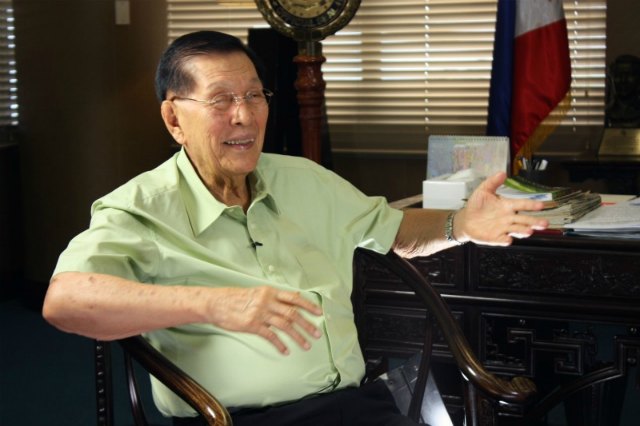
MT: Talagang natural na ang memory ninyo, ang capacity is so huge? You were talking earlier of your childhood. And you know all the dates, including when you graduated elementary.
JPE: If you go through life's roller coaster like I did, you cannot forget your experience.
MT: Yeah, but the dates, naalala pa rin ninyo.
JPE: You cannot forget the dates, the important events in your life, the people that you met, the dangers that you were exposed to. You cannot.
MT: And your health, how do you take care of your health?
JPE: Well, I exercise, I used to run, I was a runner, I was a jogger. I was the one that brought taekwondo in the country. I practice it. I'm a black belter.
MT: Oh really...
JPE: Although I can no longer hit high with my leg. The book that I have written will show what I was when I was practicing taekwondo. I was a water skier, I could ride the horse standing on the back of the horse or a carabao.
MT: Pero Senator, do you have a full day? Meaning to say in the morning… What time do you wake up in the morning, sir?
JPE: Ah normally I wake up between six and seven.
MT: Bakit po napakaaga? That's your regular habitual...
JPE: That has always been my waking time. Ever since I was studying law.
MT: Oh really, bata pa kayo ganun na. Tapos pagkatapos po nun?
JPE: I go to sleep at 11.
MT: And then at 6, do you do exercises?
JPE: Eh immediately I wake up and then I do calisthenics now. But before when I used to run at 6:00 in the morning around the village, especially when I was living in the Urdaneta Village. Then in Dasmariñas, when I was already 75, I was walking around the village every morning.
MT: For one hour?
JPE: Ah I go around the perimeter of Dasmariñas Village.
MT: Basta ‘yung perimeter.
JPE: Approximately 6 kilometers, 7 kilometers.
MT: And then after that, after the exercises…
JPE: Then I take a shower, then I go to work.
MT: Ah you go to work. Usually what time are you in the office?
JPE: Normally I get to the office between 8 and 9.
MT: Every day?
JPE: Every day.
MT: And then?
JPE: Then I go home and then I take dinner with my family. MT: How long did you prepare for that impeachment trial, sir?
JPE: Well, when the Senate received a copy of the articles of impeachment, the office prepared this one, these are the pleadings. They are in large because I have to use big fonts to read the material. From the moment we got the articles of impeachment, they started reading it. Then when the answer of Chief Justice Corona arrived, I went through it also and I made an outline of both the position of the prosecution and the defense. You have the complaint, the answer, the reply. And then I did the legal research. And then the research on the rules of evidence that would be use in the trial. I made an outline of these things.
MT: Sir itong procedure na nabanggit ninyo, is this only for you as a presiding officer?
JPE: For me only. I did not share it with the others.
MT: Yeah, but they were, but was it also incumbent upon them to research?
JPE: I don't know if they did any research. I did this just like the way I was doing my cases when I was in law practice. During my law practice, I go to the court room, I do not use any notes. I try the case with all the facts in my head and with the rules of evidence at my fingertips.
MT: Is it true that you never lost a case?
JPE: No. I never lost a case. And I have handles many cases.
MT: Wow.
JPE: I was pitted against very capable lawyers ha. MT: Anong experience niyo as a trial lawyer ang masasabi ninyong you know very significant in your career and your life?
JPE: There is nothing like preparation. You have to be thoroughly prepared to tackle your opponent inside the courtroom because it's quite different in the court room. In the case of a corporate lawyer, tax lawyer, or a patent lawyer, or just a business lawyer, you have all the time to go to library to research and then you can ask your assistants at least to look at this rule from the law books. When you are inside the court room...
MT: Immediate yun…
JPE: …you are engaged in a mental battle between you and your opponent and between you and the witness. And then you have the judge to watch over you and stop you or allow you to proceed in your questioning whenever you question the witness. There's no time for you to study anything if you are inside a courtroom. And you have to be able to make split decisions as you go along in the trial.
MT: In this trial, the impeachment trial sir, did you think that the defense and the prosecution played their roles properly and very well?
JPE: Well, to say very well is relative.
MT: Sa standards ninyo?
JPE: Well, they did well enough, but I wish they could have done better. There was a room for improvement, especially in their cross examination of witnesses. Direct examination is easy. You just present your story through the words of somebody and through pieces of paper called evidenciary documents. But to handle a witness inside a courtroom and break him little by little in order to go into the core of what we call truth, human truth, is an art. And there are only four rules that you have to follow. It is like entering a forest and you have to see first whether the forest is full of snakes or full of bugs or full of quicksand. So you use a technique to test what this witness has in mind or knows. And then you undermind him or you suggest to him some different impression or perception could have been possible. Or if you have the material, you can impeach your witnesses, what we call impeaching a witness by confronting him and destroy him totally. To acquire that, it is not enough that you handled only one, two, three, four, five, or a dozen witnesses. You must have lived inside the court room and handled this (inaudible) as a witness in the course of your experience as a trial lawyer. MT: And what you are saying is that you did not see this in the impeachment trial?
JPE: I was expecting those things from the contending lawyers, but some of them were able to do it, some did it perfunctorily. MT: Now I want to go to your house. Can we talk about your house, senator? When did you acquire the house?
JPE: I acquired the house in 1975.
MT: Ganun na ho ba itsura noon nung in-acquire niyo? But you built the house?
JPE: We built the house. I borrowed money from the GSIS.
MT: Oh really, at that time?
JPE: I borrowed almost a million pesos.
MT: You built the house for a million pesos only.
JPE: Eh magkano lang ang lupa doon no’n.
MT: Nung 1970s…
JPE: In the 70s.... Kasama ako nung ginawa yang mga subdivision na yan.
MT: Baka special price sa inyo sir?
JPE: Hindi, hindi.
MT: Talagang ganoon ang presyo noong unang panahon…
JPE: Ay ganun talaga. Eh magkano ba ‘yung Forbes Park, 6 pesos ‘yun, ang per square meter. Ngayon San Lorenzo… San Lo is naging 12 pesos yata.
MT: Mas mahal pa yung San Lo.
JPE: 18 pesos ‘yung Bel-Air. ‘Yung Urdaneta Village ang sumunod, 25 pesos per square meter. Then sa Legaspi, pagkatapos Salcedo Village, then Dasma. MT: Pero senator, kayo ang nagpatayo ng bahay…
JPE: Oo. Ang asawa ko. Dahil I was busy.
MT: But were you part of the designing?
JPE: No, no. Siya lang ‘yun.
MT: You know what struck me with your house? Walang pintuan…
JPE: Bukas…
MT: The whole lanai was open. Talagang hindi sinasara.
JPE: Oo.
MT: So I was really a little surprised and I asked Mrs. Ponce Enrile if talagang… sabi niya talagang it's open. Sabi niya because she likes the...
JPE: Yan ang ginawa ng arkitekto eh.
MT: You did not object to that? I mean, for security…
JPE: Wala, wala. Noong araw ni wala akong security eh pumupunta ako sa trial eh nag-iisa ako eh. Eh ang prino-prosecute ko mga kwan, meron akong kaso na hinawakan ang mga defenders ay member ng Hukbalahap. ‘Yung mga pumatay nung (inaudible) ng Hacienda Luisita. Kliyente ko yung Hacienda Luisita noon eh. Eh ‘yung central Azucarera de Tarlac, kliyente ko ‘yan eh, pati yung Tarlac Development Corporation nina Don Pepe Cojuangco, lolo nina Noynoy, ni President Noynoy. Eh nung binibista ko ‘yun, nag-iisa lang ako, wala akong tsuper. Wala akong kasama, naka-Mercedes-Benz diesel ako dahil meron akong… bago ako nag-asawa meron na akong kotse na Mercedes-Benz.
MT: Ay kaya pala naman eh.
JPE: Sapagkat paborito akong abogado ni Don Andres Soriano eh nung ginawa ko yung Philippine Oil Development Company, eh nasa oil exploration sila noon. Eh natapos ko at paalis ako papunta sa America, iniwanan niya ako… binigyan ako ng 300,000 shares of PODCO. One centavo per share. Ang value akalain mo bumalik ako sa Pilipinas pagkatapos ng graduation ko sa Harvard, umabot ng 76 centavos per share, so binenta ko lahat ‘yun. I had plenty of money so I bought myself a yellow Mercedes-Benz diesel car. Model 180D.
MT: Naalala pa niya.
JPE: Ayun ang ginagamit ko. Eh taun-taon pinapalitan ko ang kotse ko, diesel sapagkat ‘yung diesel noon eh matipid at saka ang tatay ko ang unang nagdala dito ng diesel car. Eh magkano lang ang diesel car noon? ‘Yung yellow car ko eh binili ko lang 7,500 pesos.
MT: But do you remember how much that house was during that time? ‘Yung bahay na pinatayo niyo doon?
JPE: That's about a million pesos only.
MT: A million pesos only. Do you remember that you have an Our Lady of Guadalupe in one of the rooms?
JPE: Ah that was later.
MT: But do you remember that?
JPE: Pinagawa naming ‘yung kapilya later on.
MT: Whose decision was it for the kapilya?
JPE: My wife.
MT: Ah your wife. So pagdating sa bahay wala kayong say?
JPE: Wala akong kwan doon. Tumitira lang ako doon sa bahay.
MT: You don't care.
JPE: Asawa ko lahat ng nakakaalam doon. I have no time for those things.
MT: But are you a generous head of the house?
JPE: Well, I do not have any money. My money belongs to my family. MT: But are you the kind of husband who loves to give gifts, to your children and to your wife?
JPE: Ay ‘yun ang problema ko dahil I'm not like other people na I have been habituated or trained about that dates, birthdays, anniversaries. Ni ako hindi ako nagbi-birthday nung ako’y bata eh. Ni wala akong natanggap na regalo.
MT: Wala?
JPE: Kaya nakaugalian ko na hindi ako nagreregalo.
MT: Ay...
JPE: But once in a while I give her… ‘yung pera ko ibibigay ko sa asawa ko. Bahala na siyang bumili ng gusto niya, ay hindi ko naman alam kung anong gusto niya. MT: But where is your soft side?
JPE: I will not tell you.... That is my secret. MT: Senator, this has been a very, very pleasurable conversation with you. Thank you for that and for my lessons in history, my lessons in law that you gave me today. Maraming salamat po.
JPE: Thank you!

