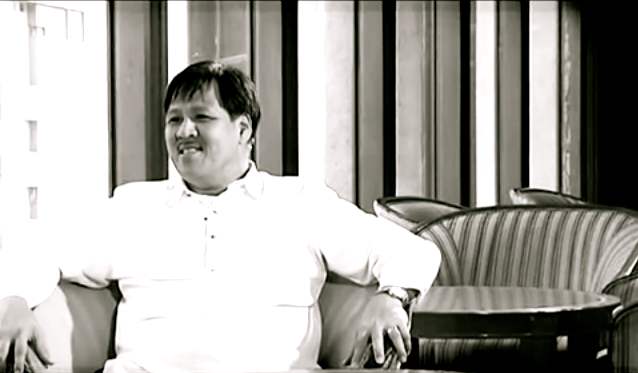
In late 2010, GMA News' Rhea Santos conducted a one-on-one interview with the late DILG Secretary Jesse Robredo at a time when he and his colleagues in the Aquino administration were still reeling from the Luneta hostage massacre, where the police botched the rescue attempt on live television. He had assumed his position under what many would assume were humiliating circumstances, as described in the interview. But Santos heard no complaint and sensed no bitterness from the man now lauded for his dedication to public service. Amidst calls for him to resign, Robredo found himself disheartened yet still determined to make a difference. “Marami akong dinaanang pagsubok. Ang dulo ng lahat ng bagay, ‘yung totoo ang mananaig,” said Robredo. “As long as I feel that I still can make a difference, I will continue working.” The wide-ranging interview covered his rocky relationship with President Aquino, his attitude towards his job, and his legacy to the people of Naga, where he served as mayor for nearly two decades. Today, days before his burial, the public is pondering his legacy to the nation. The full transcript of the interview, produced for the program Reporter's Notebook:
Rhea Santos (RS): Paano niyo binago ang Naga? Sec. Jesse Robredo (SJR): Palagay ko po ‘yung bagong pananaw. I’ve always advocated that the most important resource of Naga is really the Nagueño. We are physically endowed... Naga is the center of trading and commerce in the region. Sabi ko, maaayos natin yung lugar kung maniniwala ‘yung Nagueño sa sarili niya, and we can be as good as anyone. We can improve the city if we work together. We will be able overcome all adversities if we believe in ourselves. And I started that in 1992. And you know the only way people can be proud of the locality is if they are engaged with their government. Ibig-sabihin, alam niya kung ano ‘yung nangyayari. Kabahagi siya sa mangyayari. And as they say, you share the pains and the gains. Ibig sabihin kasama siya hindi lamang sa mabuting nangyari kundi sa mga pagsubok. Halimbawa, parati kaming binabagyo.
RS: Ano po ba ‘yung pinakamalaking accomplishment niyo sa Naga? SJR: I think it’s empowering the Nagueño. Ibig sabihin, you know, I can say I’ve constructed buildings and more roads than any administration… If you can combine all of them, the measurement is how long probably we’ve done our share in that regard. Recently, we just built a new coliseum for the city. But then I think, if you had the money, you will be able to do it, pero giving the Nagueño a stake in their city government, giving them the opportunity to be empowered. Doon sa amin, just to be specific, there is a local law that requires NGO representatives in everything the city hall does. Ibig sabihin, in the city council, mayroong NGO representative in all the committees of the city council. Ninety percent of work in the city council is committee work. There is somebody in that committee who is part of the quorum, who can debate with the elected officials, who can vote in the proceeding. At least an elected member. He is an NGO member, chosen by the federation of non-government organization in the city. I think we have pioneered the bringing to line the principles of transparency and city. There is a local law in the city that requires city hall to publish the website of the city, or post in the bulletin board the city government. Everything related to us, to how we use the money, so there is a local law. Meaning it’s not for the sake of transparency, it’s for providing them with information, so that they can meaningfully engage with the local government unit. And if you try to contextualize all of these, since 1992 up to now, we have been voted on straight ticket… mayor, vice mayor, all belonging in just one political party. And in that context, we told ourselves that even when given full mandate and full confidence, we still give power to you. So if there is anything we have done really, it’s really putting into practice,the principle of empowering the citizen.
RS: Secretary, bago i-offer ho sa inyo itong DILG post, di ba dapat meron kayong fellowship sa Standford University? SJR: Oo. In fact, I already accepted the fellowship, I think the fellowship starts July 23 o 24 and my deadline was sometime at the end of June.
RS: And then what happened po? SJR: I think it was sometime July 10, July 11. I emailed Stanford and said I’ll be working for the government. With the fellowship, I don’t know if it’s possible. I think given the opportunity of a fellowship and making a contribution in this new administration, certainly making a contribution is more important.
RS: Sa tingin niyo bakit sa inyo inoffer ang DILG? SJR: I think the president has mentioned the track record, the competence, what we have demonstrated, what we can do. And of course the other that has not been mentioned quite often is that I’ve worked with NGOs, not only in the city, but in Metro Manila as well. And if we advocate transparency, empowerment and the like, it’s really important that we engage with the non-government sector.
RS: Noong inalok ito sa inyo, wala ba kayong alinlangan, o medyo pinag-isipan niyo? SJR: Ito, malaking desisiyon kasi ito sa mga buhay natin. In fact,even before this was offered to me, pinag-usapan namin ito ng aking asawa and my children. Tahimik na buhay. Get the fellowship, do the consultancy work, go back to the province and probably engage some business activity. While in government, medyo kontrobersyal, but at least it brings meaning to your existence. My wife, and children said, “I think that will make you happy.” Kaya ‘yun.
RS: Ibinunyag ni PNoy na meron kayong differences in style. May mga oras bang nagkakabanggaan kayo? Meron po bang ganun? Lalo nung panahon ng kampanya? SJR: Hindi kami nagkakabanggaan in the sense that we openly disgreed with each other, how we will run the campaign. It was more of me demanding a lot of his time, eh. Bibigyan kita ng isang example – we did four provinces. We started at 8:00 AM and ended around 11:00 in the evening. So that’s Catanduanes, Albay, Camarines Sur and Camarines Norte. Eh, mahirap talagang pagsisiksikin mo ‘yan. And I think the president counted 20 stops, ‘yun. Of course you know, I’m responsible. I tried to maximize reach as much as possible, exposure and reach. Medyo mahirap ‘yun.
RS: Kayo ba magkaibigan na even before the campaign started? SJR: Ako po, I have been an Aquino supporter ever since, and you know si dating Pangulong Cory, when I was being disquailifed, kaya di ko makalimutan, eh. At parati kong tinatanaw na utang na loob ‘yun sa pamilya nila. I think it was 2007 or 2004 na ididisqualify uli ako ng kalaban ko sa pulitika. Si Pangulong Cory Aquino went to AIM, signing that petition saying that I’m qualified to run, I have a good track record. Eh, dating Pangulo ‘yun, and the former President is an icon. And of course, after that, nagkakausap po kami ni Pangulong Noynoy. When I had problems with the Philippine National Police, he was chair of the Local Government Committee. He really helped me. Talagang tinulungan niya ako, at ako naman naniniwala naman talaga ako sa kanya. When he decided that he will run and I was invited to help, walang pag-atubiling tinanggap ko. Two reasons. One, I wanted to do the job because in the first place, it was a promise that we made during the campaign. Second, I think, let's say for instance, just before this interview of yours, kausap ko sina Bishop Pabillo at yung grupo ng maralitang taga Mega-Manila. Sabi ko, eh, kailangan kong gawin ‘yan. Gusto mong gawin ko ‘yan for you, gagawin ko ‘yan. Even if it’s really nasa gray area ng aking assignment. I think it’s just proper that we accept responsibilities and assignment where we can make a difference. Sabi ko nga, I’m not here for the turf nor for the power. I’m just here to help. Kaya I really didn’t mind.
RS: First time po kaming nakarinig na ang DILG parang nahati. SJR: Palagay ko, hindi , marami kasing misimpression sa bagay na ‘yan. Actually, the USec is really USec for Bureau of Fire and Bureau of Jail. He’s not USec for PNP. There is no USec for PNP. He was only given special assignments for PNP. So it can even happen that the USec for public safety is a different person, from the person assigned to liason for PNP.
RS: Ano po ang direct order sa inyo ni PNoy sa inyo bilang DILG secretary? SJR: It’s really a focus on local government, kasi nga, bagong halalan, bagong opisyal. And I think the other important parts of the reform agenda are really bringing transparency and accountability to local government units, and it is difficult, by the way, considering the people are conscious of turf.
RS: Hindi po ba kayo nagtaka na ‘acting’ DILG Secretary kayo? SJR: Ang katunayan, you’ll be surprised, but I’m not interested, I’m not concerned. In fact, prior to this incident, this will be confirmed by people in Naga, before this Quirino Grandstand incident, I think four or five testimonial dinners, events, they all looked at my DILG assignment on a day to day basis. Meaning, I make a difference every day and try to work on the problems I need to address but I do not see it as a permanent assignment. Ibig sabihin, you run the risk of doing things that may displease people and in the process you have to make hard choices. Halimbawa, ‘yung mga gingawa namin hindi naman ordinaryo, palagay ko merong hindi masisisyahan eh. And I told myself, I can go anytime... I remember that saying that in AIM as well when I was invited to speak. I said, I look at this assignment on a day to day basis.
(Speaking about the Quirino Grandstand shooting) Of course you know, that’s the only unpleasant [thing] that I had. You know I’ve been there ... for 19 years. Sinira ng dalawang linggo. And to think it’s no fault of my own. It’s really undeserved.
RS: Are you still hurting, Secretary? SJR: Not really. The reason why I’m not really hurting is because I know this is no fault of my own. Kumbaga, nasagasaan lang ako dito ng tren, eh. But of course I was embarrassed initially but then I told myself that there’s not much you can do really. It’s beyond you.
RS: Marami na ring nagpakita ng suporta, nag-sympathize sa inyo, talagang naniniwala sa inyo. Sumisigaw na ‘bigyan niyo pa siya ng chance’. Would you take that chance if ever? SJR: Ako lang, as long as I feel that I still can make a difference, I will continue working. Of course, as long as the president feels that I can still make a contribution, I will continue working. Ang sabi ko nga niyan, may saysay pa ba ito sa akin at may paniwala pa ba ang pangulo na may magagawa akong saysay? It is really both him and me, and you know I cannot allow myself to walk away just because people who do not like me to be here will say that I should walk away. Palagay ko gagawin ko lang ‘yun kung ‘yung mga pinaniniwalaan kong mga tao na ang magsabi na that it’s not worth it anymore.
RS: Sumagi po ba sa isip niyo na magbitiw sa pwesto? SJR: Ah oo. Kasi hindi naman madali yung sitwasyon na wala kang magagawa eh. Come to think of it, I’d been mayor for 19 years. My only boss in my locality are really my constituents. ‘Yung dynamic sa national is really different, kaya hindi siya madali.
RS: Ano po ba yung mga pinamasakit sa mga narinig nyo? SJR: Palagay ko po ‘yung pinagbibintangan ka na alam niya kung ano ‘yung totoo. I think a lot of people are using this against me. I really don’t [know] what’s the real score. And that’s very unfortunate.
RS: Secretary, balikan ko lang po. ‘Yung sa Quirino Grandstand, ano po ang naging partisipasyon niyo noong mga kritikal na oras na yun? SJR: Ang katunayan talaga, wala. When I say, wala, if I recall it right, I said that I had four conversations on the matter. One was when I asked Commissioner Esqueta not to have interviews anymore because he might prejudice the interest of the hostages. Ang pangalawa is, I asked, I think I got the text message from General Santiago, and he clarified that these are not Korean tourists but Hong Kong tourists. And the third one was when I asked him if he had checked if media is covering and [if] Mendoza [has] television inside the bus [and] is also watching. ‘Yun ang pangatlo. Then yung pang-apat, I think it was again a text message, then I answered and said, it seems we were not able to manage the media very well. Other than that, wala.
RS: You took the initiative to text those people o sila po ang nag-uupdate sa inyo? SJR: Yung sa Korean, tinext ako, so I replied. ‘Yung kay Commissioner Esqueta, I called him. ‘Yung sa media, I was on my way to Makati so I called General Santiago, ‘yun lang. Kaya ako napunta sa Quirino, because was on way to Makati dahil nagkagulo na eh.
RS: It was USec. Puno on the scene? SJR: Palagay ko, not in Quirino, but I think USec. Puno was coordinating.
RS: Noong nangyayari po yun sa inyo, malinaw po sa inyo kung saan kayo dapat pumisisyon? SJR: Ah oo.. Sabi ko nga, ako naman hindi ko pinipilit yung sarili ko, hindi ko ugali 'yun.
RS: May pagsisisi po ba kayo na tinanggap niyo yung position bilang DILG Secretary? SJR: Palagay ko, magsisinungaling ako kapag sasabihin ko sayong walang-wala. May mga pagkakataon na sasabihin ko sa sarili ko, ano ba naman ‘tong napasukan ko. At ‘yun naman ang totoo. Hindi naman siguro pagsisi pero parang tinatanong na … Maayos naman yung hangarin mo. Nais mo naman magtrabaho ng maayos. Gusto mong mapagmasipagan ito. Bakit nagkaganito pa?’ From time to time, it occurs to you, eh. During the moments that you feel like giving up, ‘yun yung time na nagtatanong ka eh.
RS: Umiyak na po ba kayo? SJR: Hindi. Kapag masaya lang ako umiiyak eh.
RS: As DILG secretary pakilinaw po sa amin ano ang magiging priority niyo: reporma ba sa PNP? Hahawakan niyo na ba ‘yung matters concerning PNP or anti-jueteng? SJR: Ako po, pangkalahatang reporma. In fact, what we are trying to [do right now is coming up with institutional reforms. I will give you an example. ‘Yung aming full disclosure sa LGU, it’s institutional. Ibig sabihin, wala na ako diyan, pag binuksan natin ito, hindi na nila pwedeng sarahan ito. Let’s say for instance, we’re looking at reforms on the budgeting in the Philippine National Police. Palagay ko kapag binuksan namin ito, hindi na to masasarahan. We’re trying to bring all money down to the level of the police stations and police officers. Ibig sabihin pag binuksan namin ‘yan, hindi na masasarahan ‘yan, kaya sinasabi ko ‘to, I’m looking at my assignment on a day to day basis. I’m looking at venues by which if we are able to do something, it will be almost irreversible already. Pag inumpisahan mo, mahihirapan kang baguhin uli. Kasi nakita na niya yung benepisyo ng pagbabago. Ang prinsipyo ko sa Naga noon, pag nakita na niya ‘yung prinsipyo ng pagbabago, hihingin na niya ‘yan. Kung ayaw mong ibigay, hihingin na niya. And we’ve done that with PNP. We’ve raised the budget of the police station from 740 per police officer to 950 per police officer. Hopefully we’ll be able to work with the new PNP Chief—we can move it up to a thousand per police officer.
RS: Gaano po karumi ang pulitika on a national level? SJR: Palagay ko marumi siya. The higher you go the dirtier it is I guess. Kasi sa Naga, hindi naman kami bumibili ng boto, wala naman akong goons, hindi kami nanakot. At hindi naman po, sa akin po sa Naga, earned media. Wala akong PR work eh, nothing. Walang ganyan sa akin doon, nanalo kami. Para sa pananaw ko, okay ‘to sa amin. Dito siguro sa Maynila, iba na.
RS: Na-trauma po ba kayo? SJR: Hindi naman. Palagay ko hindi naman ako ganun ka-naïve, pero hindi ko kayang laruin yung laro. First of all, let’s say for instance, I will not do PR work for myself here. I will not pay anyone just to be build up my image, clean this up for me, I will not do that. Because you know in doing that, I do not believe in myself anymore. Kaya sa akin siguro ‘yang larong ‘yan hindi talaga ako pwede. Kung ganyan ‘yung laro sa Maynila, eh, maling player ako o maling laro yung nasalihan ko. But again, looking back, ganun din sa Naga noong umpisa. Wala naman nagsasabi na magtatagumpay kami doon kasi iba nga yung aming paniniwala, iba ‘yung aming pananaw.
RS: Kung dumating na po yung punto na you have to step down? Ang sinasabi po kasi, pati yung sa listahan ng Commission on Appointments, wala na raw po ‘yung pangalan niyo. What do you intend to do? SJR: Madami. Palagay ko, there are many thing that you can do. Given my experience, given my interests, palagay ko hindi problema yung gagawin. Probably helping the informal sector. You know I was out of government from 1998 to 2001— volunteer ako ng isang NGO, working on housing. And of course, I did some consultancy work with ESID10, and PBSP. Di ko problema maghanap ng gagawin. Ang problema lang talaga maghanap ng gagawin na may saysay. And you know, all my life has been guided by making a difference in everything that you choose to do. Kaya siguro lahat ng bagay, gusto kong gawin. Palagay ko ‘yung bagay lang na palagay ko ay may saysay ‘yung gagawin ko, that is the only thing I will pursue.
RS: Na-mention niyo po kanina, 19 years of governance of service, sinira. Medyo mabigat po ‘yung statement na yun. SJR: Hindi naman sa sinira in the sense na nasira ‘yung ginawa ko. Pero ‘yung reputasyon.
RS: How do you change that sir? SJR: Just work. First of all after saying that, it doesn’t concern anymore me, eh. Ibig sabihin nangyari na. From my experience, marami akong dinaanang pagsubok. Ang dulo ng lahat ng bagay, ‘yung totoo ang mananaig. Number two, ang dulo ng lahat ng bagay, yung matino ang nananalo. It may take some time, it may be difficult, but at the end of the tunnel, hindi naman nagwawagi yung masama sa mabuti. At hindi naman nagsisinungaling ‘yung kasalanan sa katotohanan. So I think in time, all of these will pass and people will realize that what the true picture is. And hopefully by that time eh nandiyan pa rin ako. People will look at things differently.
—AA/PF, GMA News 

 GMA Brandtalk
 Tracking
 Archives


