

 GMA Brandtalk
 Tracking
 Archives

ADVERTISEMENT
Filtered By: Scitech
SciTech
ComVal landslide was waiting to happen —DENR
+
Make this your preferred source to get more updates from this publisher on Google.
The landslide that wiped out settlements in Pantukan, Compostela Valley was not the first nor will it be the last.
Leo Jasareno, the head of the country's geoscience bureau said on January 5 that the landslide in Pantukan, which occurred at 3 am on January 4 and killed at least 25 people, was a tragedy waiting to happen.
“In the geohazard map, almost the entire Compostela Valley is red. That means it is landslide prone,” Jasareno, director of the Mines and Geosciences Bureau, explained.
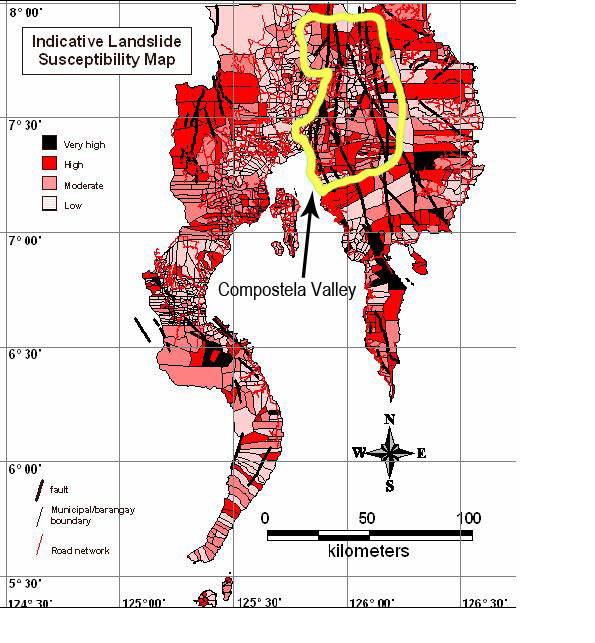
Maps of Pantukan indicated that the mountain region, with its steep slope and weak ground soil, could collapse from high pressure or big movements, such as earthquakes. Mining operations
Because of the danger, Environment Secretary Ramon Paje said he has already dispatched a team of geologists to assess the area for possible dangers posed on rescuers, warning them of the possibility of further landslides due to the condition of the soil as well as holes caused by small-scale mining.
Those who were buried or injured in the landslides were small-scale gold miners who did not have permits to mine the land, which is under the license of Napnapan Mineral Resource Corp., Jasareno said.
He admitted that it was difficult for the national government to order the evacuation of the area as the miners themselves opted to work in the tunnels.
Jasareno said the miners would rather risk their lives for a possibility of finding gold instead of evacuating to safe places, where they would be jobless.
“I asked them before: why do you stay when you could die here? Their answer was quite melodramatic. One miner said to me: If we leave, we will also die because there are no jobs. We have a fighting chance here,” the MGB chief said. History of vulnerability
Jasareno explained that the topography and the geological features of Pantukan has made it vulnerable over the years.
He described the mountain area as rugged and steep, which increases the possibility of landslides.
In the past inspections of the DENR, cracks and fissures have been also observed in the mountain ridges.
Jasareno explained that the mining activities that loosened up the soil below and the processing plants erected in the mining enclaves could have contributed to the landslide.
Furthermore, the extraction process in Pantukan led to heavy soil erosion. Jasareno noted that miners there use a process called hydraulic mining to extract gold. The method employs high pressure jets of water to dislodge rocks and separate dirt from the metal.
Science Undersecretary Graciano Yumul Jr., who used to teach at the University of the Philippines-National Institute of Geological Sciences, noted that rains in Eastern Mindanao in the past days loosened the mountain soil.
Because the soil has become almost like clay, it could not carry the its weight as well as the structures such as houses and processing plants. Residents warned of danger
Paje said the people of Pantukan knew the dangers of living in the mountain slope. In April last year, a similar landslide happened in the municipality after days of incessant rains.
The DENR said it sent several letters to Pantukan Mayor Celso Sarenas warning him that the rains from La Nina could increase the hazards in his municipality. Aside from landslides, the DENR said the villages of Pantukan are at risk of flash floods, storm surges, riverbank erosion, and coastal erosion.
Because of these dangers, the municipality of Pantukan must exercise “vigilant monitoring,” the DENR said. — TJD, GMA News

