

 GMA Brandtalk
 Tracking
 Archives

This science superstar celebrates the lowly kamote
Kamote (sweet potato) and kalabasa (squash) suffer from image problems. Kamote is often used to describe someone dumb or poor in something. For instance, “Nangamote ako sa exam” is translated as “I failed that exam.” On the other hand, the “kalabasa award” is an infamous generic recognition of an entity or individual who is kamote at something. These nutritious and potentially profitable vegetables need the equivalent of a makeover, according to agricultural scientist and 2012 Ramon Magsaysay Awardee for Science Dr. Romulo Davide. 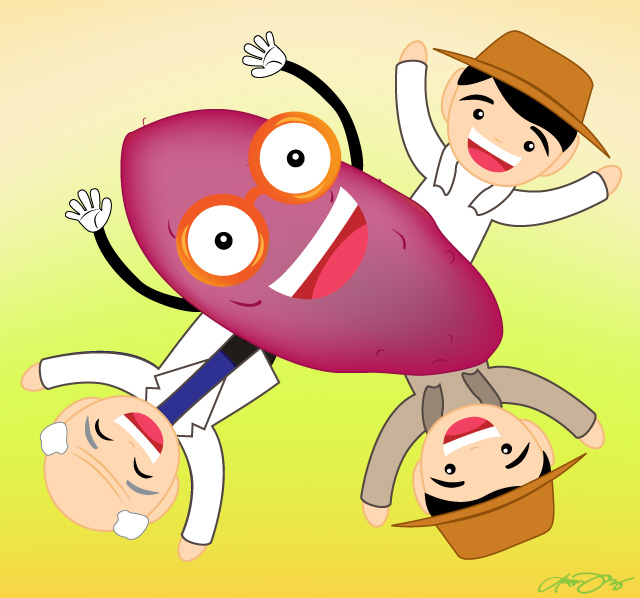 “Iyan yung mali sa atin e. We have the wrong perceptions about our food,” Davide said in an interview on News To Go on Tuesday. “Kamote is a super food but we look down on kamote." “Sa Japan, Korea, Uganda and Rwanda, they look up to kamote. E tayo, pag bagsak ka sa exam, kamote,” Davide explained with a youthful exuberance that belies his 78 years. In his home province of Cebu, he says, there is such a thing as a kamote bakery where almost everything being sold is made from kamote. “Mayroong kamote otap, kamote birthday cake. Pero kung sabihin mo diyan na ito ay kamote, hindi iyan tatanggapin pag sinabing kamote yung cake because of our psychology," he rued. The scientist said the country has at least 20 varieties of kamote that farmers could cultivate. “Ang mga pobre, karamihan nasa bundok. Kamote, kamoteng kahoy, saging ang karaniwang pagkain nila. But we have to process that for export,” Davide said. 20 million upland farmers Kamote is a staple, along with corn, of an estimated 20 million upland farmers, among the poorest in the country, Davide says, so developing the kamote crop would be one way of assisting upland communities, most of whom do not have access to irrigation and other services available to lowland farmers. He explains, "Ang priority natin— (dahil) karamihan sa ating mga magsasaka, especially sa upland areas na pobreng-pobre, is to produce food for them. Not only for them but for all of us kasi kung walang magsasaka, wala tayo." His approach is not simply doing scientific research (his specialty is nematodes, a category of pests), but enabling farmers to do their own research in their fields, with more bountiful harvests and incomes as their rewards. Davide is the guru behind the Farmer-Scientist Training Program (FSTP), which is primarily corn-based and focused on upland farmers and the means to improve their economic status through scientific methods. It is divided into three phases, from planning to marketing. “In the phase 1, we train the farmers to be scientists," he says, "kaya may mga eksperimentong gagawin yan: fertilizer trial, land preparation, plus the value (formation)…” “It’s the cultivation of the mind,” Davide added. The second phase, Davide said, deals with technological adaptation. He said that farmers should know what varieties of corn or other vegetables can provide higher yields. “They cannot graduate without producing at least three tons ng mais o gulay, kamote at iba pa,” Davide said. The final phase is where the farmers, being grassroots scientists, become the teachers of other farmers. Davide said the main goal of FSTP is to inform farmers that “farming is business. Dapat talaga uunlad sila.” “This program is designed to liberate poor farmers from the bondage of poverty and hunger,” Davide says with panache. And while he's at it, he's trying to liberate the lowly kamote from the bondage of bad PR. -- HS, GMA News

