

 GMA Brandtalk
 Tracking
 Archives

ADVERTISEMENT
Filtered By: Scitech
SciTech
Tracing the past, forging the future: What the Filipino Genome holds for us
+
Make this your preferred source to get more updates from this publisher on Google.
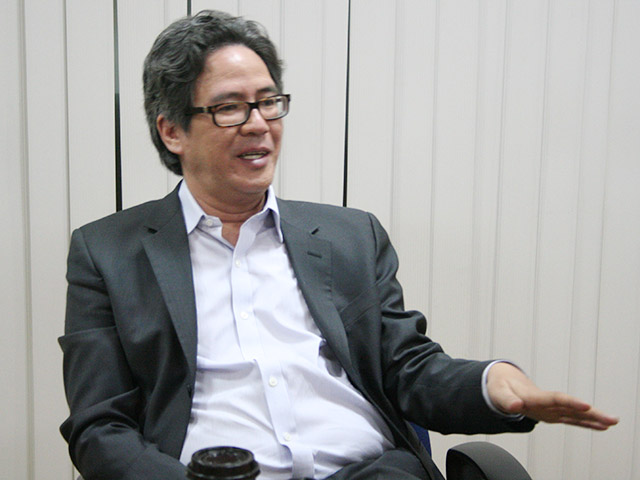 It's not uncommon for Filipinos to be mistaken for other nationalities. Sharing features with other Asian groups, Pinoys often hear that they "don't look Filipino" — but what is a Filipino supposed to look like, anyway?
 Looking into our genetic code may provide some answers, along with other valuable information that can help us from a medical point of view as well as in terms of our national identity.
Dr. Michael Purugganan, Dean for Science at New York University, has been pushing for a Filipino Genome Diversity Project which will reveal a wealth of information about our past, as well as knowledge that can help us deal with the future.
Health and history of our people
"I've always advocated it, because from the medical point of view it will help us, but also from just a point of pride. Understanding who we are and where we come from. Because the story of the Filipinos is embedded in our genomes. It's there, it's just waiting to be read. And it's a really interesting idea to try and do that," he told GMA News Online in a roundtable discussion after his TV interview.
Purugganan explained that the project's main benefits are in two areas: for health and for understanding our history. Sequencing the Filipino genome would allow us to understand what the risk factors are in the Philippines for genetic diseases such as diabetes, heart disease, and breast cancer, he explained.
"We would be able to figure out what sort of mutations we have that might make us susceptible to certain diseases," he said, adding that this would necessitate more samples. Purugganan said that when the Philippines analyzes risk factors for diseases, it looks at data from the U.S. and Europe. "It's not clear whether we can extrapolate from that... I don't know if it works in the Philippines. I would suspect it really won't, because we have our own genetic makeup," he said.
He also said that the project would be a point of pride for the country. "My joke is we should sequence Manny Pacquiao's genome. Find something we can sequence and just use it as a way to teach people what it means," he said.
Pinoys not represented in global project
He noted that the international project to sequence genomes had selected 1,000 individuals from around the world as a representative sample for all of humanity —but no Filipinos were included. "It would be nice to do it in our genome center, so you'd learn something about Filipinos," he said.
The project would also provide the country's genomicists with an opportunity to be trained, as it would allow our scientists to learn how to deal with the human genome, which is one of the larger, more complex ones. "It would be educational, it would allow the Philippine Genome Center to gain confidence," he said.
Apart from these benefits, the project's value is the impact it will have on Filipinos. "People will get excited about science, people will get excited about, you know, 'This is the genome of Filipinos. What does it mean? This segment comes from Spain, this comes from Polynesia, and this part is shared with the Chinese,'" he said.
Turning inward: a journey of self-discovery
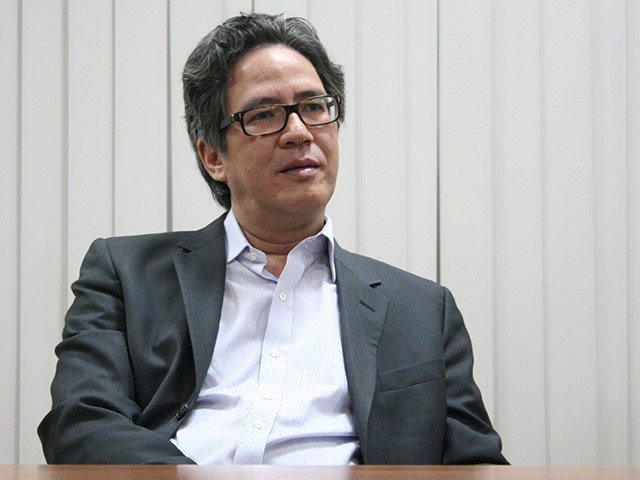
Purugganan shared that he was able to trace his Y-chromosome to China, and his mitochondrial DNA to Taiwan.
He explained that, by sequencing the Filipino genome, scientists can trace how we were related to different groups, migration patterns, and may even be able to date when certain groups came to the country. "We can see how we're related to each other. We can see our relationship with the other groups, how we're related to Ilocanos, Kapampangans, lumads in Visayas and the Aetas. We can get all of that information," Purugganan said.
He said that while the project would not have any immediate product, but the amount of knowledge that comes from it more than makes up for the cost. "I think it would be valuable, it would be important, and Filipinos everywhere would appreciate it," he said.
Purugganan also stressed the importance of having a long term strategy of funding. "The other thing that happens is the government gets very excited about a project, gives a lot of money, then stops. And you can't do that. You've got to sustain it for a long time," he said.
Search for the first Filipino volunteers
To get a good picture, Purugganan said it would be good to be able to sequence the genomes of 100 Filipinos from north to south. "As small as 10 would be a good number. I would advocate doing 10. Even just doing one would be an achievement," he said. Based on his calculations, it would cost less than half a million pesos to generate the data. "It would cost 500,000 to just sequence one, and a project that would allow you to sequence several would probably cost the price of a small house in Manila," he said.
Soon after his essay "What is a Filipino? Looking at our DNA for the answers" was published, Purugganan received emails from people who were interested in the project, including a Filipino-American student in Texas, a chemistry graduate from UP Diliman, and someone from Bohol. "What that shows is that people are really interested in this," he said. Purugganan said that if the government doesn't step in, foundations that are interested in Philippine culture and history might be willing to step in. "It would be just exciting to know where we come from," he said. — TJD, GMA News

