

 GMA Brandtalk
 Tracking
 Archives

ADVERTISEMENT
Filtered By: Scitech
SciTech
Hinatuan: How a small coastal town in Mindanao survived Sendong and Pablo
Hinatuan was expected to be the entry point of both Typhoons Sendong and Pablo in 2011 and 2012. Sendong did enter the country through the coastal town in Surigao del Sur, while Pablo veered toward Davao Oriental.
But the second-class municipality with a population of 39,000 people weathered the storms with zero casualties while several towns in Mindanao suffered the wrath of both typhoons.
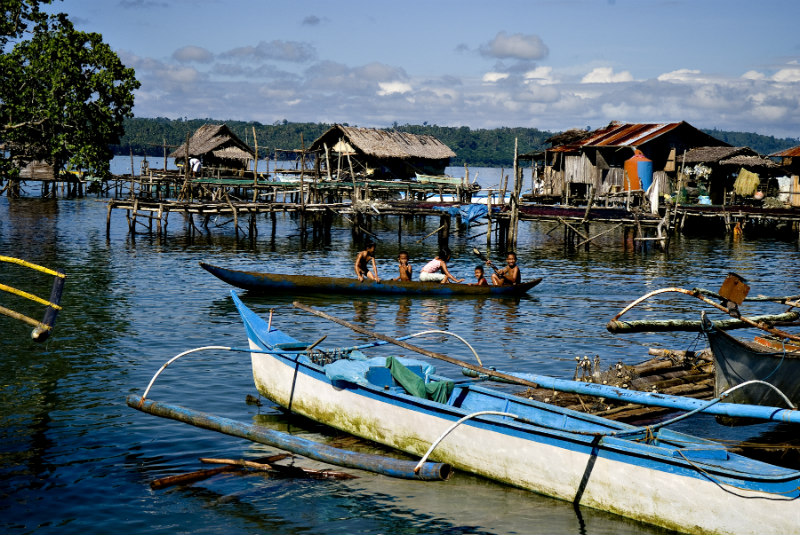
Ninety percent of Hinatuan is composed of coastal areas. The people's main source of livelihood is the sea around them. (Photo: Veejay Villafranca for Oxfam)
Sendong claimed close to 1,300 lives and caused an estimated P2.068 billion in damage to properties and livelihood.
Pablo devastated the region, affecting 6.3 million people with more than 200,000 homes damaged or destroyed. Major sources of income like large banana, coconut, corn, and rice farms were flattened to the ground. Damage by the typhoon cost an estimated P36 billion.
Hinatuan won this year's National Gawad KALASAG for Excellence on Disaster Risk Reduction Management and Humanitarian Assistance for its response in the aftermath of Typhoon Pablo in 2012.
“Lahat ng ginagawa namin for the last two to three years now, ginagaya na namin yung mga best practices sa adaptation,” said Hinatuan Mayor Candelario J. Viola Jr.
Preventive measures and people's participation
December storms like Sendong and Pablo are a rarity in Mindanao. But even before Sendong hit, Viola sent his team on a lakbay-aral program in Legaspi City to learn their best practices on disaster preparedness.
“Even before Sendong happened, nakikita na namin yung trend. Dati every 30 years ang bagyo sa bayan namin. But lately, we have discovered that more typhoons are visiting Hinatuan now than before,” Viola said in an interview during Oxfam's Making Climate Adaptation Finance Work for Mindanao forum.
“Kaya dinala ko itong mga tauhan ko sa Legaspi para maglakbay-aral kami. Lahat ng natutunan namin, dinala namin sa Hinatuan at nag-innovate kami.”
They took home knowledge on the systems of evacuation and rapid communication which they incorporated into their town's disaster-preparedness program. They put in place an evacuation protocol which they applied when Sendong hit their town.
“Sa awa ng Diyos, (walang namatay). Kasi we were able to evacuate our people from those risky areas to the highlands,” Viola said.
That didn't stop the storm from damaging their houses and the sources of livelihood in the area, though.
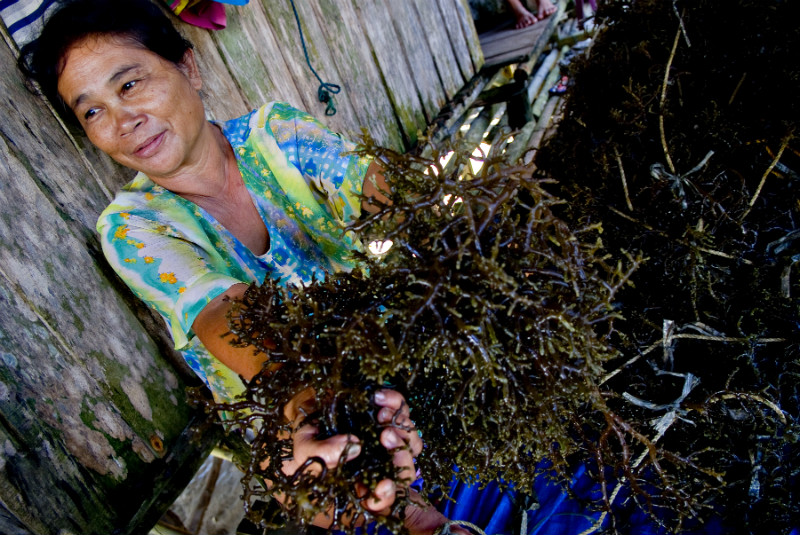
Aida Fernandez is a seaweed farmer from Isla Cabgan, Hinatuan, Surigao del Sur. (Photo: Veejay Villafranca for Oxfam)
Seaweeds and fish, major sources of livelihood in Hinatuan, were scarce after the storm. But 30 percent of Hinatuan's quick response fund (QRF) which they allotted for disaster preparedness allowed them to recover in a few months.
“Mayroon kaming 1.4 million pesos every year. So doon namin kinukuha yung pang-relief kaagad, para ma-restore namin yang pamumuhay ng mga tao,” he said.
“Mayroon kaming 1.4 million pesos every year. So doon namin kinukuha yung pang-relief kaagad, para ma-restore namin yang pamumuhay ng mga tao,” he said.
“Kasama na yung seeds and seaweeds kasi relief portion na yan. Halimbawa, identified ka na victim, mayroon kang pondo para roon. Mayroon kang seedling, nylon line, kasi iyon ang magagamit.”
A contest before Pablo
Sendong served as a “dry run” of sorts to test the town's disaster preparedness. In order to improve their adaptation and disaster risk reduction protocols, Viola organized a barangay contest.
“Kung alin ang pinaka-resilient na BDRRMC (Barangay Disaster Risk Reduction and Management Council), iyon ang pinaka-champion sa amin. Kaya nagaganahan ang mga tao doon na sumali,” Viola narrated.
A few months later, Typhoon Pablo visited their town. But this time, they were more prepared.
“Matapos yung contest ng barangays, dumating yung bagyo. Kaya lahat ng natutunan nila, nagamit kaagad nila sa pag-prepare kung ano ang gagawin. Kaya nga medyo naka-iwas kami. Kahit isang patay hindi po nangyari.”
Latest efforts
One of the town's latest efforts is to involve several stakeholders in their disaster preparedness system, including the private sector.
“Mayroong mga grupo para sa mga sunog, grupo sa bagyo, tsunami, et cetera. At mayroong iba't ibang mga sistema kung paano makaiwas na hindi madidisgrasya ang tao (at para) ma-save natin yung mga valuable properties ng mga tao,” Viola said.

Many of the residents are seaweed farmers and fisher folk. (Photo: Veejay Villafranca for Oxfam)
As a second-class municipality, Hinatuan has limited resources. Here is where the private sector comes in. The town has talked to owners of big trucks that can be used for evacuation and relief operations.
“Ang ginawa namin para magkaroon ng mass evacuation kung kinakailangan, may agreement na agad kami na magagamit namin agad iyan during typhoon or hazard situation na hindi muna mag-bayaran. Gamitin na namin kaagad, saka na ang bayaran,” he said.
Future plans
Yet the major problem of Hinatuan is still property damage and evacuation.
“Hinatuan, (is) about 90 percent coastal except for two more barangays. Lahat based on the riverbanks, and the coast, meaning, the Pacific Ocean. Kaya pag may bagyo o tsunami, lahat ng mga tao ay exposed directly.”
They plan to acquire 20 hectares of private land in an elevated area and build a stable evacuation site there in case of typhoons or tsunami warnings. Part of the plan is also to prepare a docking facility where the citizens can leave their boats without the fear of damage by natural calamities.
“Kahit na andoon sila, at least safe yung mga gamit nila. Kasi yun ang problema kaya ayaw nila lumikas. Kaya nga ang gagawin natin is to provide the system. Yung implement nila to fishing, hindi masisira,” he said.
Viola meanwhile wants the People's Survival Fund Act implemented so it can strengthen disaster risk reduction projects in the local government level. This will also ensure that the funds flow smoothly to the highly vulnerable areas.
Although the law was passed last year, it still lacks Implementing Rules and Regulations.
Although the law was passed last year, it still lacks Implementing Rules and Regulations.
Viola also calls for the amendment of the Disaster Risk Reduction Management (DRRM) so local government units can allocate part of their Personal Services budget to appoint Disaster Risk and Reduction Management officers even when their plantillas are full.
"Dapat yung national (act on) DRRM should be very explicit. Dapat yung DRRM Officer must be appointed by the local government regardless of the Personal Service limitation," he said. — JDS/KDM, GMA News

