

 GMA Brandtalk
 Tracking
 Archives

ADVERTISEMENT
Filtered By: Scitech
SciTech
Our brains have adapted to see smileys as real human faces
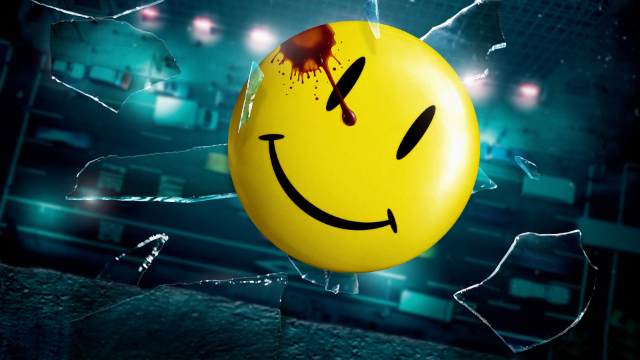
Well, Rorshach certainly didn't see that coming.
But you could call it a happy case of brain conditioning :)
A new study has found the use of emoticons since the 1980s has reprogrammed people's brains to treat them like real human faces.
"(W)hen upright, emoticons are processed in occipitotemporal sites similarly to faces due to their familiar configuration," the researchers said in their abstract.
"However, the characters which indicate the physiognomic features of emoticons are not recognized by the more laterally placed facial feature detection systems used in processing inverted faces," they added.
The team is led by Dr. Owen Churches, a postdoctoral fellow in psychology at Flinders University in South Australia.
Emoticon history
Emoticons were first placed in a post to the Carnegie Mellon University computer science general board by Professor Scott E Fahlman in 1982, University World News reported.
Fahlman wanted the symbol to mean a statement should not be taken too seriously.
"Upright, faces are perceived primarily due to their configuration: an arrangement of two eyes above a nose which is above a mouth and this is driven by regions of the brain in the occipito-temporal cortex. But when faces are turned upside down, this arrangement is disrupted and the perception of the face is driven by the processing of the individual features of eyes, nose and mouth," it said.
It added the study found emoticons are perceived as faces only through configural processes in the occipito-temporal cortex.
Reconfigured recognition
"When that configuration is disrupted (through a process such as inversion), the emoticon no longer carries its meaning as a face," it said.
Also, it said that since the features of emoticons are not eyes and noses and mouths, "the feature processing regions of the brain do not act to pull the figure into the precept of a face."
In their study, the researchers presented 20 participants with images of upright and inverted faces, emoticons and meaningless strings of characters.
"Emoticons showed a large amplitude N170 when upright and a decrease in amplitude when inverted, the opposite pattern to that shown by faces," they said.
'Culturally created'
A separate report on UK's The Independent quoted Churches as saying this is "an entirely culturally-created neural response."
"Emoticons are a new form of language that we're producing, and to decode that language we've produced a new pattern of brain activity," Churches added. — TJD, GMA News

