

 GMA Brandtalk
 Tracking
 Archives

Vetiver grass helps clean murky Manila estero
Can a plant grown for use in perfumes clean up Manila's mucky esteros? It's possible...sort of.
Behind Centro Escolar University in Manila is the Estero San Miguel, a small canal that smells faintly of stagnant water and is littered with plastic cups, polystyrene containers, and leaves.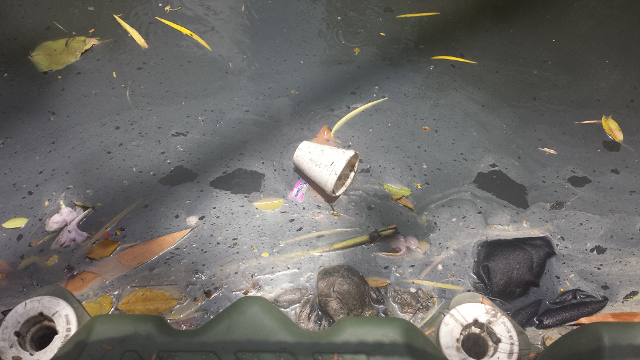
It does not have the same black muck that chokes the Pasig River that the estero flows into, but its water is greenish grey due to the waste disposed in it.
Surprisingly, tiny fish - tilapia, I was told - live in that body of water. Hundreds of them swim among the occasional trash.
In one part of the area is a floating billboard made of a stiff grass called vetiver, which, aside from producing an aromatic essential oil, is an effective and inexpensive material used to treat polluted wastewater, mining wastes, and contaminated land.
Vetiver grass can improve wastewater quality by trapping debris, sediment, and particles, and absorbing pollutants such as agrochemicals and heavy metals like lead, arsenic, manganese, and copper.
"CLEAN RIVER SOON", the 27-meter-long floating billboard – a project by beauty company Hana – spells out and promises.
Despite the promise, it cannot completely clean the estero. The most the grass can do is improve the color of the water.
Vetiver grass is usually used to clean enclosed bodies of water like lakes and ponds. Since the estero flows freely, it is difficult to measure at what rate the grass can clean it, Vetiver Farms representative Mary Noah Manarong told GMA News Online in a phone interview on Tuesday.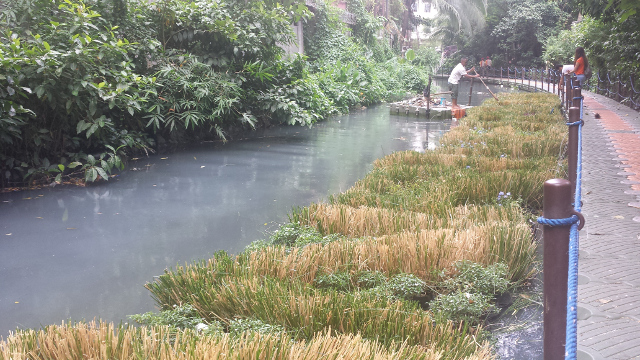
"Walang specific measurement. But any kind of natural wastewater treatment is better than nothing," she said.
Completed on March 18, the billboard – which is made of 13 pontoons of 992 balls of vetiver grass – will be in the estero for three months.
"Definitely the water will be much cleaner," Manarong said. — JDS, GMA News

