

 GMA Brandtalk
 Tracking
 Archives

ADVERTISEMENT
Filtered By: Scitech
SciTech
Gov't agencies, citizens prep for killer Manila quake
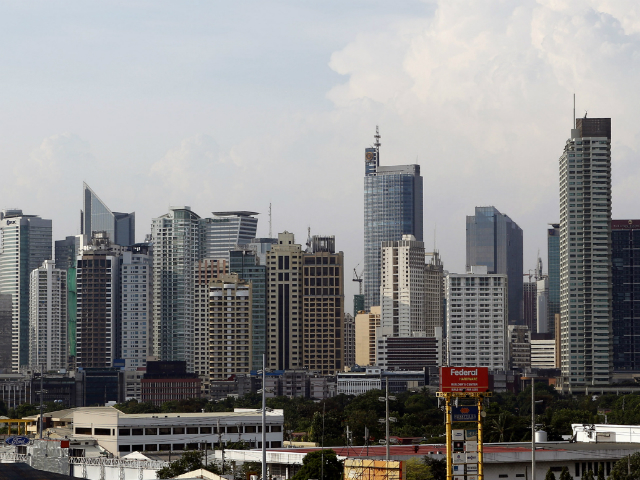
It's not a matter of "if" but "when": Manila is due for a powerful quake within our lifetimes, and it's about time that the government and the population made preparations for this eventuality.
NDRRMC emergency preps
In an interview with GMA News Online on Wednesday, the National Disaster Risk Reduction and Management Council (NDRRMC) Office of Civil Defense Public Affairs Chief Romina Marasigan said they already have preparations underway.
“Public information programs in relation to the earthquake is our primary concern,” Marasigan said adding that they have been conducting earthquake drills practicing safe evacuation procedures.
“We also have quarterly simultaeneous earthquake drills that we conduct in cities near fault lines such as Marikina City. There are also earthquake drills in highly populated ares like schools, hospitals and offices,” she continued.
Marasigan said that when a strong earthquake hits Metro Manila, the first thing they will do is identify functional operation centers where they can conduct their activities to support the victims.
Marasigan explained that after setting up an operations center that will serve as their command post, they will convene with other government agencies.
“Our operations will be conducted in cooperation with private and government groups from local up to the national level,” she said.
The next will be to deploy response teams formed by personnel from various government agencies that will bring relief assistance to disaster areas. These teams will then report back to the command post with their damage assessment that will be tallied by the NDRRMC.
Marasigan also urged the public to read the Philippine Institute of Volcanology and Seismology's (PHIVOLCS) recently released Valley Fault System Atlas that details information about the VFS and risk areas.
“Sana basahin ito ng ating mga kababayan para aware sila kung nakatira sila malapit sa danger zones ng possible earthquake para alert sila sa pag vacate,” she said.
According to PHIVOLCS, the West Valley Fault runs through Bulacan, Cavite, Laguna, Metro Manila and Rizal can generate a 7.2 magnitude earthquake.
DPWH infrastructure upgrades
Meanwhile, the Department of Public Works and Highways (DPWH) is also doing its part by strengthening several bridges in Metro Manila to sustain the projected killer quake.
In an earlier report, DPWH NCR Assistant Director Tiburcio Canlas said they already have plans of retrofitting Metro Manila bridges.
“Lahat ng bridges na nakikita natin na hindi na akma sa earthquake kasi mas malakas na earthquake ngayon, pinapatibay natin ang mga ito,” Canlas said.
The Ayala Bridge in Manila is already in the process of being rehabilitated. Other bridges that will be strengthened are the San Juan Bridge, McArthur Bridge, Quezon Bridge and the Old Sta. Mesa Bridge.
“Kaya inaayos namin ang mga tulay kasi kapag naputol ito mahirap ang rescue kung magkakaroon man ng malakas na lindol," Canlas continued.
Individual action needed
According to Philippine Institute of Volcanology and Seismology (PHIVOLCS) Director Dr. Renato Solidum, Jr., we shouldn’t just rely on the government when it comes to preparing for earthquakes. “Tayong lahat pwedeng biktima. So responsibility natin na alamin natin kung anong kailangan nating gawin,” he said.
The release of the Valley Fault System Atlas is one step towards empowering citizens to take action even without government intervention. Solidum points out that the atlas can serve as a reference for everyone, providing information about the location of the VFS and nearby affected areas.
Click here to download PHIVOLCS' Valley Fault System Atlas.
Click here to download PHIVOLCS' Valley Fault System Atlas.
PHIVOLCS also partnered with the Association of Structural Engineers of the Philippines (ASEP), Japan International Cooperation Agency, and the Japan Science and Technology Agency (JSTA) to create a manual to help people self-check the integrity of their homes (though the manual is only applicable for “1 to 2-storey Concrete Hollow Block” houses).
“I urge you all to adopt a proactive stance when dealing with disasters,” NDRRMC Executive Director Undersecretary Alexander Pama said, urging people not to wait for the government before taking action for themselves.
Late last year, Pama emphasized the need for a paradigm shift when it comes to dealing with disasters and their aftermath, urging the need to be proactive instead of simply reactive.
“People have yet to accept that, first and foremost, they are responsible for their own personal well-being in times of disasters,” Pama previously said. — TJD, GMA News

