

 GMA Brandtalk
 Tracking
 Archives

Pinoys witness partial solar eclipse in PHL
Astronomy enthusiasts, scientists and students alike donning protective glasses and telescopes trooped to the rooftop of the PAGASA observatory in Quezon City on Wednesday to witness the solar eclipse.
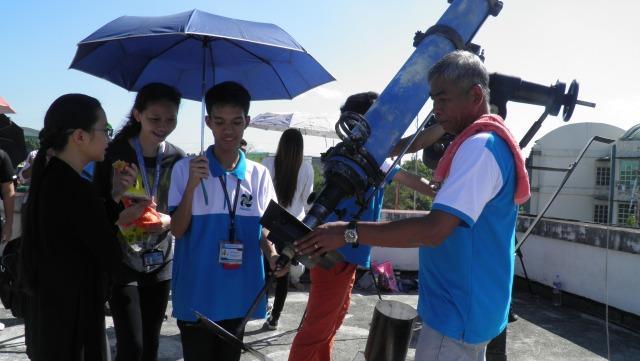
A solar eclipse is an astronomical phenomenon when the moon passes between the Earth and the sun.
A blip on the right side of the sun could be seen at the start of the eclipse by 7:51 a.m.
The eclipse's peak started at 8:58 a.m. In Manila, the moon could be seen covering 47 percent of the sun.
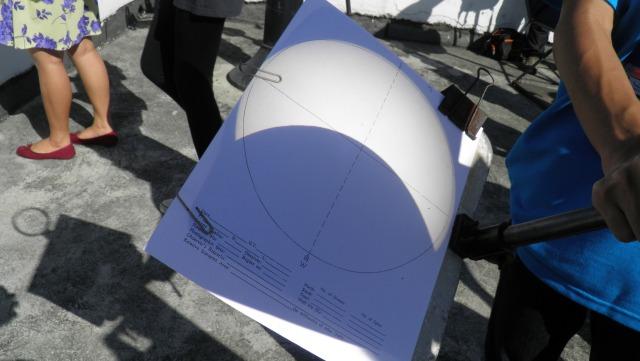
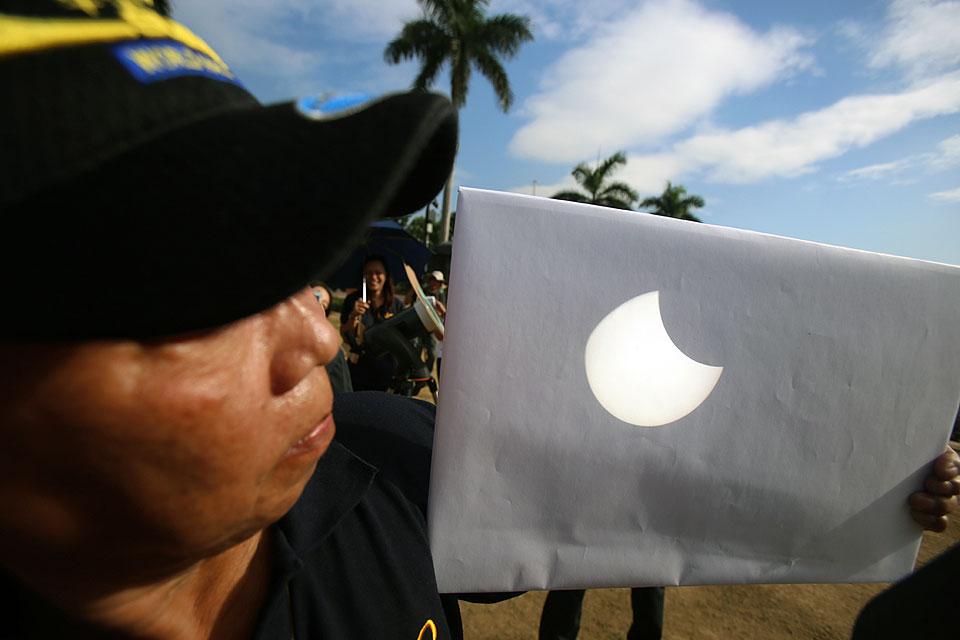
Dario Dela Cruz, chief of science and astronomy section of PAGASA, said the moon could be seen covering a much bigger chunk of the sun in several parts of Mindanao.
"Sa Sarangani, almost 83 percent, sa General Santos 80 percent, at sa Davao ay 76 percent," he said.
The total solar eclipse was seen in islands of Indonesia.
Dela Cruz said that in places with total solar eclipse, the temperature would go down.
Meanwhile, the UP Astonomical Society provided telescopes for students to witness the eclipse.
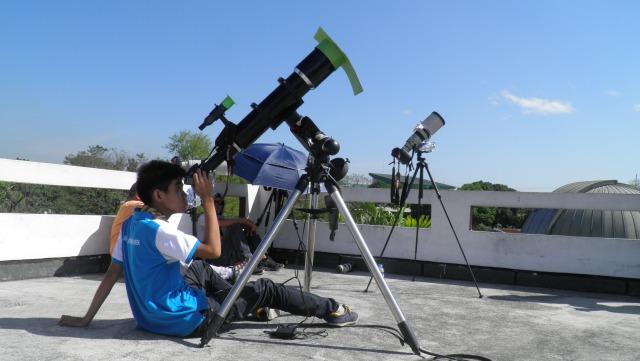
"This event is one of our ways in promoting the study of astronomy to the public," said Bernadette Detera, UP AstroSoc's executive secretary.
Detera said they also wanted to promote the scientific understanding of eclipses.
"Kasi po sa Philippines, marami po tayong myths at misconceptions about eclipses. Tina-try natin 'yun na maalis sana 'yung mga misconception about eclipses," she said.
Meanwhile, another eclipse is expected to happen on March 23, this time a penumbral eclipse. —KG, GMA News

