

 GMA Brandtalk
 Tracking
 Archives

Eccentric French math genius’s ‘scribblings’ go online
MARSEILLE, France - Nearly 18,000 pages of notes by eccentric French math genius Alexandre Grothendieck were posted online Wednesday by his alma mater, Montpellier University in southern France.
Grothendieck, who died aged 86 in 2014, "revolutionized an entire area of mathematics, algebraic geometry," said Jean-Michel Marin, head of an institute that bears the mathematician's name at the university.
"It will take years of work by experts to benefit from his notes," Marin told AFP. "There are only a few hundred people in the world who could understand them."
The papers put on line are part of a trove of 28,000 pages bequeathed by the genius to one of his students, Jean Malgoire, who is still a professor at Montpellier University.
Cérémonie de mise en ligne des archives d'Alexandre Grothendieck en présence de P. Augé, JM Marin et J. Malgoire pic.twitter.com/noxshX4ath
— Univ Montpellier (@umontpellier) May 10, 2017
"Un trésor mathématique de 18 000 archives accessible sur https://t.co/iVA1M9P6Wt" J. Malgoire pic.twitter.com/AJbW5DP3pW
— Univ Montpellier (@umontpellier) May 10, 2017
The German-born mathematician's children ceded online publication rights to the university while retaining ownership of the physical documents, which Grothendieck referred to as "scribblings."
"They contain not only original results but also tools for understanding [Grothendieck's] thinking," Marin said.
Grothendieck won the Fields medal, known as the Nobel prize of the math world, in 1966.
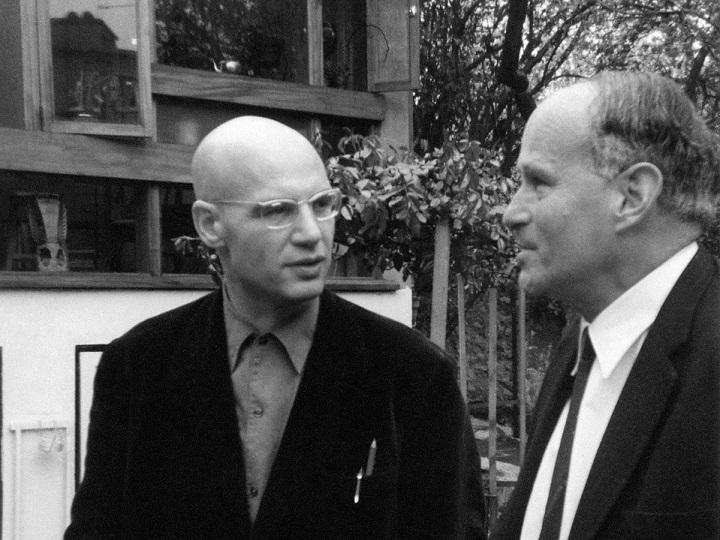
But by then he had become a radical environmentalist and pacifist who opposed the Vietnam war as well as Soviet military expansionism, and he refused to travel to Moscow to accept the prize.
According to the legend that has built up around Grothendieck, his talents were not immediately obvious when he was a young man.
It was while he was studying at the university that two professors gave him a list of 14 questions, considered to be years' worth of work, and told him to pick one.
Grothendieck came back a few months later having completed them all.
He was born in 1928 in Berlin to a Russian anarchist father and a journalist mother, who left him behind in Germany while they went to fight in the Spanish Civil War.
The family was reunited in France, where Grothendieck was naturalized and was to spend most of his life, only for his father—a Jew—to be rounded up by the Nazis and killed in Auschwitz.
He became a recluse, even from his family, in 1991, living in a small village in the French Pyrenees until his death in 2014. — Agence France-Presse

