

 GMA Brandtalk
 Tracking
 Archives

This adorable creature could be extinct in less than a year
According to scientists’ estimates, the wild is home to now less than 30 vaquita marinas, which means the adorable creatures could go extinct by 2018 should we fail to enact urgent conservation efforts.
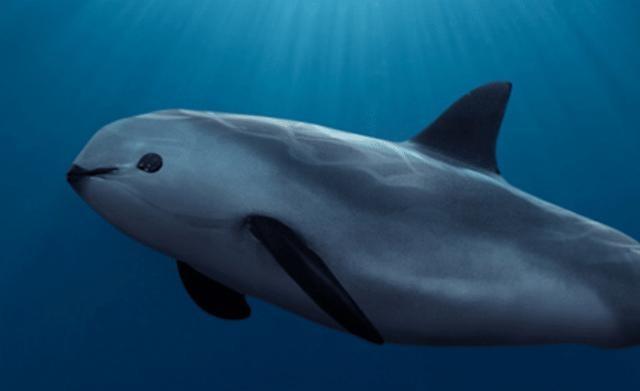
The vaquita marina (Phocoena sinus) is a tiny cetacean—a group to which belong porpoises, dolphins, and whales—that lives in the upper portion of the Gulf of California. It is the world’s rarest cetacean, as well as the tiniest. Males grow up to a mere 53.1 inches (134.9 cm) in length, while females can grow slightly larger, up to 55.4 inches (140.6 cm).
Due to its elusive nature, the vaquita (which in Spanish means “little cow”) was only recently discovered – in 1958. It has black lips, and black rings surroundings the eyes – unique facial markings that explain why some have taken to calling it the “panda of the sea.”
The decline in their numbers have accelerated at an alarming rate. In 1997, there were an estimated 567 individuals in the wild. This value plummeted to a paltry 150 in 2007.
In fewer than six years, the species’ global population has plunged by 90 percent. And now, Greenpeace has stated in a recent report that there are fewer than 30 individuals in the wild, making the vaquita one of the most endangered species on the planet.
“If we don’t do something today, the vaquita could be extinct by 2018,” said Maria Jose Villanueva, World Wildlife Fund for Nature (WWF) Mexico’s director of strategy and science. “Losing it would be like losing a piece of Mexico.”
Indiscriminate slaughter
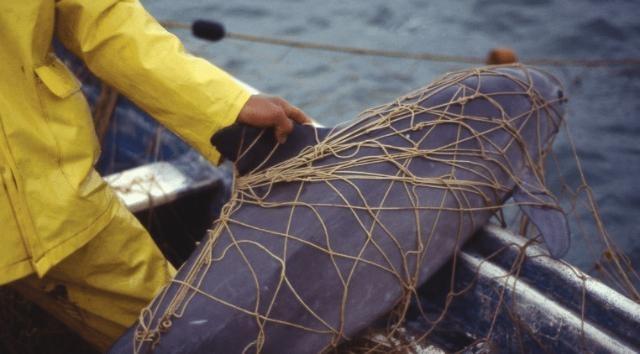
This sharp fall in the vaquita populations is attributed to the doubling in number of fishing boats called pangas in the Gulf of California, which occurred in the period between 1993 and 2007.
Specifically responsible for the deaths of hundreds of vaquita are fishing nets called gillnets. As fish swim through the water, these nets catch them by their gills, hence their name.
However, gillnets have also been known to inadvertently ensnare and kill other animals; each year, they are responsible for the deaths of approximately 700,000 marine mammals and birds worldwide.
Gillnets are used illegally in the Gulf of California to snag totoaba, an endangered fish species that is of a similar size to the vaquita.
Local conservationists have found and removed gillnets with lengths measuring up to 2 km. From February 2016 to April 2017, the Gulf of Mexico was the site of around 374 of such gillnets. While all of them were pulled out, vaquitas continue to die, with this year alone already seeing six casualties.
Emergency plan
While the Mexican government did enforce a two-year prohibition on the use of gillnets, said prohibition is nearing expiration. Local conservation and environmental groups are now considering enacting an emergency plan, which should allow the surviving vaquitas to be relocated to a “temporary sanctuary” in September.
“We see it as a desperate measure,” stated WWF Mexico’s interim director general Jorge Rickards. “We consider this a high-risk measure because nothing like this has ever been done before.”
Even if the plan comes to fruition, the vaquita, once returned to their natural habitat, will remain in danger should local governments fail to enhance efforts to combat illegal fishing practices.
Rickards and WWF are therefore hoping the Mexican government will permanently ban gillnet use in the Gulf of California, as well as suppress the totoaba trade in order to ensure “the recovery of the vaquita within its natural habitat that includes specific population increases and timelines." — TJD, GMA News

