

 GMA Brandtalk
 Tracking
 Archives

Karding's Trough, habagat to bring cloudy skies, rains over western sections of Southern Luzon, Visayas
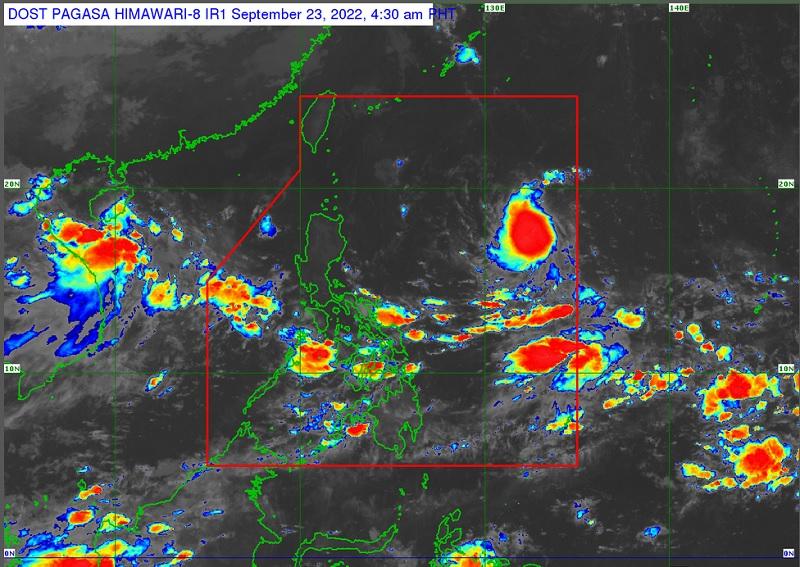
Tropical Storm Karding slightly accelerates westward while maintaining its strength as the southwest monsoon or habagat will be affecting the western sections of Southern Luzon and Visayas on Friday, PAGASA reported.
Based on the the Tropical Cyclone Bulletin posted by PAGASA early Friday morning, the center of Tropical Storm Karding was estimated at 1,235 kilometers east of Northern Luzon packing maximum sustained winds of 65 kilometers per hour near the center, gustiness of up to 80 km/h, central pressure of 1000 hPa, and moving westward at a speed of 10 km/h.
The extent of Tropical Cyclone Winds is strong to gale-force winds extend outwards up to 130 km from the center.
Rainfall
Visayas, CALABARZON, Bicol Region, Bataan, Oriental Mindoro, Occidental Mindoro, Marinduque, Romblon, and the northern portion of Palawan including Calamian and Cuyo Islands will have cloudy skies with scattered rain showers and thunderstorms brought about by the southwest monsoon and the Trough of Tropical Storm Karding with possible flash floods or landslides due to moderate to at times heavy rains.
Metro Manila and the rest of the country will have partly cloudy to cloudy skies with isolated rain showers or thunderstorms due to localized thunderstorms with possible flash floods or landslides during severe thunderstorms.
On Sunday midnight through morning, light to moderate with at times heavy rains may occur over Batanes, Cagayan, and Isabela.
For the rest of Sunday through Monday early morning, moderate to heavy rains over Cordillera Administrative Region, Cagayan, Isabela, Ilocos Provinces, and La Union.
Light to moderate with at times heavy rains over the northern portion of Aurora and the rest of Ilocos Region and Cagayan Valley.
PAGASA warned that isolated to scattered flooding and rain-induced landslides may occur especially in areas that are highly or very highly susceptible to these hazard.
The southwest monsoon, partly influenced by Karding, will bring occasional rains are also possible beginning Sunday over most of Southern Luzon and Visayas, especially over their western sections.
Severe Winds
Tropical Cyclone Wind Signals may be hoisted by Friday evening over the eastern portions of Northern and Central Luzon in anticipation of winds of at least strong breeze to near gale strength associated with the approaching tropical cyclone.
"Per latest track and intensity forecast, the most likely highest wind signal that will be hoisted is Wind Signal No. 2. However, the potential for hoisting a Wind Signal No.3 is not ruled out at this time," PAGASA reported.
Coastal waters
A preceding northeasterlies may bring moderate to rough seas over the northern and western seaboards of Northern Luzon by Saturday.
"On Sunday, moderate to rough seas will continue for the seaboards of Northern Luzon and may begin prevailing over the eastern seaboard of Central Luzon due to the approaching tropical storm," said the weather bureau.
"Such condition may be risky for those using small seacrafts. Mariners are advised to monitor for updates, take precautionary measures when venturing out to sea and, if possible, avoid navigating in these conditions during the said period, the agency added.
Karding is forecast to track generally westward while gradually accelerating towards the east coast of Northern Luzon, where it may make landfall on Sunday.
After crossing the mountainous terrain of Northern Luzon throughout Sunday, the tropical cyclone will continue tracking over the West Philippine Sea and gradually intensify prior to landfall.
"Per latest intensity forecast, it is likely to make landfall as a high-end tropical storm or a low-end severe tropical storm. Frictional effects of the rugged terrain of Northern Luzon may result in some slight weakening, although Karding will most likely be at tropical storm category once it emerges over the West Philippine Sea," PAGASA said. -- BAP, GMA News

