

 GMA Brandtalk
 Tracking
 Archives

DOST: Local efforts, innovations key to boosting disaster resilience
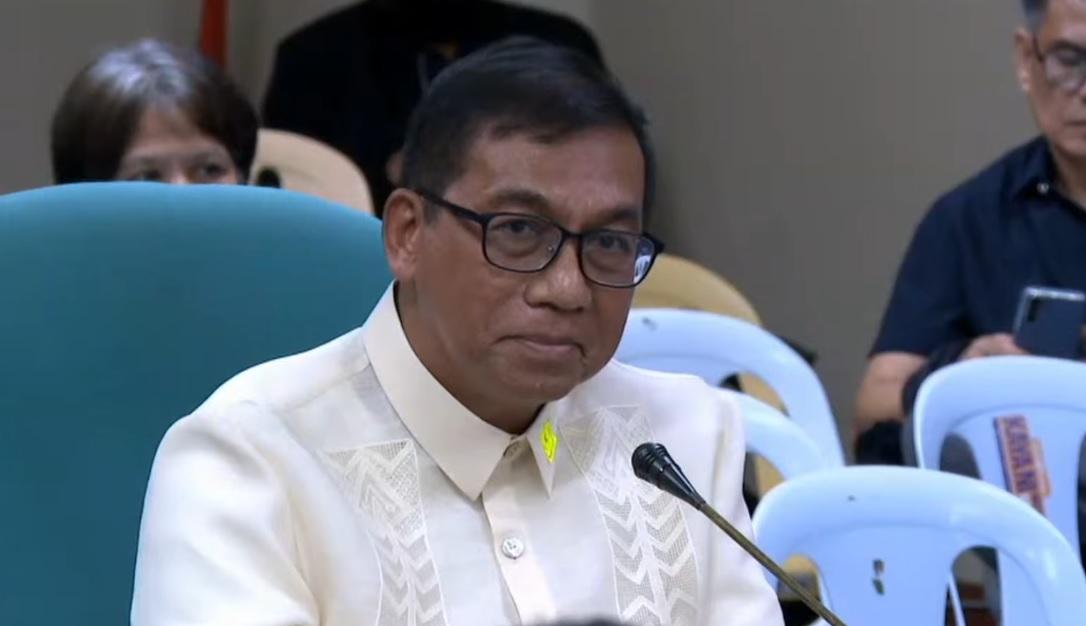
BAGUIO CITY - The Department of Science and Technology (DOST) highlighted the pivotal role of local communities and innovations in promoting disaster resilience in the country.
DOST Secretary Renato Solidum said that a “smarter and more resilient Luzon” would require a better understanding of local information and technology, empowerment of local minds, and support for local solutions for resilience.
"We must shift from responding to disasters to reducing risks, managing vulnerabilities, and increasing capacities - involving all sectors, government, non-government, private industry and all Filipino general public,” Solidum said during the Handa Pilipinas sa Bagong Pilipinas 2025 opening ceremony in Baguio City on Thursday.
“When local minds are informed, empowered, and equipped, they become heroes of their own stories of resilience,” added Solidum.
The Secretary also recalled the call of President Ferdinand Marcos Jr. during the 4th State of the Nation Address (SONA) to “embrace the principle of continuous improvement” in terms of responding to risks and hazards.
Technology and tools
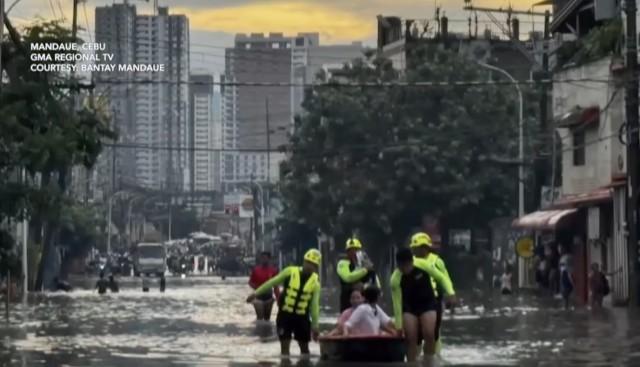
Solidum, meanwhile, noted the developments in technology and tools to help communities prepare better, such as the GeoRiskPH, early landslide warning system Dynaslope, and agricultural sustainability project Smarter Approaches to Reinvigorate Agriculture as an Industry in the Philippines (SARAI).
He also shared that initiatives and projects have been developed by local innovators and teams to further aid local disaster response efforts.
“Let me emphasize this clearly, technology alone is not enough… Empowering local minds and recognizing that our people are not just beneficiaries, but also powerful agents of innovation,” said Solidum.
“These innovations remind us of a critical truth: communities are not just recipients, they can be co-creators of solutions… When we invest in local capacity, we unlock innovation. When we empower our citizens with knowledge, they become not only recipients of solutions but creators of change,” he added.
Baguio City
Mayor Benjamin Magalong, through Vice Mayor Faustino Olowan, said that science and innovation are now necessary to respond to hazards, especially in areas such as Baguio City.
“Your theme for this year’s celebration echoes with our aspirations as a city and as a nation. In this era of increasing climate threats, environmental uncertainties, and fast-evolving challenges, science and innovation are no longer optional. They are imperatives for survival and sustainability,” said Magalong.
“As a city that experiences the full force of climate shifts—from landslides to extreme weather—we know how crucial it is to be proactive. We embrace the power of data, the value of research, and the urgency of building smart, sustainable, and disaster-resilient communities,” he added.
During the program, DOST-CAR, the Philippine Institute of Volcanology and Seismology (PHIVOLCS), and the Department of Economy, Planning, and Development (DEPDev) CAR Regional Land Use Committee (RLUC) signed an agreement for the GeoriskPH Adoption by the Cordillera RLUC.
The DOST also turned over the Handa Pilipinas local caravan guidebook and exhibit modules to local government units in CAR.
Handa Pilipinas Luzon Leg 2025 takes place at Newtown Plaza Hotel in Baguio City from August 7 to 9, 2025.
The event aims to showcase science, technology, and innovation (STI) for disaster risk reduction and climate change adaptation in the Philippines. —VAL, GMA Integrated News

