

 GMA Brandtalk
 Tracking
 Archives

Aftershocks: What to know and what to expect
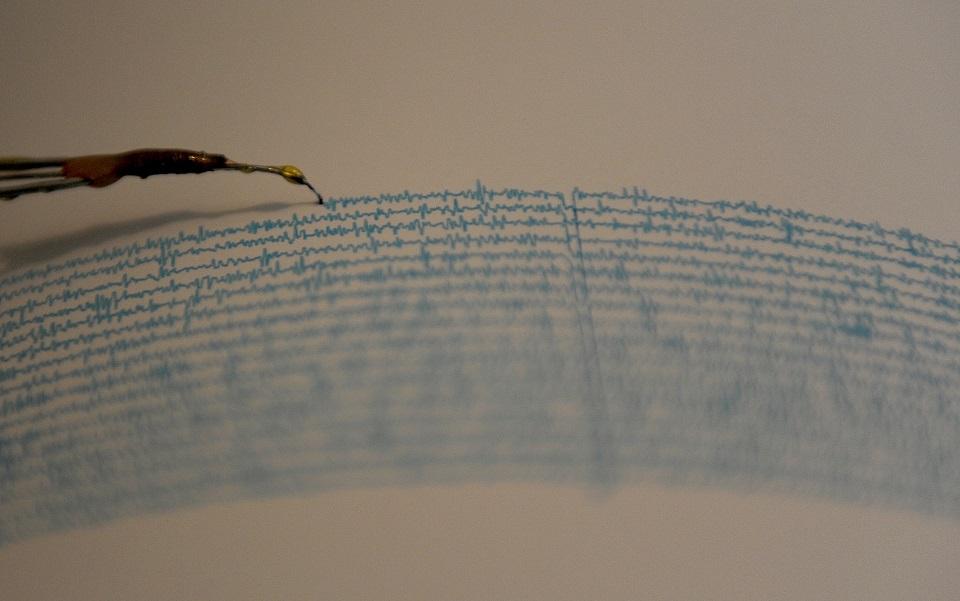
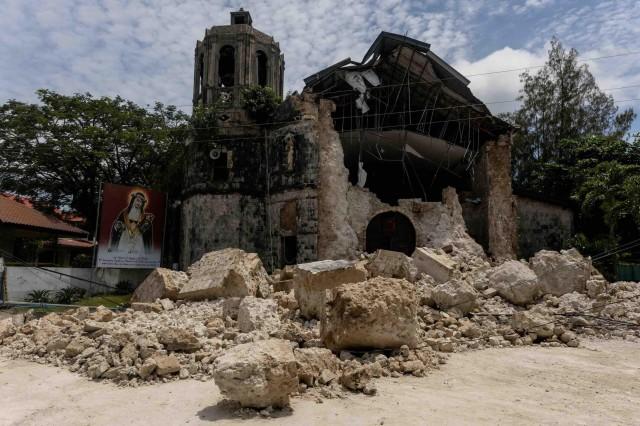
Thousands of aftershocks have been recorded in the past months in areas that have recently been rocked by massive quakes such as Cebu and Davao Oriental.
But what exactly is an aftershock?
The Philippine Institute of Volcanology and Seismology (PHIVOLCS) recently described aftershocks "as usually one magnitude lower than the main shock.”
However, the intensity of these aftershocks varies, and they could last for weeks or even months, according to PHIVOLCS.
It can occur by the thousands, as can be seen recently with 1,364 aftershocks now recorded in Davao Oriental following doublet earthquakes on October 10.
In Bogo, Cebu, PHIVOLCS has recorded over 12,000 aftershocks following the Magnitude-6.9 earthquake in Bogo, Cebu.
The United States Geological Survey (USGS) stated that aftershocks often occur in the same general area of a main earthquake, or “main shock,” during the period of time before the usual seismicity level of the area resumes, usually caused by minor readjustments of faults that may have moved during the main earthquake.
The Japan Meteorological Agency (JMA) notes that the strongest aftershocks occur within 3 days after the main shock in most cases.
Earthquake trigger?
That being said, are aftershocks a sign of an incoming earthquake?
According to PHIVOLCS, earthquakes cannot trigger more earthquakes.
"'Yung triggering na sinasabi natin nangyayari lamang 'yan kung ang fault na malapit ay handa nang gumalaw," said Dr. Winchelle Sevilla, Chief Science Research Specialist of the Seismological Observation and Earthquake Prediction Division of DOST-PHIVOLCS.
(The triggering we're talking about only happens when the fault nearby is ready to move.)
"May mga instances din na instead na mapagalaw, puwede rin niyang mapatagal pa 'yung actual na paggalaw. So basically na-relieve niya 'yung stress," he added.
(There are also instances where instead of being moved, he can also prolong the actual movement. So basically he relieves the stress.)
PHIVOLCS further clarified that it was impossible to predict incoming earthquakes.
“Kami naman sa PHIVOLCS, ang ine-emphasize namin na walang technology that can tell us when an earthquake would happen,” Bacolcol said.
(We at PHIVOLCS emphasize that there is no technology that can tell us when an earthquake will happen.)
“Science na ang nagsasabi na walang technology na makapagsabi sa atin kung kailan magkakaroon ng lindol,” he added.
(Science is already saying that there is no technology that can tell us when an earthquake will occur.)
Magnitude 6
The Department of Science and Technology (DOST) noted that the country currently experiences around 30 earthquakes a day, which are recorded through seismic equipment.
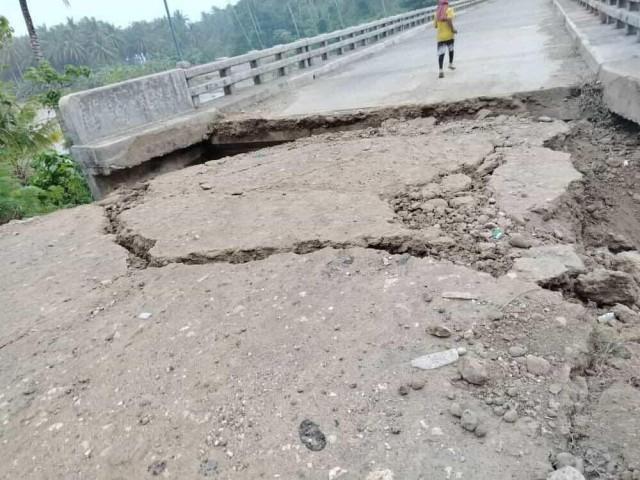
They also noted that Magnitude-6 earthquakes and up occur yearly but are just not often detected or felt.
"Pambihira 'yung mga magnitude 6 or greater pero hindi naman 'yan nangyayari na naze-zero tayo sa isang taon. Nangyayari talaga 'yan. 'Yung iba lang, masyado naging malayo sa lupa kaya hindi naging mapaminsala," he said.
(Those with a magnitude of 6 or greater do not happen often, but it does not mean we don't get any in a year. It really happens. Some are just farther away from land, so they are not as destructive.)
PHIVOLCS advised the public to observe proper procedures such as “duck, cover, and hold” to ensure safety during earthquake disasters. —VAL, GMA Integrated News

