

 GMA Brandtalk
 Tracking
 Archives

Recycled water bottles take spotlight in disaster prevention, construction innovation
BACOLOD City —Disaster response and construction take a step towards sustainability with the newest innovations from Carlos Hilado Memorial State University.
During the HANDA Pilipinas 2025 Visayas leg, innovators from the University presented their most recent, cost-effective inventions that “turn pollutions into solutions” by using recycled materials, such as plastic and PET bottles, as their main components.
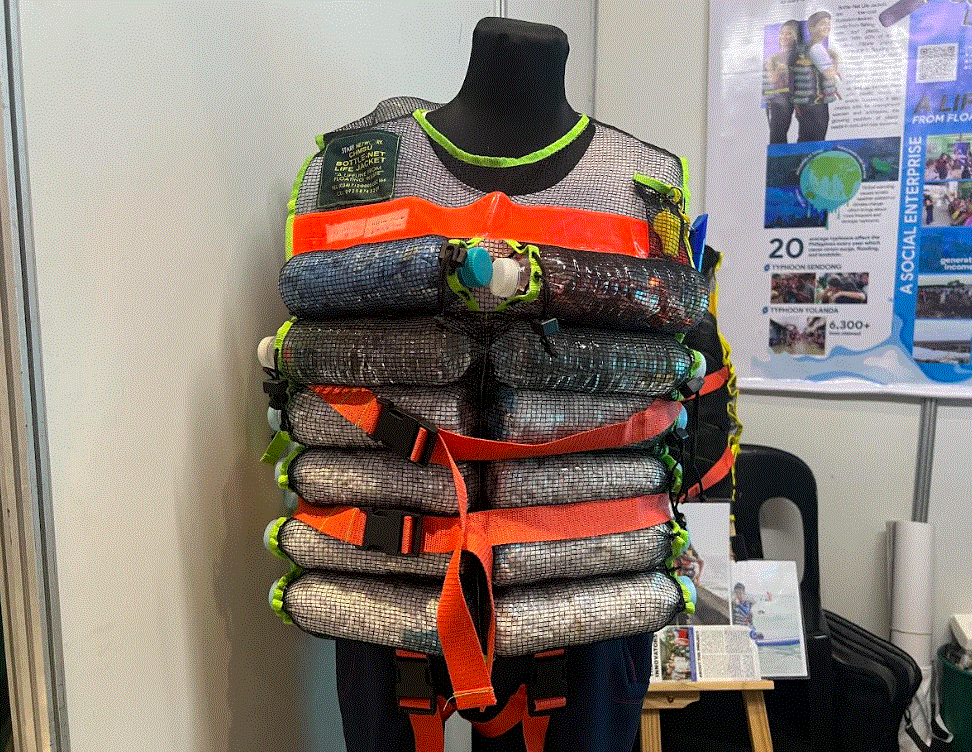
Bottle-net life jacket
The project was initiated in 2017, with funding from UKAid, Start Network, and TUKLA Innovation Labs.
Each life jacket is sold at P800 to P1,000 per unit, made entirely of recycled fish nets.
Instead of cotton or padding, the life jacket’s filling or floatation device is packed with around 20 PET bottles that can be filled with life-saving items in case of emergencies, like snacks or drinking water.
“Ang innovation nito, this product is made of recyclable materials. This is [the] PET bottle na tinatapon lang natin, at tsaka ang laman ng PET bottle mga discarded waste [na] ginugupit-gupit at nilalagay sa loob ng PET bottle as hardener para kung mabangga ito, di madali mayupi… Yung isang PET bottle ang laman ay candy [at isa pa para sa tubig]. Para sa survivor, kung nasa gitna siya ng dagat, may makonsumo siya for a number of days para masustain ang life niya,” said faculty member Dominic Mercurio.
(This product is made of recycled materials. This is the PET bottle that we just throw away, and the PET bottle is filled with discarded waste [that] we just cut up and place inside the bottle as a hardener so if it’s hit, it won’t crumple so easily… This one PET bottle is filled with candy [and another is for water]. For a survivor, if they are in the middle of the sea, they would be able to consume something for several days.)
Considering that the life jacket had no padding to absorb water, it will stay afloat longer than a traditional padded life jacket that has a lifespan of around 72 hours.
The jacket is available in small (130 lbs), medium (150 lbs), and large (170 lbs) sizes, and comes with a whistle, reflector, and flashing lights.
Customizable jackets for pets are also available.
The life jacket is also being used as an income-generating project for women in coastal areas, who undergo training to create them.
The project is already being used by some barangays in Talisay and Negros Island, but is not yet available in local markets.
“Maraming challenges na dapat harapin ng innovator, kung paano ito ma-market at paano matanggap ng mamamayan kasi sanay tayo sa life jacket na commercial available na foam,” added Mercurio.
(The innovator will face a lot of challenges on how to market this and how it can be accepted by the public because we are so used to the commercially available foam.)
Enviroblocks
The university said that their enviroblocks, produced using bound PET bottles filled with mixed cement and plastic waste, are stronger than the typical hollow block.
Currently undergoing testing, the enviroblocks have since been used to produce a small classroom in Vista Alegre, Bacolod City.
Enviroblocks act as a foundation that binds together and creates a wall behind concrete reinforcements.
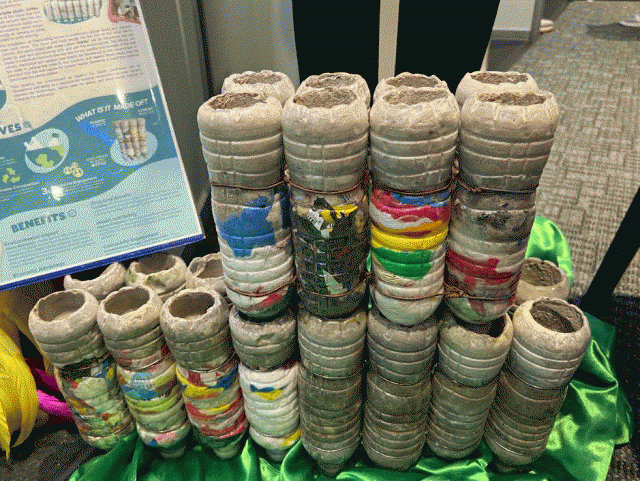
It is designed like crates with holes on top to create an interlocking figure using the bottom of the PET bottle, its head, and neck for stronger reinforcement before it is sealed with mortar for a permanent lock.
With the innovation, communities would be able to contribute to reducing plastic waste, promoting sustainable construction, and improving community engagement.
Unlike the bottle-net life jacket, the product is still not at the mass production level and needs more development.
The university, ranked 26th in Crisis Management at the World University Rankings for Innovation in 2024, is now seeking further partnerships with local communities and the government to promote and commercialize its sustainable solutions. —LDF, GMA Integrated News

