

 GMA Brandtalk
 Tracking
 Archives

EXPLAINER: What is coastal uplift, and how does it affect humans and wildlife?
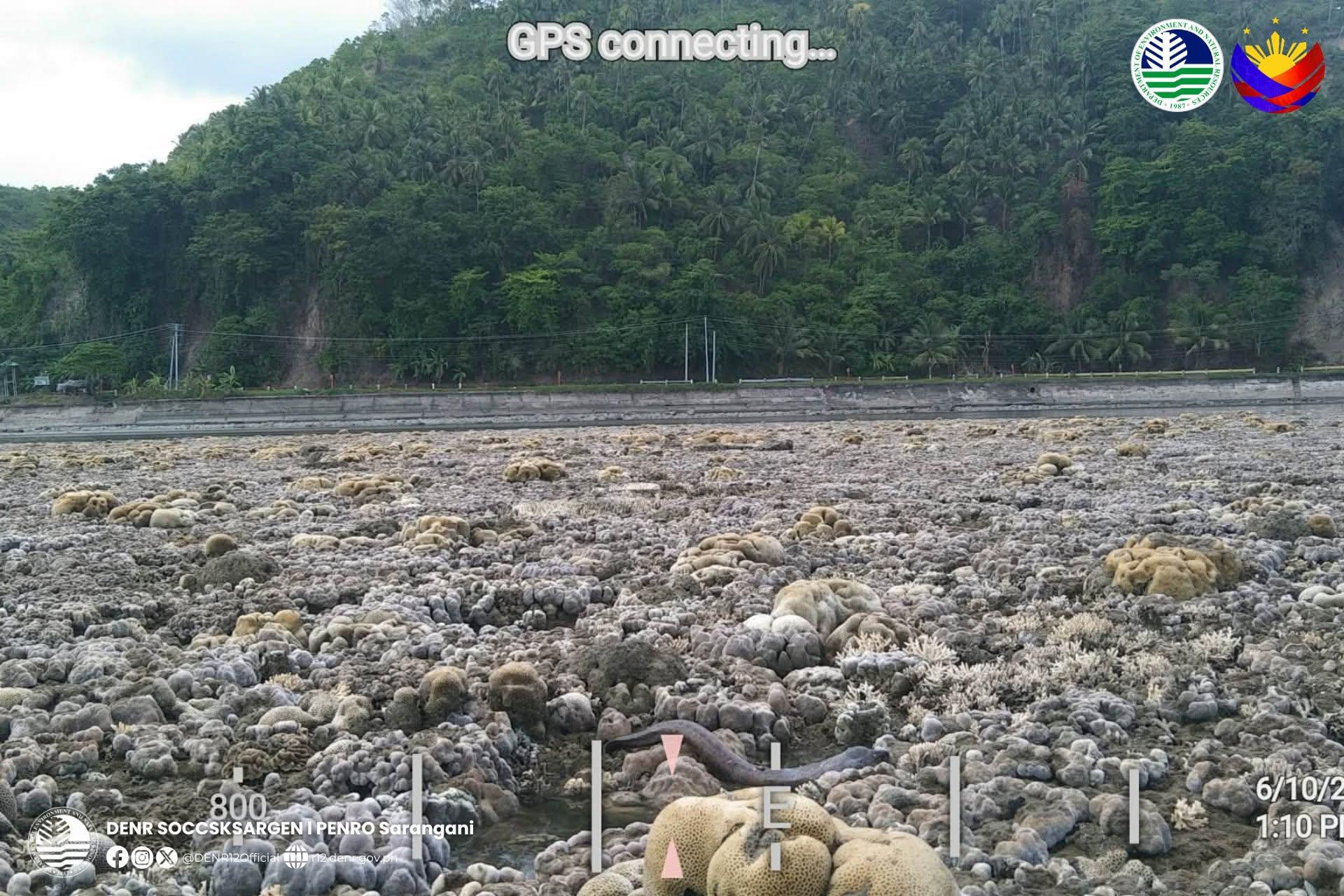
A coastal uplift occurred at the coastlines of Sarangani and Davao Occidental following the magnitude 7.8 earthquake that hit the region on June 8, PHIVOLCS said.
According to the earthquake and volcano monitor, a coastal uplift is a vertical deformation where land along the coastline rises, exposing areas that were previously submerged underwater.
This phenomenon happens due to the lifting of the Earth's crust along a fault line or subduction zone.
Aerial survey of PHIVOLCS and the Mines and Geosciences Bureau (MGB) shows that sections of the shore in Glan in Sarangani and Jose Abad Santos in Davao Occidental has visibly risen, by as much as nearly two meters in some cases.
This, in turn, caused the seawater to recede by around 200 meters.
In a separate statement, the Department of Environment and Natural Resources' regional office (DENR SOCCSKSARGEN) said the Sarangani Bay Protected Seascape (SBPS) Protected Area Management Office (PAMO) began receiving reports of low sea levels in the area.
Authorities inspecting the area found "long stretches of shoreline, coral reef and seagrass beds" had been exposed, exposing the marine life that was usually under water.
Pangyan Marine Sanctuary in Glan's Barangay Pangyan was particularly affected.
"These exposed corals and seagrass beds had begun dying off alongside their resident organisms such as reef fishes, eels, clams, and shells," DENR said.
Caused by the earthquake
Coastal uplift can occur suddenly during an earthquake (coseismic) or gradually over time after an earthquake (interseismic).
Studies show that coastal uplift has a major impact on both nature and human livelihood, because the rising of the land and the receding of the sea naturally expand the dry land area within coastal zones.
As a result, marine life such as coral reefs, marine plants like seagrass, and other marine fauna are exposed to air and the heat of the sun, leading to massive die-offs.
Biodiversity
Coastal uplift triggers a permanent transformation in local biodiversity as areas that were once part of the ocean floor gradually turn into dry land.
Over time, terrestrial vegetation such as grass begins to overtake these newly exposed areas, completely replacing the former marine ecosystem with a land-based one.
This severe destruction of marine habitats directly causes a drastic decline in the catch of fish and other vital seafood resources.
The drop in local catch happens because the shift destroys critical intertidal zones along the shoreline, which serve as the essential shallow waters where fish lay their eggs and grow.
Humans
Beyond its devastating ecological toll, the sudden expansion of these coastal areas also introduces severe safety hazards to nearby residents.
Communities living near the shifted shorelines are strongly advised to remain vigilant and prepare for potential aftershocks or tsunami threats. — Lyjah Tiffany Bonzo/BM, GMA News

