

 GMA Brandtalk
 Tracking
 Archives

EXPLAINER: What is sulfur dioxide emission?
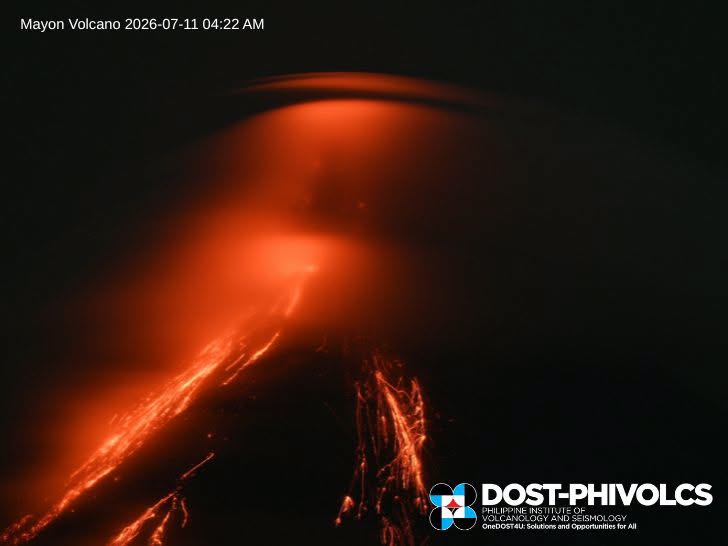
State seismologists recorded an average of 13,128 tonnes of sulfur dioxide per day at Mayon Volcano last July 11, the highest emission from the volcano in the last 26 years.
According to PHIVOLCS, the latest measurement is slightly near the 14,800 tonnes per day logged during the March 2000 eruption.
But what is a sulfur dioxide or SO2 emission?
“Ang sulfur dioxide or SO2 ay gas na nanggaling sa magma. So kapag mataas ang sulfur dioxide emission, ibig sabihin maraming volcanic gas ang nailabas mula sa ilalim ng bulkan,” PHIVOLCS Director Teresito Bacolco told Bagong Pilipinas Ngayon.
(Sulfur dioxide or SO2 is a gas that comes from magma. So when the sulfur dioxide emission is high, it means a lot of volcanic gas is being released from beneath the volcano.)
PHIVOLCS noted the SO2 emission declined to 5,842 tonnes per day.on July 12.
“Although mataas pa rin ito if we compared sa kanyang normal level,” said Bacolcol.
(Although this is still high compared with its normal level.)
Mayon Volcano remains under Alert Level 3 or high level of volcanic unrest. Under such a level, there are sustained increases in volcanic earthquakes and SO2 emission rates as magma is near or at the surface, according to PHIVOLCS.
Exposure
PHIVOLCS highly suggests wearing of N95 face masks to protect oneself from volcanic ashes and sulfur dioxide gas.
“Yung advise namin limitahan ang outdoor activities kapag mataas ang volcanic gas…Kung may ashfall naman, magsuot ng N95 kung maari. Ang N95 ay effective laban sa volcanic ashes at mismong sulfur dioxide gas. Kung mataas ang gas concentration, mas mainam na umiwas muna sa affected area kung kinakailangan,” said Bacolcol.
(Our advice is to limit outdoor activities when volcanic gas is high… If there is ashfall, wear an N95 mask if possible. The N95 is effective against volcanic ash and the sulfur dioxide gas itself. If the gas concentration is high, it is better to avoid the affected area for now if necessary.)
According to the Department of Health (DOH), sulfur dioxide is a colorless toxic gas that can affect all living beings including plants and animals.
A person can be exposed by breathing air containing sulfur dioxide or through skin contact, the DOH said then.
“Short-term exposure to sulfur dioxide can harm the human respiratory system and make breathing difficult,” the DOH said.
Among the symptoms due to sulfur dioxide exposure include the following: skin irritation, eye irritation, mucus secretion, aggravation of bronchitis, increased risk of respiratory tract infection, coughing, and asthma.
The DOH warned of inflammation and irritation of the respiratory system due to prolonged exposure or high concentrations of sulfur dioxide.
Environment
Sulfur dioxide is not only detrimental to human health, but also to the environment.
SO2 and other sulfur oxides can lead to acid rain, according to the United States Environmental Protection Agency and the Queensland Government in Australia.
Sulfur dioxide mixes with air and water to create sulfuric acid, the driving force behind acid rain. The damaging effects of acid rain include: destroying forests and woodlands; making waterways acidic; and corrode building materials.
Other sources of SO2 also include burning of fossil fuels in power plants, trains, ships, and other vehicles that burn fuel with high sulfur content. — LA, GMA News

