

 GMA Brandtalk
 Tracking
 Archives

Mayon activity persists with more rockfalls but fewer usons, quakes — PHIVOLCS
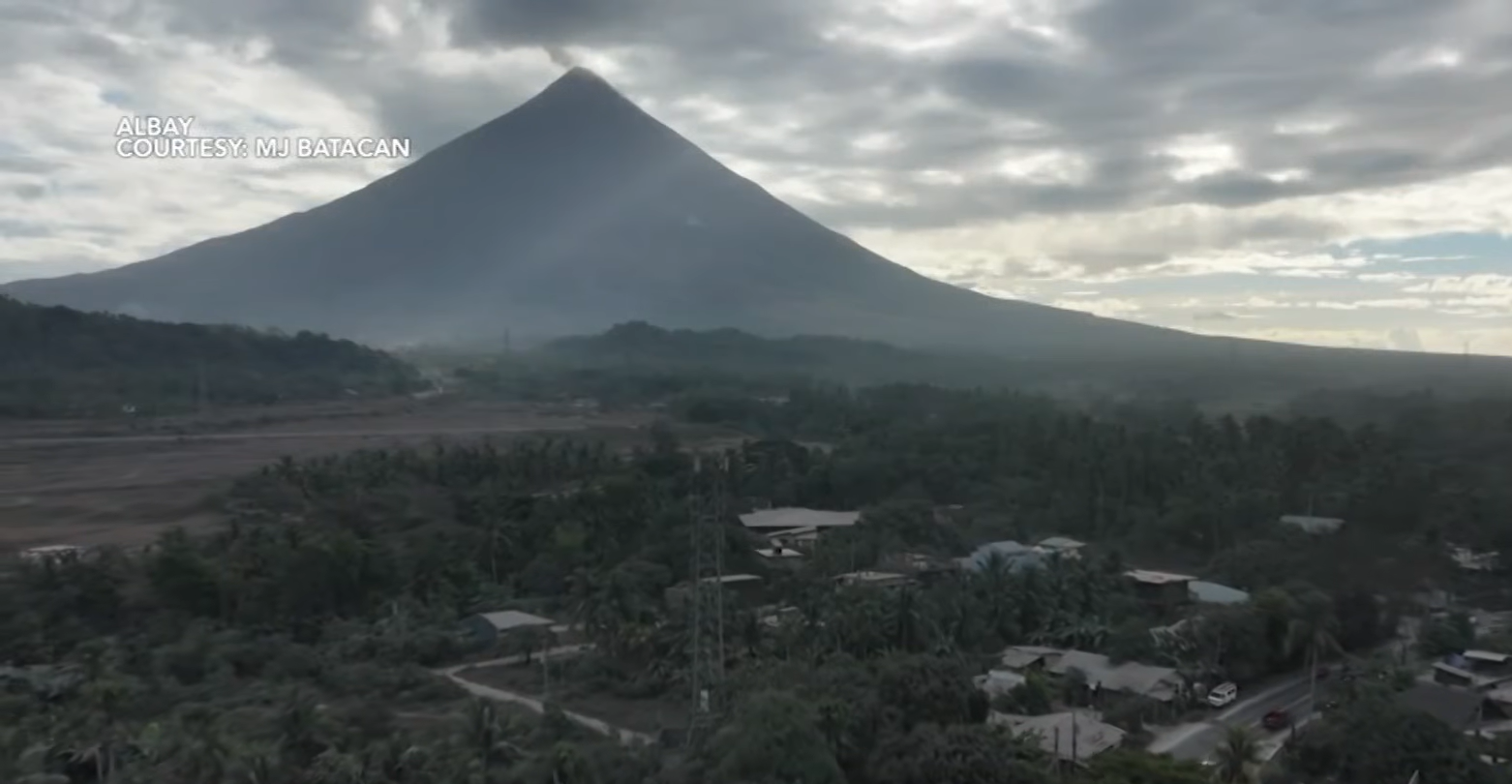
Volcanic activity continued at Mayon Volcano over the past 24 hours with increased rockfall events but fewer volcanic earthquakes and pyroclastic density current signals, state volcanologists said Thursday.
In its latest bulletin, the Philippine Institute of Volcanology and Seismology (PHIVOLCS) said 297 rockfall events were recorded, which is higher compared to 283 in the previous report on Wednesday.
A total of 10 volcanic earthquakes were recorded, which is lower than the 11 in the previous report on Wednesday. The recent volcanic earthquakes lasted longer, up to 34 minutes. However, the number of daily volcano tremors increased from three to six.
Pyroclastic density current signals or “usons” also declined from 17 to two, according to the PHIVOLCS.
Unlike in the Wednesday report, no lava fountaining was observed this time.
Lava effusion with lava flow remained on Basud (3.8 kilometers), Bonga (3.2 km) and Mi-isi (1.6 km) gullies, with episodic minor strombolian activity.
Mayon emitted a weak plume rising 300 meters above the crater and drifting northwest and west-southwest.
Crater glow remained visible and was described as “fair.”
Sulfur dioxide emissions averaged 2,184 tonnes per day based on measurements on Tuesday.
There was a short-term deflation of the edifice with shorter-term inflation on the northeastern flank of the volcano, according to PHIVOLCS.
Alert Level 3 is maintained over Mayon Volcano, which means there is an intensified unrest or magmatic unrest.
PHIVOLCS also reminded the public that entry into the six-kilometer radius permanent danger zone remains strictly prohibited due to persistent hazards.
The agency also warned against flying aircraft close to the volcano.
Among the possible dangers are rockfalls, landslides, ballistic fragments, lava flows, lava fountaining, pyroclastic density currents, and moderate-sized explosions.
Lahars may also occur during periods of heavy and prolonged rainfall.
Interviewed on Super Radyo dzBB, Camalig, Albay Mayor Carlos Baldo said light rains were being experienced in the town.
“Medyo maulan-ulan po at saka may maliit na PDC pero hindi naman po ganoon kalaki,” Baldo
(It's been raining and then there's a small PDC but it's not that big.)
“Yung mga sa puno siguro baka mabawasan na yung mga abo pero yung mga sa kalsada kasi hindi pa yun basta-basta matatanggal po kasi medyo makapal. Kailangan po talaga ng tulong ng tao 'yun,” he added.
(The ashes on the trees might be washed away but the ones on the road can't be easily removed because they're quite thick. We really need people's help.)
More than 100 barangays and nearly 200,000 individuals have been affected by the massive ashfall from Mayon on May 2.
Baldo said some roads leading to barangays still have ashes.
Residents are being advised to clear ash from roads, rooftops, and gutters because accumulated ash can clog drainage systems and make roofs heavier, increasing the risk of collapse.
Around 205 families remain in evacuation centers in Camalig. Some residents affected by the ashfall temporarily returned home to clean up.
The mayor is requesting for more supplies of N95 masks. Camalig already received assistance from the Office of Civil Defense and other donors, he said.
Baldo appealed for additional support from the national government, particularly farm tools and planting materials so farmers can resume planting. — RSJ, GMA News

