

 GMA Brandtalk
 Tracking
 Archives

ADVERTISEMENT
Filtered By: Scitech
SciTech
Transparent, foldable smartphones may be available by 2016
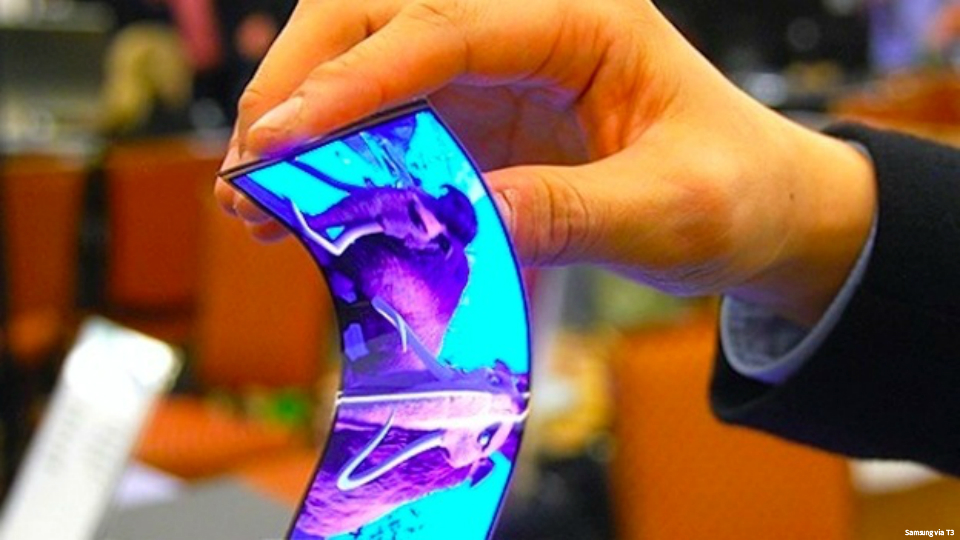
With advances in transparent and flexible displays, foldable smartphones could start rolling out as early as 2016, a Korean news site reported this week.
Business Korea quoted an official from Samsung Display as saying such foldable devices could be commercialized by then.
Foldable smartphones
"The industry believes that the commercialization of foldable smartphones will be possible in 2016," Business Korea quoted the official as saying.
It also said an official from the industry as saying the flexible display technology could expand to other items like e-books and laptops.
Once this happens, the official said, the concept of tiny portable PCs and e-books will "be realized in reality.”
Business Korea also quoted a senior official from LG Display as saying the development of display technology that creates a virtual space on glass is already completed.
"However, it will take time until the product becomes commercialized due to mass production according to demand and stable supply,” the LG official was quoted as saying.
Transparent displays
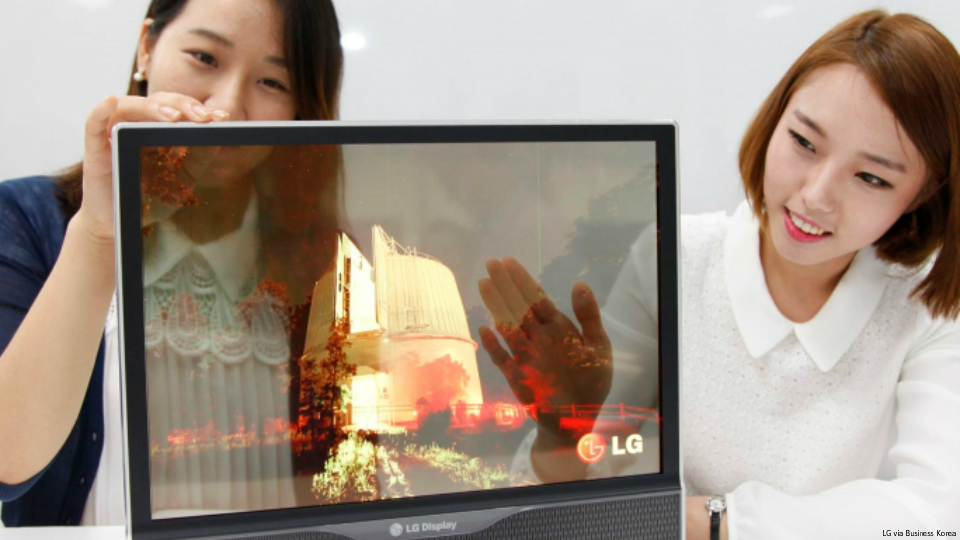
Business Korea said LG Display and Samsung Display, which have a 50-percent worldwide market share, are working on two new technologies: transparent and flexible displays.
Transparent displays are used for heads-up displays and even transparent refrigerators. Flexible displays are paper-like displays that produce the same picture quality even if bent by users.
A separate report on T3.com said this could mean folding a phablet into a pocket instead of having to cram it.
Flexible phones
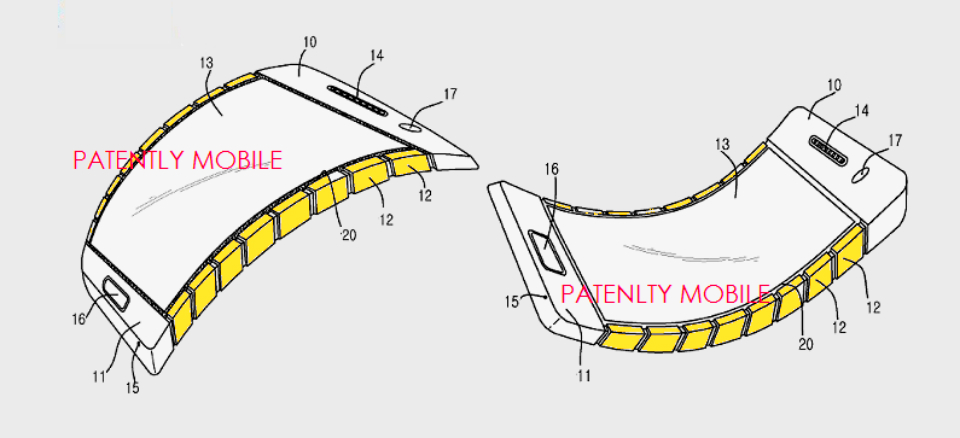
Recently, Patently Mobile said that Samsung had obtained a patent for not just a flexible screen or display but at also a flexible frame.
"The invention just isn't about a flexible display but also a completely flexible frame that could be bent forwards and backwards with relative ease," it said.
Under the patent, the frame even has sections that can open up and grab a user's clothing and then lock it in temporarily.
"(A) runner, for example, doesn't have to wear an additional clip, armband and/or strap to hold their smartphone in place," it said.
The flexible device may also have a flexible battery pack in the inner space of the case frame, and a flexible display.
Also, the flexible device may have hinge holes or protrusions.
The case frame may be made of a synthetic resin, metal, glass, Glass Fiber Reinforced Plastic (GFRP), and a Carbon Fiber Reinforced Polymer (CFRP).
But Patently Mobile also noted Samsung originally filed the patent application in the second quarter of 2014. — Joel Locsin/TJD, GMA News

