

 GMA Brandtalk
 Tracking
 Archives

Pioneers Festival in Vienna hints at new technologies in near future
Some trade shows present to us a glimpse of what life would be like in the future, and as our marriage to technology deepens, we try to get used to emerging gadgets and human extensions that would soon become a part of us as our skins are.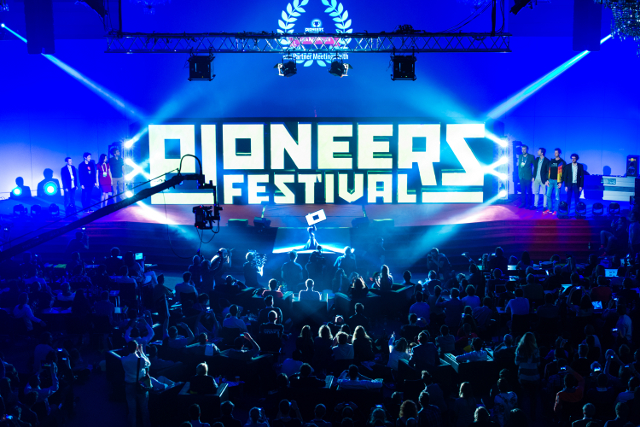
Technology start-ups and investors gather yearly at the Pioneers Festival. Source: Pioneers Festival, pioneers.io
The recedntly-concluded Pioneers Festival in Vienna was one of such trade shows.
Only four years old and focusing not only on consumer electronics but technology in general, this year’s Pioneers Festival showcased products and concepts that are seen to change forever the way we live.
Here’s a look at the most promising innovations that may be widely used and commercially adopted in the next 10 years: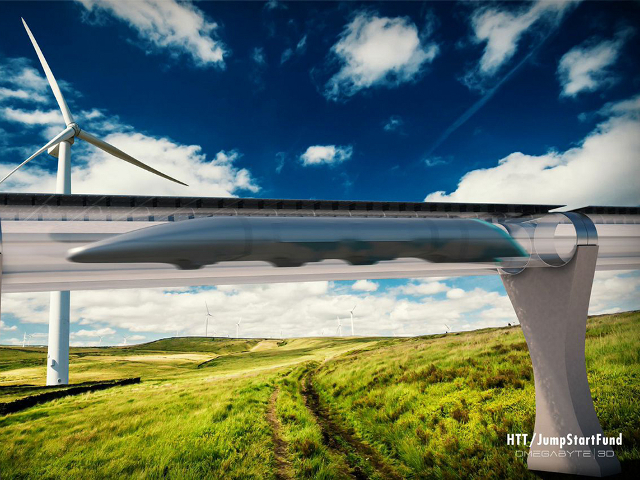
A rendering of a Hyperloop. Source: Hyperloop Transportation Technologies / JumpStartFund
The Hyperloop
A project backed and proposed by Elon Musk in 2013, the Hyperloop is a transportation system similar to a vacuum tube train without the rails.
Musk envisions the Hyperloop to have low power requirements and able to travel at speeds twice that of a jet aircraft. The technical specifications, cost to build, design and construction feasibility of the Hyperloop are still a subject of much debate and the proponents of the project believe they are ten years away from commercialization.
Open-Source Artificial Limb
Unlimited Tomorrow, founded by then 17-year-old Easton LaChappelle, is dedicated to creating cheaper robotic, 3D printed new arms and hands for people with disability.
Now 19, LaChappelle is embarking on a new project —an exoskeleton to help disabled people regain mobility.
The concept is not new but earlier proposed models are bulky and expensive. Since the exoskeleton is considered a medical device, it will require US Food and Drug Administration (FDA) approval before it can be sold to the general public.
Muurfi Animal-Free Milk
How do you feed more than seven billion people using sustainable and environmentally conscious food production processes? You can’t. Not yet. Not at that scale. It is going to take decades before we can fully realize this dream but Muurfi is taking a step in that direction by using biotechnology to create synthetic milk as an alternative.
It said the milk is perfect for people who are lactose intolerant and are by principle opposed to commercial dairy farming practices.
Tech you wear
Athos develops apparel (shirts, shorts, among others) and technology that can measure and track a person’s heart rate, breathing patterns and muscle activity and provide feedback to the wearer through his or her smartphone.
The brain of the system is the Core —a 2.5 inch Bluetooth-enabled device that receives data from sensors embedded in Athos garments, Athos said, adding that this real-time reporting mechanism can help athletes and possibly even people in physical therapy, improve their workout, routine and athletic performance.
Human API
Health is a trillion dollar global industry and companies from start-ups to large pharmaceutical firms are in a race to take advantage of recent technological trends and innovations to raise the chances of success in the treatment and management of diseases.
Human API, a platform that unifies and standardizes health data (blood pressure, glucose level, among others) allows developers to efficiently build applications that use these.
Patients can then control and give permission to use all or select data sets to their caregiver, hospital, drug store, physician and insurance company.
Moreover, the platform allows these providers to integrate the patient’s data with their own applications and systems, creating efficiencies and reducing costs. — LBG, GMA News

