

 GMA Brandtalk
 Tracking
 Archives

Indie game developers share the secrets of their success
To succeed in the game industry, you need to make great games. However, our passion for the creative process sometimes blinds us to other important aspects of game development—such as getting your game noticed by the right people, and making money off your precious work.
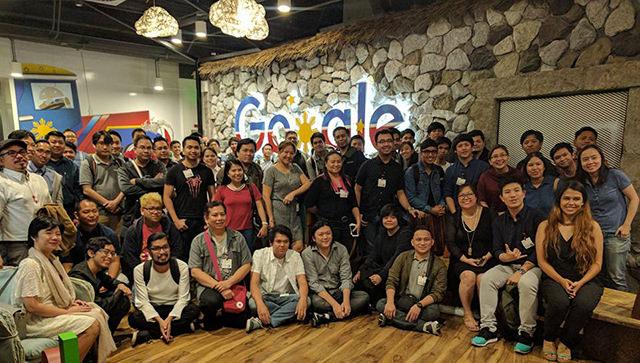
On July 26, at an event called Game Developers Night, Filipino game development veterans were invited to discuss the value of using digital distribution services such as the Google Play Store, and how to maximize Google Services to ensure your games are profitable.
The event was made possible by Game Developers Association of the Philippines and Indie Arena, with the help of Google Developers Group and Google.
Get featured, get seen
James Lo, the president and co-founder of Philippine game development studio Indigo Entertainment, discussed the importance of getting featured on app stores.
Indigo Entertainment is the developer of original IPs such as mecha fighting game “Garrison: Archangel” and the challenging action-platformer “Agent Aliens.”
“Agent Aliens” experienced an enormous spike in its number of new users—over 190,000!—the first day it became a Featured App on the Google Play store. This makes sense; a featured game appears on the store’s front page, making it more visible to a greater number of people. Getting featured is therefore crucial to your game’s promotion and ultimately success, as it boosts its number of downloads and connects you with game reviewers and publishers. It also helps your user base grow.
Lo admits he isn’t privy to the internal process the Google Play store editorial team uses to decide which games get featured. Nevertheless, he has a few tips on how to improve your chances of getting that coveted feature.
1. Your game has to be spectacular as well as special.
“It has to have unique concept, mechanic, or twist,” Lo said. “You’ll want to show something interesting to the editorial team, preferably something they haven’t seen before, or at the very least, something very refreshing. Keep in mind that they review plenty of games on a regular basis, searching for the best games to feature on the store. So as a developer, it’s your responsibility to come up with something very interesting to get their attention.”
2. Don't underestimate the value of amazing visuals.
“The graphics have to be excellent, from inside the game itself, to the store images, the trailer, all the way to the game icon,” Lo explained. “Your game has to have substance as well; by this I mean the game play has to be fun and the narrative engaging.”
3. Consider localization—the process of tailoring your game to suit the expectations of a specific market.
“Localizing a game for your target overseas audiences would also be helpful,” said Lo. “If your game is translated, it may increase the chances of being featured in other regions.”
“Agent Aliens” is most popular in Asia, with 44.1% of its users from China and 24.4% from Vietnam.
“It makes sense to localize the game to improve the experience of your consumers,” Lo explained. “And by localize, I mean beyond translated language and currency. If your game allows for it, tack on an element that’s native to the country you’re localizing for. It could be a character, a location, whatever makes sense.”
To target the Filipino market, Lo has several strategies in mind: “Getting featured on networks and celebrity power will likely help. More importantly, I think your game should have an element that feels intrinsic to local culture, something that Filipinos can connect with.”
Examples of such games include Kuyi Mobile’s “Streetfood Tycoon,” and Most Played Games’ “Make Tusok the Fishbol.”
4. Don't soft-launch your game; do an open or closed beta instead.
“Doing a soft launch when your game isn’t as polished as possible exposes it to low ratings, which won’t help your game in the long run,” said Lo. “Trying to increase a 3-star rating to 4 and above is an uphill climb, so make sure your game is polished enough before you show it off to the world.”
5. Get to know people from the editorial team.
“This is so you can receive direct input on how best to improve your game—input that you should be acquiring anyway based on your research and playtesters,” said Lo.
So how do you get familiar with the folks at Google?
“Make the most out of events organized by Google, all those accessible to you,” he advised. “They put together development workshops, meetups in Google offices, and so on. If you have the opportunity to attend a conference, find out if Google is also attending and see if you can set a meeting. It’s always better to present your game and receive useful feedback in person.”
Lo believes developers and app stores have a natural symbiotic relationship.
“The stores need your game to attract your users while you need their users to keep on creating great content.”
Making games make money
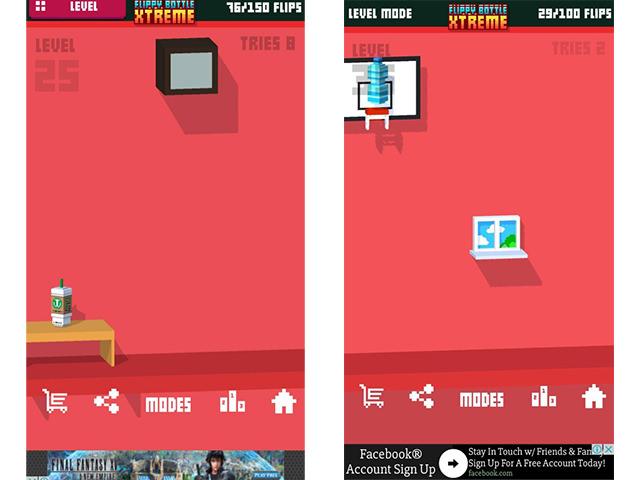
Derrick Mapagu, creator of “Flippy Bottle Extreme” and CEO of game development studio Most Played Games, talked about how to use Google Services to sustain your passion for creating games. Because face it: if your games don’t earn money, you’ll have a tough time justifying developing games for a living. It’s therefore important to design your game with a monetization plan in mind.
Mapagu listed four main ways your game can make money:
1. Through advertising, which comes in several varieties
Games like “Angry Birds” use banner ads, which take the form of a bar usually positioned at the top or bottom of the screen.
Interstitial ads and full video advertisements occupy the entire screen and occur between segments of gaming. While they accrue more revenue than banner ads, they disconnect you from the game, which some could find annoying.
Incentivized videos prompt players to watch video advertisements in exchange for in-game benefits such as extra lives or coins.
Some developers use a combination of ads.
“For ‘Flippy Bottle Extreme,’ we actually used several: banner ads, interstitial ads, and incentivized video,” said Mapagu. “I used these since these are the best fitting ads for arcade and high traffic games such as ‘Flippy Bottle Extreme’… Incentivized video is my favorite since it doesn’t intrude on the game experience that much.”
2. Through in-app purchases (IAPs), which also come in different types
- Virtual currency - in-game money that’s acquired by spending real money. Some developers use pay-to-win mechanics, which can feel unfair if abused.
- DLCs - extra content you download. It’s important for the developer to ensure said content is worth its price.
- Limitation removal - this rids the game of advertisements. While easy to implement, it has comparatively low revenue potential.
- Subscription - cash is deducted from the player per month. While expensive for consumers, it can be justified if the game quality is high.
IAPs boast higher revenue potential than other monetization methods; most top-grossing mobile games use this model.
3. Through selling the game
Games that players buy outright can’t be played until they’ve been paid for. They’re often of high quality and appeal to a smaller paying market. While it’s the easiest monetization model to implement, the developer has to take into account the tough competition.
4. Through selling merchandise
You can also monetize the game by selling merchandise—like t-shirts and bags—associated with it.
To choose the best monetization model for your market, you have to know your market.
“Know your target market like you know yourself,” advised Mapagu. “Game development has a lot to do with selling your game, and if you know your market like yourself, it’ll be easier to connect with them to actually make them play your game.”
Indie arena
Game Developers Night also saw the launch of the Indie Arena website.
The Indie Arena is a showcase of indie games at the annual Electronic Sports and Gaming Summit (ESGS). ESGS 2017 is set to take place from October 27 to 29 at the SMX Convention Center, Manila.
Indie developers who wish to be part of Indie Arena can submit their games for application through the online portal. Deadline is August 31, 2017. — BM, GMA News

