

 GMA Brandtalk
 Tracking
 Archives

Filipina actress Chai Fonacier on working with Eva Green and Mark Strong in 'Nocebo'
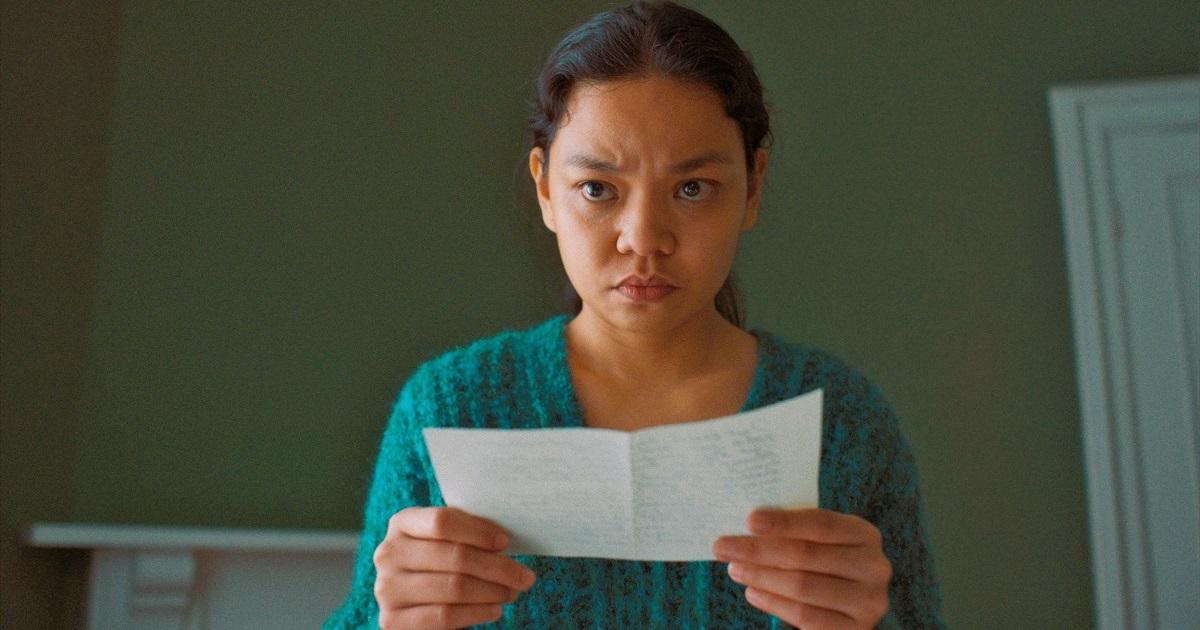
LOS ANGELES — Chai Fonacier is still pinching herself.
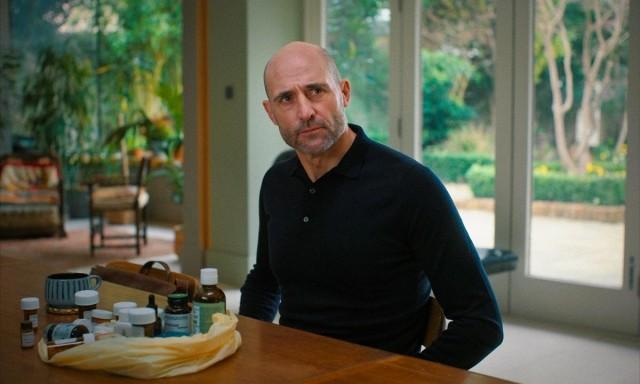
The theater actress, who was born in Cagayan de Oro, cannot believe that she is in an international film, "Nocebo," which stars actors Eva Green ("Penny Dreadful," "Dark Shadows," "Miss Peregrine's Home for Peculiar Children") and Mark Strong ("Zero Dark Thirty," "Kingsman: The Secret Service and "Kingsman: The Golden Circle").
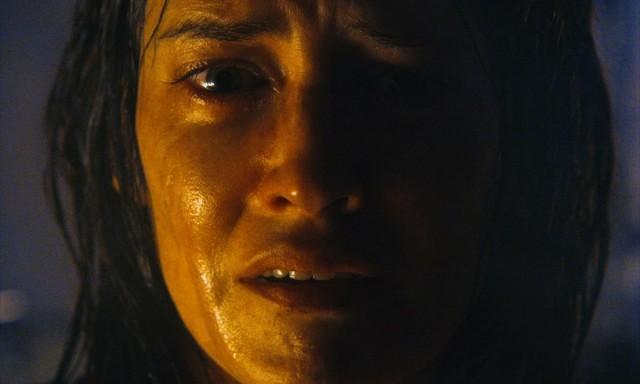
Directed by Lorcan Finnegan and written by Garret Shanley, the Filipino Irish psychological thriller is about Christine (Green) fashion designer who is suffering from a mysterious illness that puzzles her doctors and frustrates her husband (Strong), until help arrives in the form of a Filipino caregiver, Diana (Fonacier) who uses traditional folk healing practices to reveal a horrifying truth.
The petite actress, who speaks English, Tagalog, Cebuano and Hiligaynon, was excited to film the movie in Dublin, Ireland.
We were able to interview her by Zoom.
Congratulations on getting the role on "Nocebo," and with no less than Eva Green and Mark Strong. Can you tell us briefly how you got the role?
In late 2020, this was when the pandemic was at the height of everything, we were all locked indoors. Naturally, I didn't have a job back then because it affected the film industry so much. It was only the big-name people that still had jobs, so I was stuck at home, and (producer) Bianca Balbuena messaged me asking me if I wanted to audition for this film that she was co-producing. She said it was an international film. And I said, "I don't have a job. I am going to audition, of course."
So, I went for it, but the thing was, as I was asking more questions about the character so that I can do the audition videos properly, she revealed to me that Eva Green was playing the other character that was in the script that I was given. So, I had the panic attack of my life. I wasn't able to finish my audition video up until maybe five in the morning. My boyfriend sat up with me. My friend from Iligan, who was online and doing the lines with me, sat up with me all morning up until I finished it. And then I think a couple of weeks later, Bianca messaged me and said I bagged the role, and this was I think around November or December of 2020, because we didn't shoot until February.
We shot in Ireland in February of 2021, and then coincidentally, before Bianca invited me to audition, maybe a week before that, I was binging on Eva Green YouTube videos because I was dissecting some of the scenes that she was doing, which was really good. In this series called "Penny Dreadful," there's just one scene that she did so well, and I was geeking out on it. A week later, I get the call. I get the invite, and then I find out that it was her, so I was like, "The universe working."
What was your reaction at your first meeting with Eva Green and Mark Strong?
I didn't know what to do, actually. I really didn't know what to do because these are among the actors that I would be excited to watch whenever I see them on screen or in a movie. I remember the first time I noticed Mark Strong was in a film called "The Young Victoria." He was playing a villain there, and usually, I'm very interested in villain characters. And then I was like, "Who is this person? I think I like this person very much. "He's doing this villain character really well. I like this villain." So, I find out it was Mark Strong, so eventually, later on, I would be excited whenever I see his films, same with Eva Green.
I can't remember the first time I saw her on screen. I just remember that I was watching her on "Penny Dreadful." I watched her in "300: Rise of the Empire" movie. I saw her in other stuff, and then eventually, I would backtrack to their older work, like, "Amazing," so when I met them, knowing all of those, I felt like, "Is this really happening?"
I was very shy about it but also wanting to talk to them but also not wanting to over talk. But they were very nice to work with, just amazing people to work with. There was one rehearsal that we did on a Saturday where it really started to sink in that this was huge, because they were in the same room with me. We were rehearsing some scenes, and at some point, I would forget that I was part of the scene. At some point, I needed to go in, because you'd end up watching them. You'd be in awe and be like, "Amazing work," and then, "It's my turn," and then I'd go in. It's that kind of stuff. You have seasoned people in the same room with you, including director Lorcan Finnegan, including his wife, Brunella Cocchiglia, who is also a co-producer.
All of these amazing people who have had so many experiences, more experiences than I have, all in one room, and I'm in the room with them. I'm like, "Is this real?" So, I kind of felt like that.
Was it your first time to work in Dublin, Ireland?
Yes, first time to work in an international film. No, I think first BIG international film.
I keep forgetting there's this one other international film that I did, but we shot in Bohol. This was an Argentinian film, but this was my first time shooting outside of the country.
Tell me about your character. Is she a manghuhula, a faith healer, a witch?
I do not want to spoil things. I'll try not to spoil it, but she does enter Christine's household.
Christine is the name of Eva Green's character. She enters Christine's household as a house help/nanny/an assistant of some sort, and it so happens that Christine is suffering from some sort of ailment. So, she uses folk healing to help her out with her condition.
How did your director, Lorcan Finnegan, get some ideas about this kind of stuff in the Philippines?
To be honest, I think this happened quite a number of years ago already, so I've forgotten. My memory's a little fuzzy. I think they told me once why they chose our culture and used it as part of their story. But honestly, I forgot now why. I just remember the amount of work that they did pre-pandemic, coming back and forth through the Philippines for more or less two years, writing the script, researching and interviewing people.
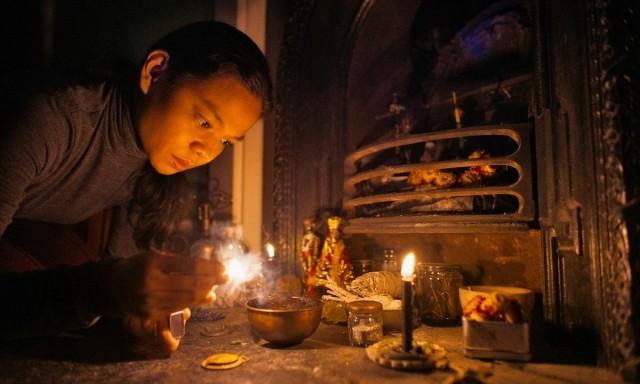
There was a huge amount of preparation also on their part in terms of the research also coming from a lot of respect in involving another culture in their story. Even all the way up until when we were preparing for the character, all of Diana's props were treated with respect, because the props that we were using are actual props that you could buy in Quiapo, actual things that practitioners use in folk healing.
There was a lot of briefing in terms of, how do we treat these items with respect, regardless of whether we believe in it or not? Don't pass by a cemetery, those kinds of instructions. And then we check the map. "Okay, no cemetery nearby. Great. We're good in defending ourselves from whatever negative energies are out there," so there was a lot of that kind of preparation, which to me was very, very interesting, and I really appreciate it.
And you're familiar with some of these rituals in the Philippines?
Not as deeply as other people might be, but I grew up with experiencing some of it. I get asked this a lot and I'd always tell them when children get sick, their moms would give them paracetamol, but also, they would call the manghihilot just to make sure that it is not the white lady in the mango tree that caused this, or it's not some nuno sa punso that we accidentally peed on.
And I went through this whole ritual, and I don't know exactly what they're doing. They'd whisper some stuff on top of my head. They rub some stuff on it, and we call it tutho in Cebu. They do that, and then they go, and then they tell my mom, "Okay. No, she's fine. It's just the flu," or "No, because they were playing in this particular area, and they probably just disturbed some whatever." So, it was like that.
Also, now I remember I also experienced this while we were shooting a film in Baguio, I think, just several years ago because we were shooting at Teacher's Camp. And Teacher's Camp is a very well-known place in terms of paranormal activity, so we had a healer with us the entire shoot. We were instructed too not be very noisy. We were not allowed to enter a particular location unless that healer entered the space first. And they're always the one that's supposed to leave last so that if anything follows, they follow the healer and not us, those kinds of practices. I think in varying degrees, people can relate with it because a lot of us have experienced it one way or another, regardless of how deeply we were involved in it or how superficially we experienced it. We're all kind of familiar with it.
At what point in your life did you decide to become an actress? I know you're also a singer and a songwriter.
I did not decide on it. It kind of just fell on my lap. I did not think I would be in film, actually. I started in theater but no formal training really. It was just the theater guilds in school, the theater clubs and all of that stuff, community theater. I had no formal training, but all of the stuff that I was involved in, it was no less educational and enlightening for me.
For a long time, I thought I was going to be a musician, but then my friend from college did her first feature film called "Miss Bulalacao", and she had me play one of the main support roles. Then I won an award for it. I won a best supporting award for it in the Cinema One Film Festival. Somebody else saw my work there, hired me for another film, and then it just snowballed from there. Then I had another friend from college who was also doing another feature film for QCinema, which was "Patay na si Hesus," so I auditioned for that.
Then from there it just snowballed. Eventually, I realized if I wanted to be hired for more films, because I was beginning to find it enjoyable, I was beginning to find film work enjoyable. If I wanted to be hired for more films, I had to move here. So, in 2017, I hopped over from Cebu to Manila, and then that was that.
Are you still pinching yourself that you're in an international movie? Did you ever imagine yourself being in an international movie?
No, actually, no, I didn't. I never thought I'd be one of those people. Although, I did have some ideas before, because people like me don't really get the kind of billing here, locally. There's not a lot of roles for people like me who prefer character roles and all of that stuff.
I said, "Maybe there's a chance outside," but I didn't know how. So, I was like, "Never mind, we will see what happens." It was mostly like that until... I'm very lucky to know Bianca, because Bianca has been involved in so many co-productions. She's one of those people whose opened doors for people like me, by way of these co-productions that she's been doing in her career as a producer. She's one of the best in the country, I dare say. I guess a lot of it has had to do with my luck. Not entirely, but there is some amount of luck in there.
What's the most challenging thing about filming in Dublin, Ireland?
Honestly, the most challenging thing at filming my first movie outside of the country, was trying to fly me out of the country, just the red tape and everything. I understand they want to make sure all of the citizens are all right, wherever it is that they're going outside of the country. Plus, the restrictions had become tighter by then because of the pandemic.
It was a little dangerous to travel, still, so I understand all of that, but it was just difficult to get all of the papers and all of that. Because as soon as I landed there, I started enjoying everything. I started enjoying the work hours, working with the Irish production who were very warm. They're very warm people, they're very nice, and they're very hard working, and talented. Just being in a new place, after being locked up in your house for so long during the pandemic. All of that newness of the outside world was, I think, distraction enough for me, so much so that I guess the challenges were something that I was more willing to take on, being there.
I noticed you don't have an accent, but in the movie, you have an accent, and you got some flak for that.
Yeah.
How do you handle critics?
If this happened to me several years ago when I was younger, I probably would've had a lot of angry reactions. But when you grow older and you understand your culture a little more, you understand your history a little more, then it makes you sadder and understanding rather than angry. I understand where they're coming from, because we Filipinos, we are hungry for representation, generally.
People who hear that kind of accent, they're used to hearing that kind of accent, let's say, in a stand-up comedy set, where somebody's making fun of their mom's accent or their dad's accent and all that stuff. There's always a butt of jokes thing. Even if they made an issue of that, I think I understand that they're coming from a protective space. They're coming from a good place, where they're just protective of what little representation we have. They're tired of seeing our culture being exploited in storytelling.
They're tired of hearing our accent as just the butt of jokes and nothing else. They're tired of seeing us as the funny one, always a funny one. You can never be a character in a film unless you're the funny one, that kind of thing. Especially me as a brown person, I usually get that. But I want to assure them that we are not the butt of jokes, here, and that there was a lot of respect going into the creation of this character, the forming of this character and this story, as much as we could.
I'm excited to see the film. I haven't actually seen the film yet, so we'll all see what our thoughts are after the film. But just based on the work that we did putting this film together, I feel like I can assure them that we're getting some good representation.
When it comes to acting, who do you idolize?
Many people. It's quite a list, I'll try to keep it short. Locally, I have always looked up to people like Ronnie Lazaro and Joel Torre. Internationally, of course, you have people like Meryl Streep, Viola Davis is another one. Of course, Eva Green, Mark Strong, Emily Blunt, and all these actors. It's quite a long list, seriously.
What do you see yourself doing now, after this project?
I have yet to see, to be honest. I have just mostly been indoors and handling the pressure that this film comes with. It's quite overwhelming, the gratitude that I'm feeling, and the love that I'm feeling for everyone, and the people who have been with me, and the pressure that this film comes with. That needs a bit of handling, so I've just been endorsed mostly.
But I think I am looking forward to seeing where this is going to take me, or us, in general. What kind of interest it's going to spark in terms of who we are as a people, what kind of conversations might come up amongst us Filipinos from this film, what ideas they might have, or who might get inspired by this film to do another one later on of their own, to further add to the whole body of Filipino work that we are all very proud of, the body of work that I am lucky to be benefiting from. Because without all of these people who came before me, I don't think I would've gotten this. I am standing on many people's shoulders, actually.
If you had a chance to talk to your younger self, what would have you told her?
I think I want to reassure her that things are going to be okay. So just exercise a little more patience. Yeah, if you could do that, please, you're going to be fine.
—MGP, GMA News

